
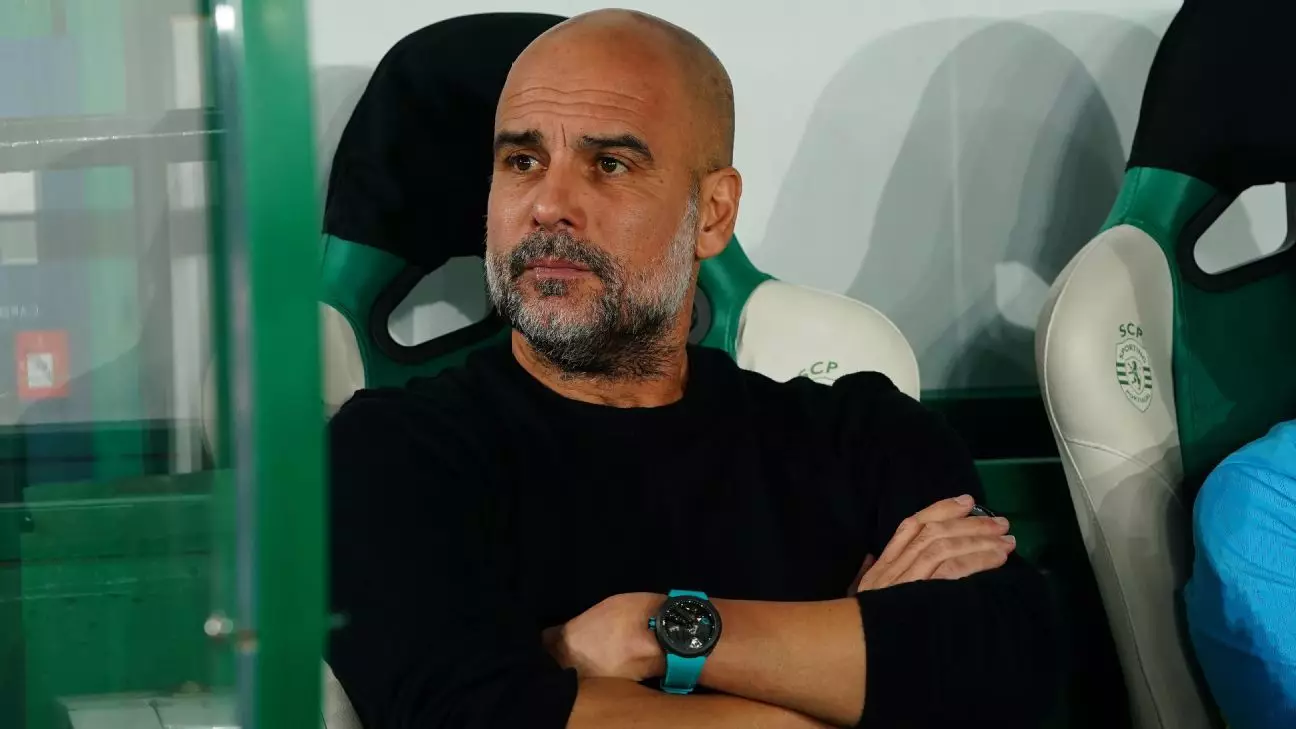
In the realm of international football, coordination between club managers and national team coaches is crucial for maintaining player welfare and optimal performance. Recently, this relationship has come under scrutiny due to an unexpected decision regarding Jack Grealish, the talented midfielder for Manchester City. Pep Guardiola, the astute manager of City, expressed his disappointment over England’s Under-21 coach, Lee Carsley, calling up Grealish without consulting him first. This incident highlights the tension that can arise in player selection, especially when injuries are involved.
A Misunderstanding Regarding Player Fitness
Jack Grealish has been sidelined since Manchester City’s 2-1 victory over Wolverhampton Wanderers on October 20 due to injury. However, astonishingly, despite his absence from the pitch, he was included in England’s squad for upcoming friendlies against Greece and the Republic of Ireland. Guardiola’s confusion and irritation stemmed from the fact that he believes Grealish is not fit to play for City, let alone serve his national side. “I’m not the guy to say you cannot go,” Guardiola stated, emphasizing the complex balance of authority between club and country. However, it is undeniable that Guardiola’s insistence on Grealish’s unavailability raises concerns about the compatibility of each side’s medical assessments.
The fallout from this situation reveals a significant communication gap between Carsley and Guardiola. Carsley claimed that Grealish had been training independently with City, but Guardiola countered this statement, asserting that Grealish had only spent limited time in training, mostly in a gym setting. This discrepancy uncovers a broader issue: clubs and national teams often have differing interpretations of a player’s fitness and readiness for competition. The lack of direct communication prior to Grealish’s selection could lead to detrimental outcomes, both for the player facing potential re-injury and the teams involved facing critical matches.
Grealish’s Ambivalence and Team Dynamics
Despite the apparent discord, it was revealed that Grealish himself expressed a desire to join the national team. Guardiola’s acknowledgment of Grealish’s intent to link up with England suggests that the player is keen to represent his country, despite lingering doubts about his fitness. This raises interesting questions about player agency and the pressures athletes face to perform at the international level, often at the expense of their health.
As City prepares for their upcoming match against Brighton, they have the ominous task of breaking a three-game streak without victory—an unusual situation for Guardiola, who has never experienced four consecutive losses in his managerial career. Guardiola’s tactical and emotional readiness for this challenge will be critical. He noted, “We know the reason why we struggle,” pointing to the importance of addressing the underlying issues affecting the team’s performance. All eyes will be on Guardiola as he seeks to reinvigorate his squad while maintaining healthy communication with national team frameworks moving forward. The outcome of this conflict may ultimately shape how clubs manage player health against the backdrop of international commitments.