
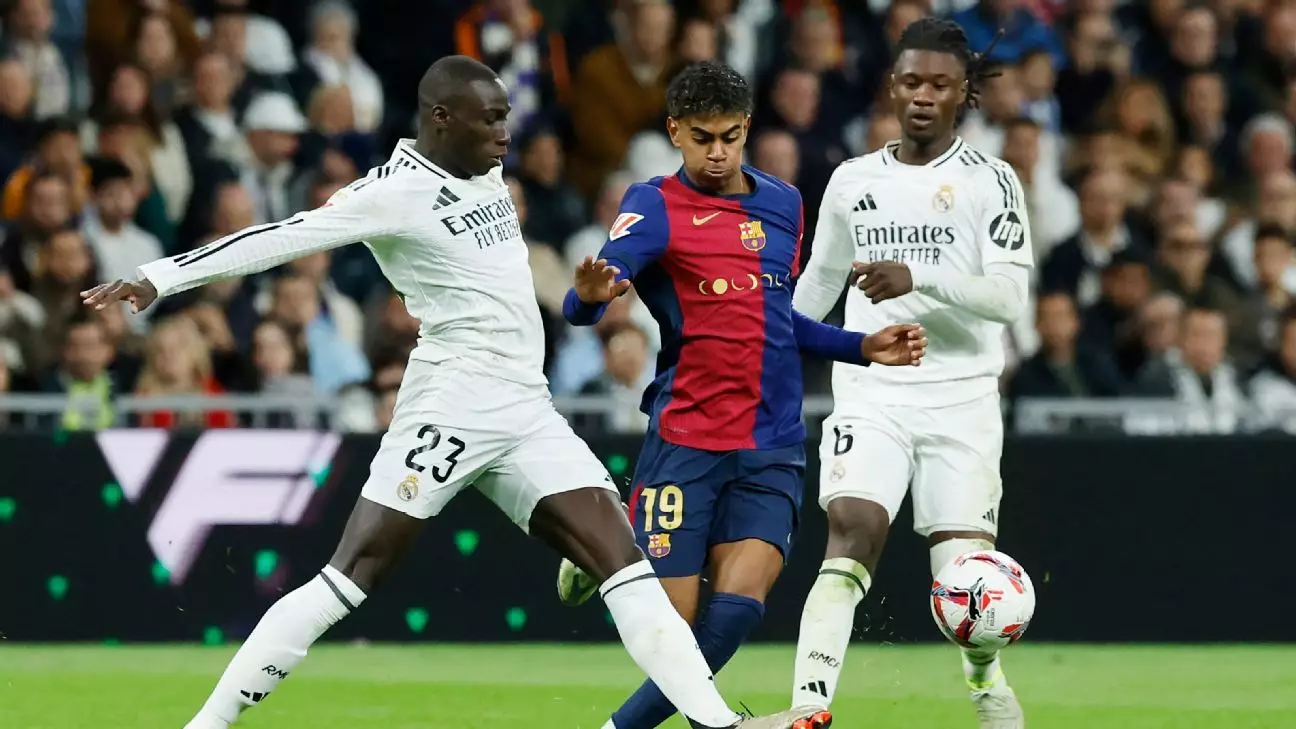
In a troubling episode that has brought the issue of racism in football back into sharp focus, Spanish authorities have detained three individuals linked to racist abuse directed at Barcelona players Lamine Yamal and Raphinha during last month’s Clásico at the famed Bernabéu Stadium. The match, which ended in a resounding 4-0 victory for Barcelona, was overshadowed by the appalling treatment of its own players by sections of the crowd. In a public announcement, the police reaffirmed their commitment to addressing such heinous acts of discrimination by stating, “Three arrests have been made for racist insults aimed at two footballers during October’s Clásico.”
This declaration exemplifies the growing acknowledgement of racial intolerance in sports, but it also raises pertinent questions about the effectiveness of existing measures and the pervasive nature of such behavior in football.
The investigation leading to these arrests was instigated by a formal complaint from LaLiga, which has taken the lead in addressing these persistent issues within the sport. The organization provided police with video evidence and a detailed report from a lip-reading expert documenting the hateful remarks made against Yamal and Raphinha. This proactive approach by LaLiga is a reflection of an evolving philosophy toward eradicating racism within the sport, yet it also highlights a significant ongoing societal problem.
Indeed, this incident is set against a backdrop of heightened scrutiny regarding racism’s presence in Spanish football. The disturbing experiences of other players, particularly Real Madrid’s Vinícius Júnior—who has openly shared his ordeal with racial abuse—underscore the need for robust action and persistent vigilance from all stakeholders in the sport.
This recent event is not an isolated occurrence but reflects a broader historical pattern in football, particularly in Spain, where racist remarks have spilled into regular match-day experiences. The criticism of Vinícius Júnior, who has become a focal point in the narrative surrounding racism in LaLiga, sheds light on a deeply ingrained culture that perpetuates such discriminatory attitudes among fans. The lengthy history of racism in football cannot be ignored; it is a pernicious issue that requires comprehensive strategies ranging from fan education to stricter legal repercussions for offenders.
In an encouraging sign, recent legal actions against those found guilty of racially motivated offenses have started to make headway, with several people already serving prison sentences for their actions. These instances serve as compelling illustrations that the authorities are actively addressing racism—yet the challenge lies in ensuring the enforcement of these penalties is consistent and serves as a deterrent to others.
As public figures with significant influence, players like Vinícius Júnior and Yamal are vital allies in the battle against racism. Their responses to incidents of discrimination can help shape the conversation and may galvanize supporters and fellow athletes to advocate for change. Post-match remarks from Vinícius, condemning the racist actions towards Yamal, resonate deeply, as he encompasses the broader sentiment that such behavior must not find sanctuary in today’s society. “What happened was terrible, and there’s no room for these criminals in our society,” he asserted, thereby directing a strong message of accountability.
However, more needs to be done beyond the rhetoric. The responsibility falls not only on individuals but collectively on football clubs, governing bodies, and fans. There needs to be a concerted effort to engage in positive dialogue, develop community outreach programs, and implement educational initiatives that target the younger generation and work toward eradicating the stigma surrounding race.
Looking ahead, the road to combatting racism in football will require unwavering commitment from all sectors of the sport, and it must begin with a unified front that emphasizes respect, inclusion, and equality. The recent arrests, though a notable step in the right direction, should be viewed as just one element of a continuous effort to change deeply held beliefs and behaviors that allow racism to persist.
It is incumbent upon organizations like LaLiga to maintain the momentum by not only holding abusers accountable but also fostering an environment where diversity is celebrated, and mutual respect is the norm. Only through collaborative endeavors can the cycle of racism in football be broken, ensuring a safer and more equitable space for all athletes, regardless of their backgrounds.