
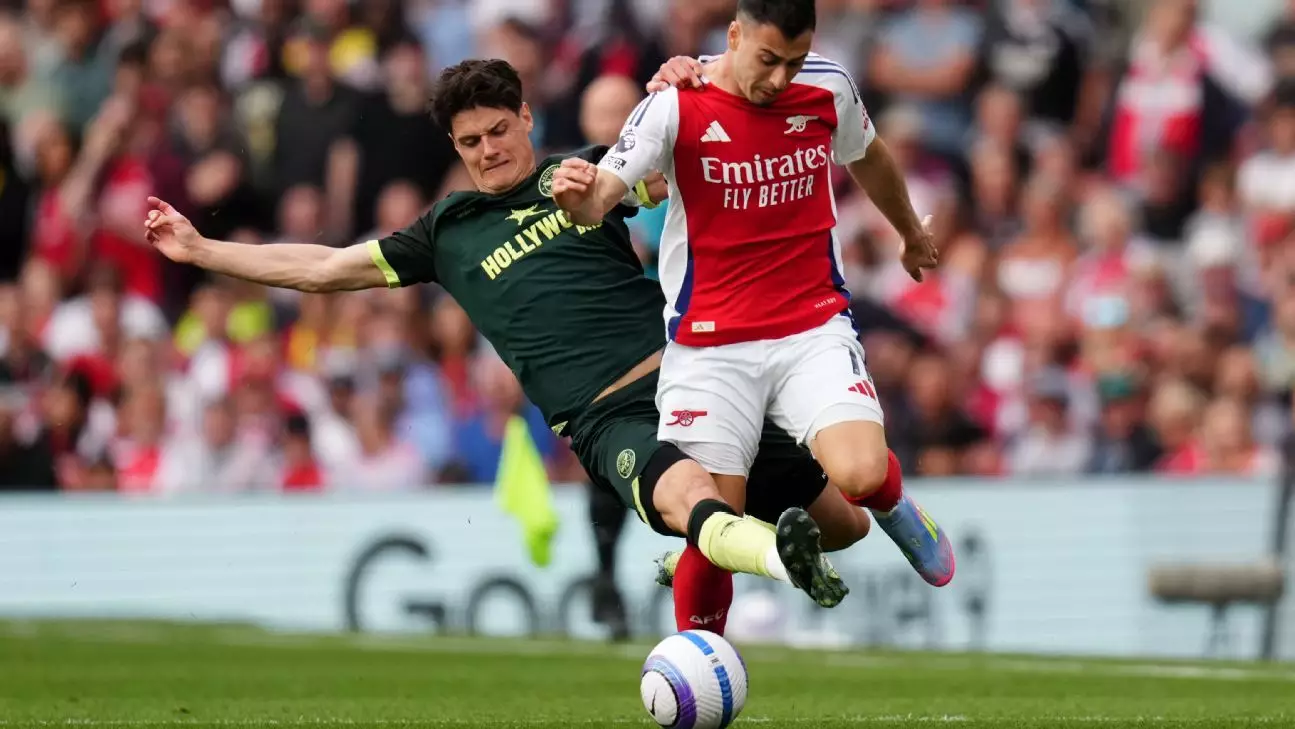
In a match where every moment counts, the terrifying late tackle by Christian Nørgaard on Arsenal’s Gabriel Martinelli during the recent clash against Brentford has sparked outrage and debate among fans and pundits alike. With Martinelli vocalizing that the tackle “could have broken my leg,” the implications of such dangerous play extend beyond mere sporting discipline. This incident, occurring in the dynamic atmosphere of the Emirates Stadium, raised crucial questions about player safety and officiating standards within football.
The Incident that Stole the Spotlight
What should have been a captivating sporting event turned into a focal point for controversy as the Nørgaard-Martinelli altercation overshadowed the intricacies of gameplay. At a fundamental level, the tackle was intended to disrupt Arsenal’s counterattack, a strategic maneuver that can often lead to heated confrontations on the field. However, when Nørgaard took down Martinelli in a manner that could easily lead to severe injury, he crossed a perilous line. Both players, as well as their respective coaches, are left to navigate the fallout, yet the ramifications extend much further than a single match.
Voices of Dissent: Managers and Players React
Reactions from both sides reveal a rift in interpretation of the incident. Arsenal’s Mikel Arteta’s fiery protests on the touchline indicate his alignment with Martinelli’s concerns, emphasizing that the tackle is symptomatic of a wider issue regarding player safety in the sport. In contrast, Brentford’s Thomas Frank dismissed the severity, believing it merited only a yellow card. This divergence in opinion not only highlights the subjective nature of officiating but also points towards an urgent need for more clarity in match regulations.
Martinelli’s remarks suggest he understands that accidents occur in high-stakes games; however, his acknowledgment of the potential danger signifies that athletes are not merely pawns in a game but rather individuals whose careers and well-being are jeopardized by reckless behavior. His refusal to acknowledge Nørgaard’s alleged apology illustrates profound discontent and distrust between players, emphasizing that the emotional aftermath can often linger longer than the physical injuries sustained.
The Broader Implications for Player Welfare
As discussions ensue regarding disciplinary actions and potential fines, one must consider the overarching theme: the necessity for stringent measures against dangerous tackles. Tackles that threaten a player’s career should not be tolerated; failing to impose strict penalties undermines the integrity of the sport and can lead to a culture where dangerous play is normalized. Stakeholders at all levels—including league officials, referees, and player unions—must take collective responsibility to advocate for a safer playing environment.
As Arsenal readies itself for a critical Champions League quarterfinal against Real Madrid, concerns about player fitness, particularly with key players like Ben White and Partey, add another layer of complexity. The emotional and physical toll from such a contentious match can affect team morale and effectiveness, making it crucial to reassess not just how players interact on the field, but also how intersections between competitiveness, safety, and sportsmanship shape the very foundation of football. As fans, we can only hope for a future where no athlete has to endure the dread of potentially life-altering injuries due to reckless play.