
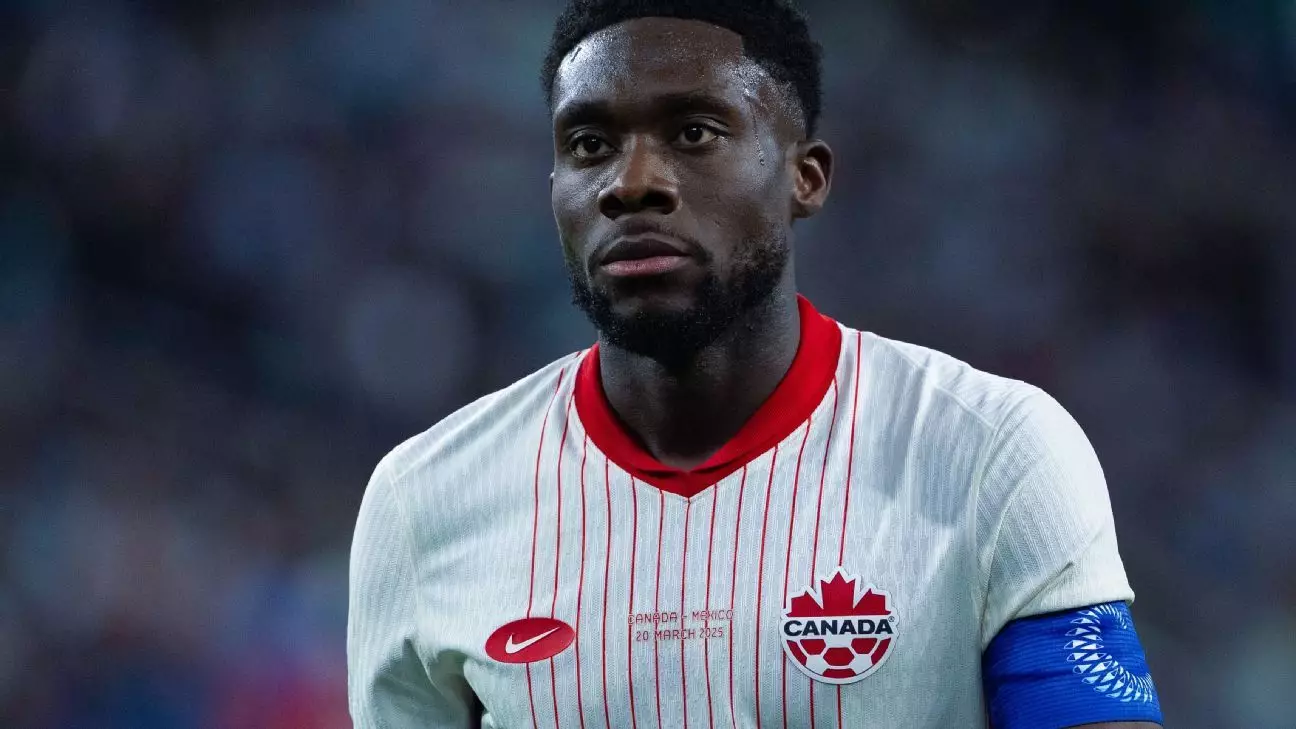
Alphonso Davies, the rising star of Canadian soccer and an integral player for Bayern Munich, recently became embroiled in controversy when he suffered a significant injury during the Concacaf Nations League finals. The young athlete tore his anterior cruciate ligament while helping his national team secure a victory against the United States. The gravity of the situation escalated when Bayern Munich expressed aggravation regarding the care Davies received following his injury. This incident underscores the vital importance of player health in high-stakes sporting events and raises questions about the responsibilities of both national federations and club teams in safeguarding their athletes.
Bayern Munich’s Concern: A Call for Accountability
Bayern Munich, a powerhouse in European soccer, did not mince words in its response to the injury incident. When the club hinted at potential legal action, it made a strong case regarding negligence, positing that the Canadian soccer federation may have failed to deliver appropriate medical assessments and care. This bold assertion was articulated by Jan-Christian Dreesen, the club’s chief executive, who pointed to the questionable decision to allow an injured player to embark on a long-haul flight with inadequate evaluation.
Bayern’s stance beckons attention, as elite clubs like Bayern Munich operate under immense pressure to protect their investments. A player’s ability to perform, especially in crucial matches leading up to major competitions, impacts both the team’s success and financial returns. Therefore, any misstep in player management can lead to significant repercussions, raising the stakes in questions of player welfare.
Canada Soccer’s Defense: A Response to Misunderstanding
In the face of criticism from Bayern Munich, Canada Soccer asserted that proper care protocols were indeed followed, and emphasized that they maintained communication with the club throughout the tournament. They stated that medical documentation affirmed their procedures, yet the juxtaposition between the two organizations raises concerns about transparency and shared responsibility.
The Canadian soccer federation’s response aims to quell misunderstandings but also highlights a critical gap in communication between national teams and club organizations. If discrepancies in medical assessments and treatment protocols exist, it compromises the safety of players who often feel squeezed between dual loyalties. For athletes like Davies, whose talent shines on international platforms, ensuring seamless cooperation between national and club medical staffs is paramount.
The Role of Player Agents: Bridging the Gap
Amidst the chaos, the role of player agents comes into significant focus. Nedal Huoseh, Davies’ agent, initially criticized Canada Soccer’s handling of the injury. However, after dialogue with Canada’s head coach, Jesse Marsch, Huoseh shifted to a more cooperative perspective. His adaptability emphasizes the importance of collaboration across entities to ensure player safety.
Agents are often seen as advocates for players, yet their role as facilitators of communication with federations and clubs is equally critical. By fostering constructive relationships among all parties responsible for a player’s welfare, agents can mitigate conflicts and enhance the support structure bounding these athletes. Davies’ situation exemplifies the potential for constructive discourse to produce beneficial outcomes, even amid tensions.
The Broader Implications for International Soccer
This incident transcends just one player or club; it raises significant issues spanning international soccer. As the sport continues its global expansion, with more athletes playing under different national federations, the necessity for standardized protocols around player welfare becomes even more critical. Injuries like Davies’ could be seen as a reflection of systemic shortcomings in how clubs and national teams coordinate on player health resources.
The financial implications for clubs who face losing star players due to mishandling cannot be ignored. Legal ramifications and compensation claims will inevitably create tension between national federations and elite clubs if matters are not addressed proactively. A more unified approach to player health, incorporating shared oversight and responsibility, is essential for safeguarding the future prospects of soccer on both national and international stages.
In the end, what happened to Alphonso Davies serves as a crucial lesson—not just about the need for adequate medical care—but about the interconnected nature of sports management that places the athlete at its core. Whether it’s on the pitch or during recovery, each decision must reflect an uncompromising commitment to player welfare.