
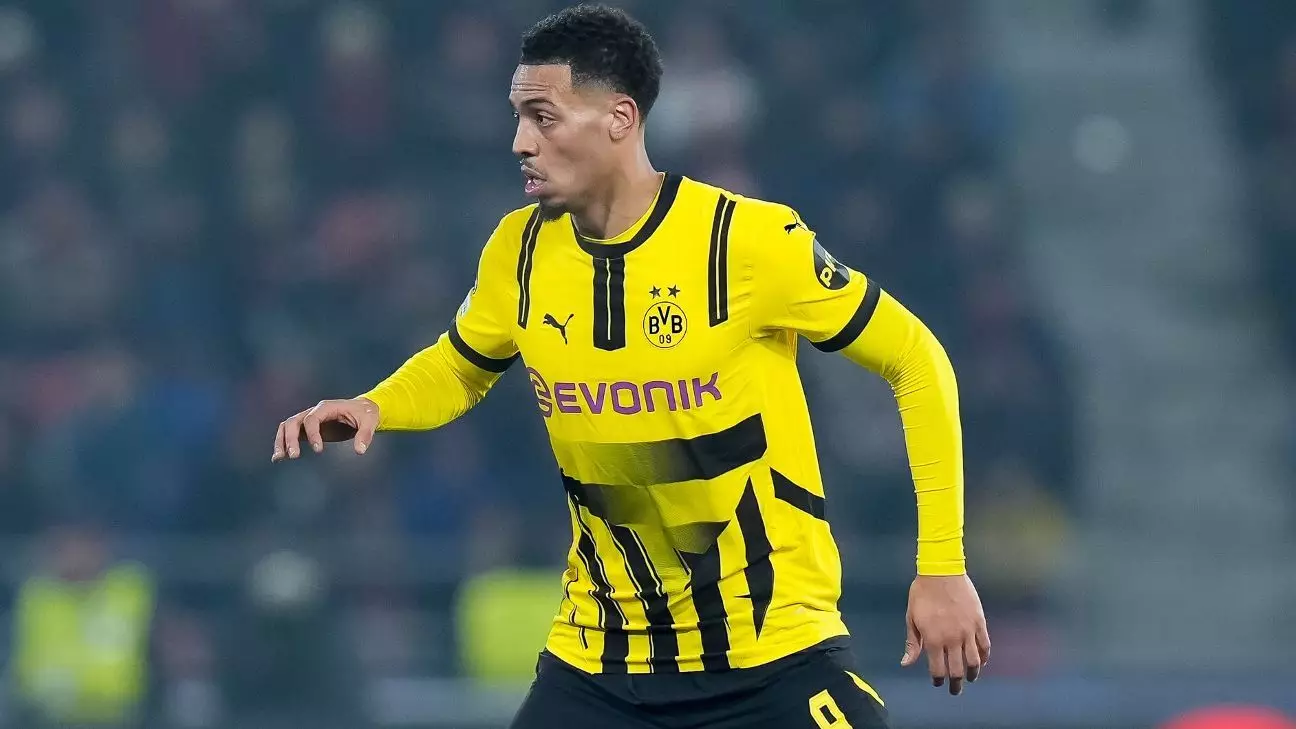
In the ever-fluctuating realm of European football, transfer rumors often move as quickly as the clock strikes match time. With Manchester United’s eye on Borussia Dortmund’s Felix Nmecha and Liverpool scouting Feyenoord’s Givairo Read for potential reinforcements, clubs have clearly identified young talents as ways to evolve their squads. The emphasis on youthful potential in these pursuits reflects a broader trend in football: the leagues’ top teams are increasingly prioritizing next-generation players over more experienced yet expensive alternatives.
Felix Nmecha epitomizes this forward-looking philosophy. Once a promising youth at Manchester City, where he struggled for opportunities, he has rejuvenated his career in the Bundesliga. At just 24, his move to Manchester United could revitalize not only his career but also the club’s midfield dynamics, especially if Dortmund, as reports suggest, must sell to alleviate financial pressures. This aligns with a common tendency seen with Bundesliga clubs facing the reality of financial sustainability in a rapidly changing market.
The Emerging Profiles of the Bordeaux Youth
Givairo Read, a mere 18 years old, has caught the attention of giants like Liverpool and Barcelona, not because of a singular extraordinary performance but rather due to consistent displays of skill that are attracting scouts across Europe. With six assists in just 17 league appearances, his young age paired with a burgeoning reputation presents a curious paradox to football purists, who often equate seasoned players with on-field wisdom. The prospect of replacing Trent Alexander-Arnold, arguably one of the world’s best right-backs, reflects Liverpool’s ambition in nurturing potential while planning for future strategies.
However, where Liverpool sees opportunity, Barcelona sees necessity. The Catalans have relied heavily on veterans like Jules Koundé, but there’s an understanding that the squad needs fresh talent to bolster competition. What’s compelling here is how both clubs are mapping out their futures—not just filling immediate needs but actively preparing for the inevitable transitions that age and contracts will impose.
The Transfer Standoff: Arsenal vs. Real Madrid
In another parallel narrative, Arsenal’s interest in Real Sociedad’s Martín Zubimendi is indicative of the larger battle for midfield dominance. Arsenal has reportedly put a significant sum of €60 million on the table despite enduring their own struggles to reclaim a firm grip on English football. However, this isn’t just a race about financial might; it’s a tactical consideration involving an assessment of other interests, such as Real Madrid wanting to increase the Spanish quota in their squad.
This adds a fascinating layer to transfer dealings: the involvement of national allegiance and club identity. Real Madrid’s ambitions to sign young Spanish talent demonstrate their own rebuilding strategy, focusing on youth and domestic players. Given the competitive nature of La Liga and the need for clubs to adapt, Madrid is walking a fine line between securing immediate talent and planning for a sustainable future.
PSG’s Revenge: Tapping Into Rival Talent**
Moreover, Paris Saint-Germain appears poised to give Real Madrid a taste of their own medicine by raiding the club’s academy. Showing a keen interest in Madrid’s promising youngsters echoes a broader strategy employed by top European teams: the significance of looting rival academies is heightened by the increasing professionalization of youth training programs across Europe. The development of these young players can indeed shift the balance of power within leagues, and PSG’s eye on Bryan Bugarin could be the start of a mouse-trap-like dynamic in European football—a tug-of-war for the next big thing.
As rivalries intensify and the undercurrents of player acquisitions shift from established stars to emerging players, traditional constructs of player value, contract positions, and team loyalty are being redefined. Football is undergoing a powerful metamorphosis where strategy, timelines, and forecasted growth have never been more critical.
The Global Exchanges: International Market Dynamics
Meanwhile, clubs like Newcastle United and Arsenal are under pressure to ensure elite talents such as Bruno Guimarães and Luis Díaz stay put amidst the swirling currents of transfer rumors, especially within a market where Saudi Arabia’s league is making waves by attracting high-caliber stars. This reflects not just on the clubs involved but creates a ripple effect across leagues—competitors must not only be reactive in acknowledging the underlying valuations brought about by financial investment but also in defending their core assets against the evolving backdrop of international acquisitions.
As clubs assess their futures this transfer window, one thing is clear: the football landscape is shifting dramatically—teaming up aspirations with strategic foresight can yield promising competitive advantages. Every rumor, every bid, and every signed contract is a stepping stone toward building club legacies that define future successes on domestic and international stages. As this market continues to evolve, the importance of both seasoned strategy and vibrant youth talent has never been more crucial.