
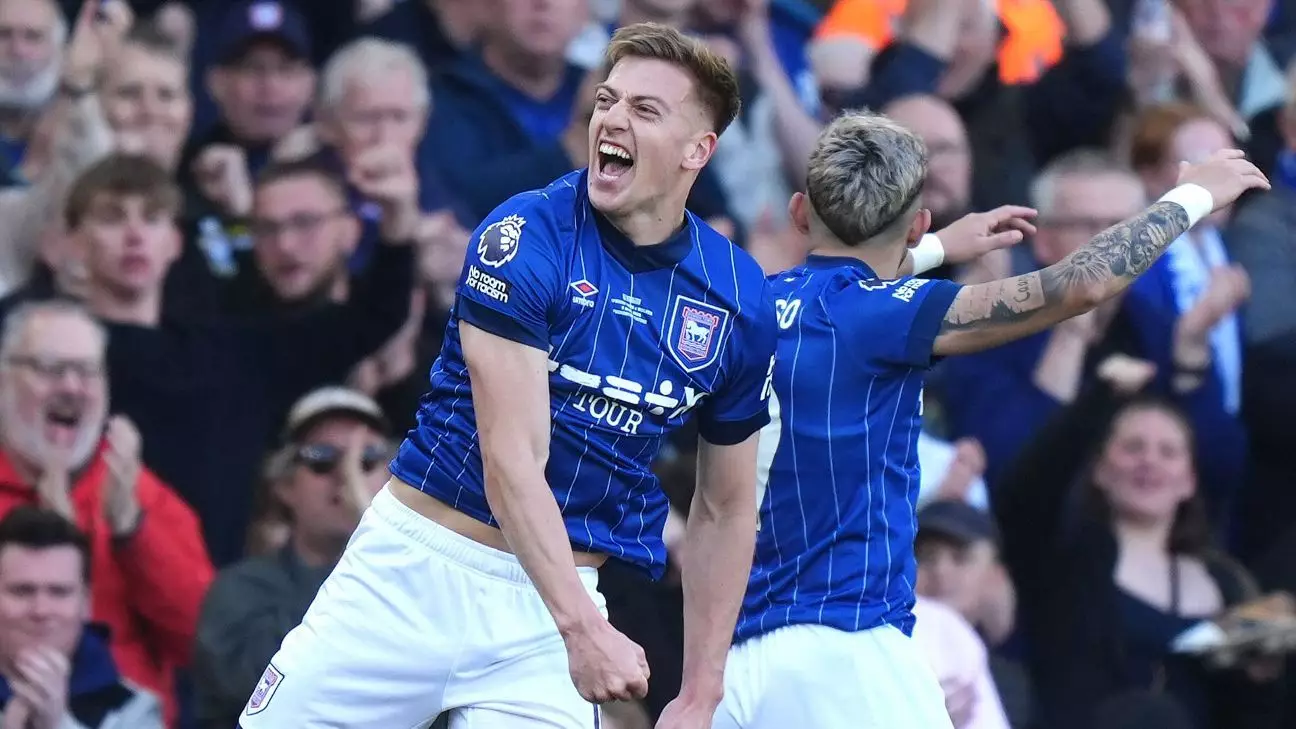
In the whirlwind of transfer season, Ipswich Town’s striker, Liam Delap, finds himself at a significant crossroads, contemplating offers from four heavyweight Premier League clubs, including Chelsea, Newcastle United, and Everton, alongside his former club, Manchester United. The 22-year-old is under the spotlight due to a £30 million release clause that adds a tantalizing element to his potential move. This situation offers a unique case study in how young talents navigate their career paths amidst a backdrop of established clubs vying for their signature.
The media buzz surrounding Delap’s decision not only reflects his value as a player but also exemplifies the broader dynamics at play in the Premier League, where clubs must continually reassess their strategic priorities. For Manchester United, who appear to be leading the race, the urgency lies in reassembling a squad that has been less than formidable in recent campaigns. Meanwhile, Chelsea and their intense interest in multiple forward options Signal a desperate push for resurgence following their recent underperformance.
Seeing Beyond Signing: Chelsea’s Forward Strategies
Chelsea’s apparent interest in Delap is complemented by their foray into acquiring Hugo Ekitike from Eintracht Frankfurt, adding layers to their striker strategy. Ekitike’s impressive stats—22 goals and 11 assists across competitions—underscore his potential as a transformative figure in their attack. However, the reported €100 million asking price reveals a significant financial obstacle. Chelsea will need to be acutely analytical in their negotiations, weighing the long-term benefits of a high-value acquisition against their current squad’s more pressing needs.
This situation raises crucial questions about Chelsea’s fiscal responsibility and tactical foresight. They are not merely seeking to fill positions but aiming to build a robust squad capable of challenging for honors again. The pressure mounting from fans and stakeholders for impactful signings means that every decision within Stamford Bridge will be scrutinized, necessitating a balance between expenditure and tactical coherence.
Manchester United’s Overhaul and Player Exodus
Across Manchester, United’s strategy indicates a potential overhaul as they look to reduce squad size. Reports suggest that they are ready to part ways with key figures like Casemiro, along with up-and-coming star Alejandro Garnacho. This pivot is reflective of a club undergoing an identity crisis, transitioning away from an era of managers and philosophies that no longer align with their vision. The challenge lies in retaining young talents while simultaneously re-establishing a competitive core.
Garnacho, who has had limited playtime recently, illustrates the delicate nature of player retention amidst such a shakeup. Should he choose to leave for a club offering more assurance of first-team action, United will need to bolster their scouting networks and perhaps be more inventive in their approach to developing home-grown talent that can take the limelight when others falter.
International Considerations: The Gakpo Moves and European Aspirations
Bayern Munich’s interest in Liverpool’s Cody Gakpo offers further evidence of the interconnected nature of global football transfers. As clubs like Bayern target players already thriving in competitive environments, the implications ripple through the European landscape. Liverpool’s willingness to entertain offers suggests they are open to redefining their squad based on their own ambitions for a rejuvenated attacking line-up. Yet, the complexities of the transfer market mean that factors such as player preferences and timing can derail even the most meticulously planned strategies.
The rumored pursuits of players like Kaoru Mitoma and Rafael Leão indicate a preference for versatile, dynamic forwards capable of adapting to different tactical setups. This pursuit reflects a growing trend among European giants to source talents that not only fit current needs but can also evolve into cornerstones of their respective teams in the long run.
Emerging Talent Shuffling: The Case of Gabri Veiga
Recent developments regarding Gabri Veiga’s imminent move to FC Porto from Al Ahli spotlight how rapidly player trajectories can shift. Coming in at €15 million, Veiga’s anticipated arrival is particularly notable as Porto looks to solidify their squad ahead of significant international competitions. The fact that Veiga was previously courted by larger clubs like Manchester City and Liverpool underscores the importance of player visibility—how emerging talents can quickly become sought-after entities, highlighting the unpredictable nature of football transfers.
As clubs prioritize long-term sustainability, these decisions shape not only immediate team success but also the narratives of player careers. For Veiga and countless others, each transfer encapsulates hope, risk, and the aspiration of fulfillment in a world where opportunity knocks sporadically and demands precision in response.
In sum, this transfer window is a vivid reflection of the evolving strategies within football, where financial implications and player potential dance together, setting the stage for both immediate action and long-term consequences.