
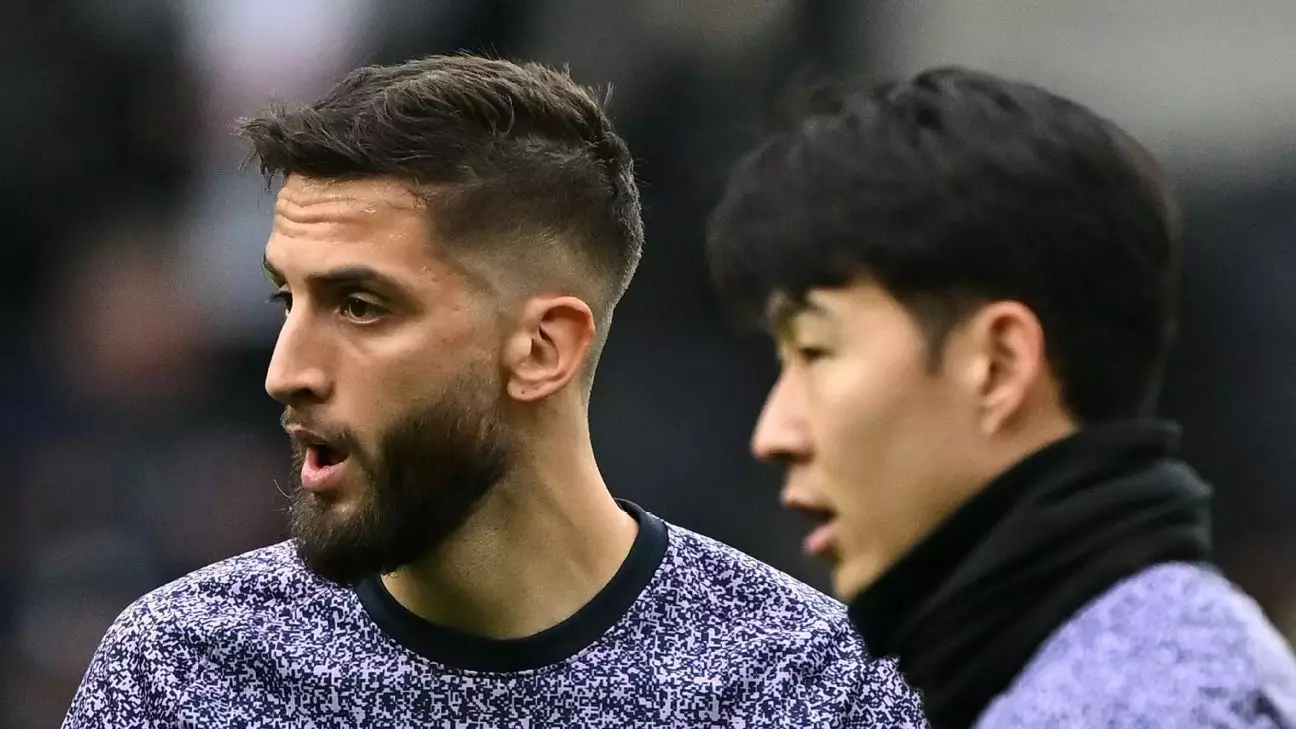
In the high-pressure world of professional sports, the spotlight often shines brightly on athletes, scrutinizing their every move both on and off the field. Recently, Tottenham Hotspur’s midfielder Rodrigo Bentancur found himself at the center of controversy following racially insensitive remarks made during an interview. The incident, which took place on the Uruguayan television program “Por La Camiseta,” has led to significant repercussions for the player, including a seven-game suspension and a hefty fine of £100,000 imposed by the Football Association (FA). This situation provides a critical lens through which we can examine issues of accountability, punishment, and the potential for personal growth within professional sports.
During the interview, Bentancur joked about the physical resemblance between Son Heung-Min and other individuals, which was perceived as a racially charged comment. While his intentions may not have been malicious, the impact of such words can be profound, sparking outrage and hurt within the community. Bentancur quickly issued an apology, stating that there had been no change in his relationship with Son, whom he referred to as a “brother.” Yet, despite these efforts, an independent regulatory commission upheld the FA’s charge, underscoring the seriousness of the offense.
Ange Postecoglou, Tottenham’s head coach, has been vocal about the need for compassion and education in such cases. His perspective emphasizes a crucial aspect of human experience: mistakes can serve as powerful learning opportunities. Postecoglou stressed that Bentancur deserves a chance to learn from this incident, advocating for a justice model that promotes understanding and growth rather than punitive measures devoid of context.
The FA’s minimum six-game ban for Bentancur’s offense has stirred debate over the appropriateness of the punishment. Postecoglou argued that Spurs’ appeal for a reduction of the one-game extension to the minimum reflects their belief that the penalty is excessive. He pointed out that the judicial process is essential for fairness, establishing that it’s not just about how the punishment looks but about ensuring that the right precedent is established. This situation raises an important question: What is the role of punishment in promoting genuine learning and reform among athletes?
While it is imperative to address instances of racism and insensitivity with resoluteness, striking the right balance between punitive action and educational opportunities is critical. Close scrutiny of Bentancur’s actions should not overshadow his potential for growth; rather, it should become part of a larger learning narrative that includes both consequences and understanding.
Postecoglou reflected on his own experiences, acknowledging that he has made significant mistakes in his life. This notion resonates with many—everyone makes errors, and the goal should not just be about facing the music but is also about evolving as individuals. The ability to acknowledge one’s faults and learn from them is a cornerstone of maturity and progress.
In the realm of professional sports, where athletes are often idolized, the importance of education around issues of discrimination and prejudice cannot be overstated. Institutions must create environments conducive to learning, where players can grow from their indiscretions while still being held accountable. This could involve workshops, mentorship programs, or open dialogues about race and discrimination within the team and broader community.
Rodrigo Bentancur’s suspension will keep him out of the game until the Christmas period unless Tottenham’s appeal succeeds. Regardless of the outcome, this situation sheds light on the need for a holistic approach to dealing with mistakes in sports. Holding athletes accountable while enabling them to learn and grow from their errors serves a dual purpose: it promotes a more inclusive and understanding culture within sports and fosters personal development.
As the sports world stands vigilant against racial insensitivity, the emphasis on education and the chance for redemption becomes fundamental. Only through this balanced approach can we hope to cultivate a more respectful and empathetic future within the realm of athletic competition.