
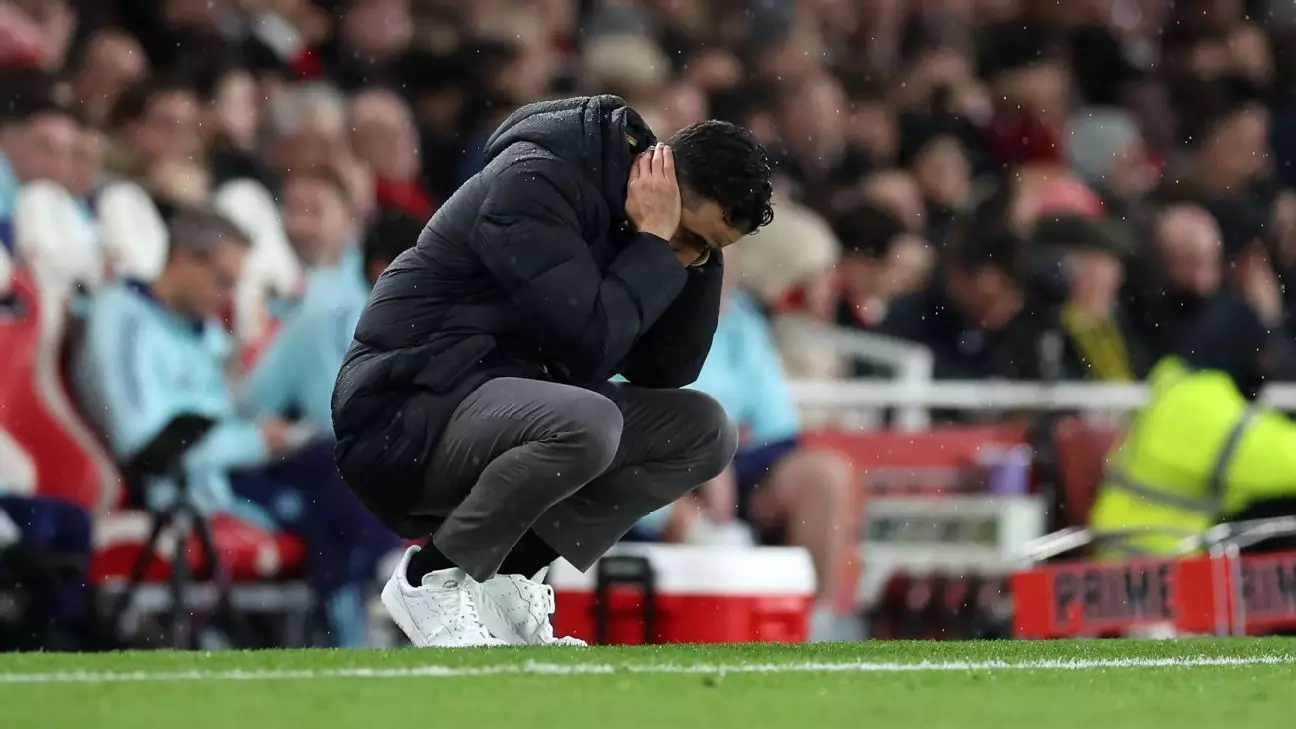
In a stark moment of realization, Ruben Amorim, the newly appointed head coach of Manchester United, faced the daunting aftermath of his first defeat since taking the helm. A 2-0 loss against a competitive Arsenal side has prompted him to grapple with the reality of managing expectations. This setback, occurring just four matches into his tenure, serves as a harsh reminder of the unpredictability within the Premier League—a league known for its fierce competitiveness and fluctuating fortunes.
Amorim’s perspective on the loss underscores an acceptance of the club’s current position and performance. He rightly notes that while the scoreline is disappointing, it is not entirely unexpected given Arsenal’s recent history of challenging for the league title. For a manager stepping into the pressure-cooker environment of Manchester United, understanding these nuances is crucial to navigating not just the demands of performance, but also the emotional landscape surrounding such a storied club.
Expectation management is a delicate balancing act for any new coach, particularly at a club with the illustrious legacy of Manchester United. Amorim emphasized the need for calm amid the swirling emotions that follow a defeat, advising that the focus should remain on constructing a sustainable approach to team development rather than getting lost in transient results. His observations reflect a broader understanding of football, where the outcome of one match can drastically shift perceptions regarding a manager’s capabilities and a team’s potential.
Moreover, as Amorim prepares for a busy schedule that includes matches against Nottingham Forest and a Europa League clash with Viktoria Plzen, he recognizes the critical role consistency will play in shaping the team’s trajectory. A successful week could redefine narratives; a couple of wins might not only alleviate pressure but also foster belief among players and fans alike.
A Closer Look at Team Structure
One noteworthy aspect of Amorim’s early management strategy is his willingness to experiment with squad selection. His decision to bench influential players like Marcus Rashford and Amad Diallo, despite their recent strong performances, raises questions about his tactical philosophy and long-term vision. This willingness to switch up the lineup might indicate a quest for stability and a clearer understanding of his optimal team configuration, something he admits is still taking shape.
His remarks about player readiness, particularly concerning Bruno Fernandes and Manuel Ugarte, suggest that he is carefully considering the physical demands placed on his squad. This is particularly pertinent in a league where fatigue can severely affect performance. Amorim’s awareness of player load management reflects a broader trend in modern football, where data and physical readiness increasingly dictate tactical decisions.
As Amorim charts his course through the upcoming fixtures, the pressure intensifies, especially with a looming Manchester derby against Pep Guardiola’s City. How he navigates these critical games will likely determine not just his immediate future at the club but also the overall direction for the team.
The early days of any coaching regime are marked by uncertainty and adjustment, but for Amorim, a mixture of patience, strategy, and an understanding of the fluctuating dynamics of football could offer the pathway to success. Whether he can translate these early insights into consistent performances remains to be seen, but his reflective approach sets a promising tone for the challenges that lie ahead.