
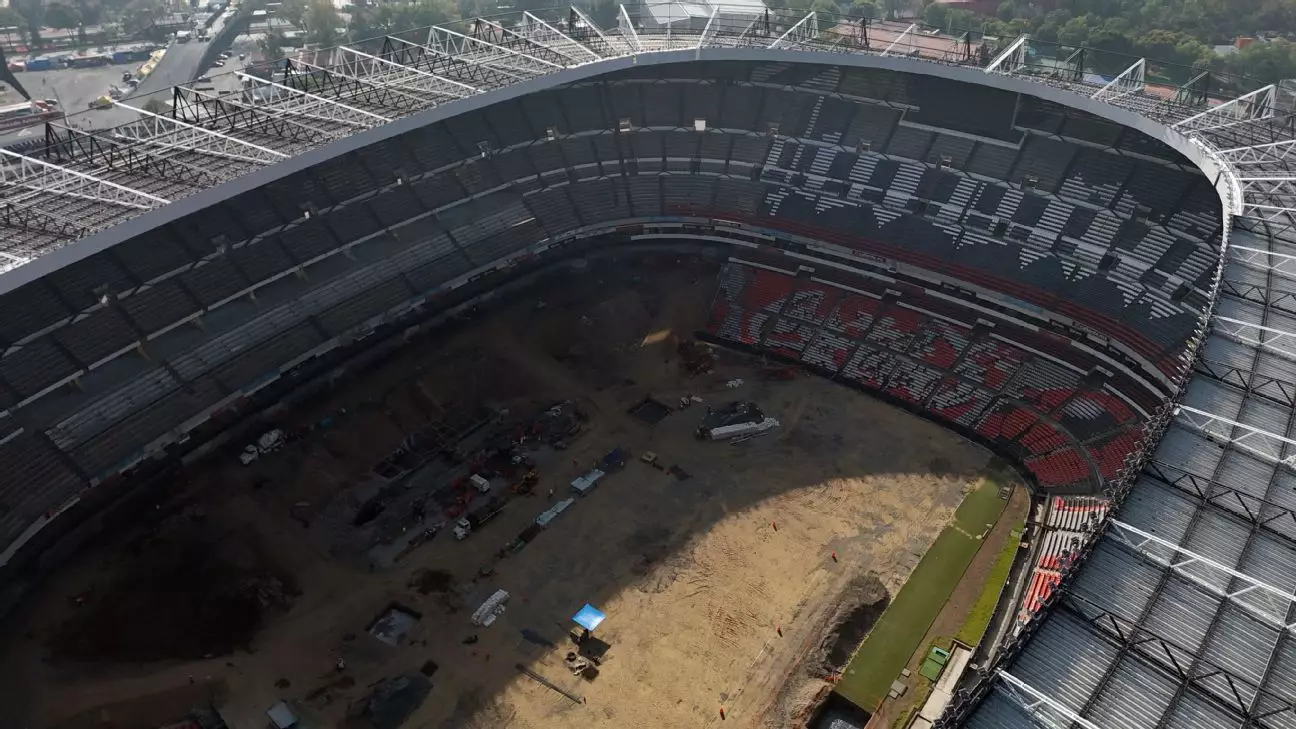
As the world eagerly anticipates the 2026 World Cup, which will be co-hosted by Mexico, Canada, and the United States, the spotlight is shining not just on the players and teams, but also on the workers who make these grand events possible. Specifically, the conditions under which construction workers labor in the Azteca Stadium—a historic venue that has hosted the World Cup multiple times—are raising critical concerns about safety, oversight, and the rights of workers. The recent denial of access to the Azteca Stadium for an inspection by the Building and Wood Workers’ International (BWI) ignites an unsettling narrative about the lack of transparency in the ever-expanding construction industry.
The Disconnect: FIFA and Worker Rights
The Fédération Internationale de Football Association (FIFA), the governing body of world soccer, has communicated to the BWI that local unions are sufficient to oversee the workers’ conditions, asserting that no accidents have occurred thus far. However, this stance, which may seem satisfactory on the surface, belies deeper systemic issues. Ambet Yuson, the general secretary of the BWI, argues that merely having a union does not guarantee that the rights and welfare of laborers are protected. He emphasizes that international norms must prevail: “The World Cup is global, and we must play by global rules and the global labor standards.” This assertion underscores a growing discontent regarding FIFA’s apparent indifference to the health and welfare of the labor force that underpins these monumental sporting events.
The Reality of Labor Dynamics in Mexico
In Mexico, where approximately 93% of construction workers are not unionized, the specter of poor working conditions looms large. This staggering statistic calls into question the effectiveness of the current labor frameworks purported to protect these workers. With the pressure to complete renovations for a world-class event, conditions can become hazardous, compromising worker safety for expedited deadlines. Moreover, the prevailing economic landscape in Mexico often places workers at the mercy of corporate decisions, leading to scenarios where profit supersedes human lives. The BWI’s claim that they have historically conducted inspections throughout various international tournaments only reveals how critical independent oversight is, especially in an era where human lives should never be collateral damage in the race for progress.
The Need for Independent Oversight
The recent news that FIFA reneged on a previously negotiated agreement for independent oversight raises important questions about accountability. Critics argue that by bypassing independent inspections, FIFA not only jeopardizes the safety of workers but also undermines its own stated commitment to uphold international labor standards. Yuson’s poignant question—“Should we wait for someone to die?”—highlights a terrifying potential: that negligence could lead to tragic outcomes, echoing past incidents from previous World Cups. Failure to address these concerns could escalate public outcry and tarnish what is supposed to be a celebration of unity and sporting excellence.
The Future of Labor Rights in Global Events
As discussions around labor rights proliferate worldwide, the conversation must not be limited to governmental policies or union negotiations. Commitments to ethical labor practices in international sporting events must be embedded into the core operations of organizations like FIFA. There is substantial reputational risk involved—failing to uphold labor rights could not only lead to tragic circumstances but also significant backlash from consumers and advocacy groups alike. Countries must embrace transparency, and FIFA must be held accountable for the narratives surrounding labor rights amid its commercial successes.
In an era where ethical considerations are becoming increasingly essential, it is crucial to address these pressing issues before they escalate into crises. The onus lies not only on FIFA but also on fans and advocates worldwide to demand greater accountability, transparency, and respect for the labor force that builds the grand stages on which athletes compete. It’s not just about the game; it’s about the human beings tirelessly working behind the scenes, and they deserve to be heard.