
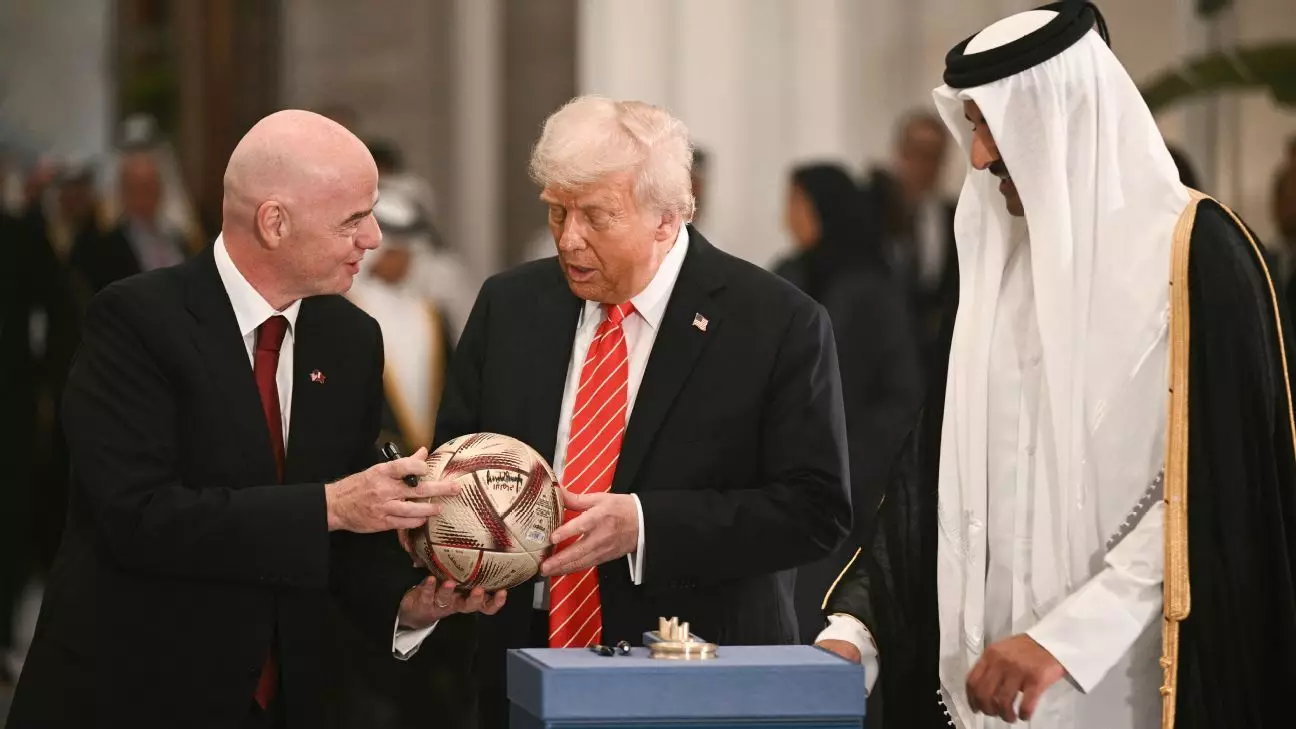
FIFA President Gianni Infantino’s recent tardiness at a crucial meeting in Asuncion, Paraguay, is a clear manifestation of the complex relationship between global football governance and international diplomacy. His delayed arrival, coming hot on the heels of political engagements in the Middle East, raises questions not just about his commitment to the organization he leads, but also about how political allegiances and time management affect soccer’s global landscape. While Infantino served as a representative of football interests in meetings with influential heads of state, his absence—and the subsequent three-hour delay of the meeting—unsettled many within the soccer federation’s ranks.
The logistical issues surrounding Infantino’s travel, including a private jet journey that involved an unplanned stop in Nigeria, underscore a troubling trend where crucial meetings are overshadowed by personal engagements. It can’t be ignored that this delay also caused significant disruptions within the meeting dynamics, leading to early exits from senior officials, such as UEFA President Aleksander Ceferin. Whether these departures were merely coincidental or a silent reprimand to Infantino’s lack of punctuality remains ambiguous but casts a long shadow over the leadership’s effectiveness.
Infantino’s Justification: Leadership with a Political Edge
In his multiple apologies to delegates, Infantino attempted to rationalize his late arrival by articulating the importance of his political meetings. He claimed that representing soccer at high-stakes discussions warranted his absence. This raises a crucial point about the responsibilities and priorities of FIFA leadership. Is it justifiable for a president to prioritize political connections over the immediate interests of 211 member federations?
One could argue that while forging relationships with political powers is essential for FIFA, especially considering the complexities surrounding the World Cup hosts and potential new partnerships, the primary role of FIFA’s head should focus on football—not political chemistry. The meeting of global soccer officials would benefit from a president who is as committed to the governance of the sport as he is to negotiating political favors. A balance must be struck between engaging in global diplomacy and upholding the day-to-day responsibilities of managing the sport.
Local Reactions and Global Implications
The local reaction to Infantino’s delay was a mix of admiration for his network and frustration over disrupted schedules. Paraguayan President Santiago Peña praised Infantino as a personal friend and a supporter of Paraguayan soccer aspirations. However, this relationship raises larger questions about how environments like FIFA may inadvertently prioritize bilateral friendships over the overarching need for equitable representation across diverse soccer cultures.
The implications of such favoritism are nothing short of significant. As soccer grapples with identity politics and the complexities of co-hosting major tournaments, there exists a layer of expectation for the FIFA leadership to be more attuned to the operational needs of member countries. Paraguay is set to host one of the additional games in the upcoming 2030 World Cup, yet the focus on political alliances could overshadow the operational realities and governance obligations that FIFA holds globally.
The juxtaposition of Infantino’s engagement with political elites versus his obligations to FIFA draws attention to the broader nexus of sports, politics, and diplomacy. In a global arena increasingly fraught with geopolitical tensions, the challenges for leaders like Infantino will likely intensify. The relationship crafted with political figures such as former U.S. President Donald Trump reflects an ambitious strategy but raises concerns about long-term ramifications for the sport.
As FIFA approaches critical decisions in anticipation of large global events like the World Cup, members and fans alike must advocate for a leadership that prioritizes transparency and operational focus while maintaining necessary political relationships. Ultimately, the soul of soccer relies on its ability to connect with grassroots movements and local communities, making the dynamic interplay of politics and sport that much more crucial for future developments.
In this evolving landscape of international soccer, officials must remember that the heart of football lies not just in boardrooms or political photops but in the passion and dedication of players and fans across the globe.