
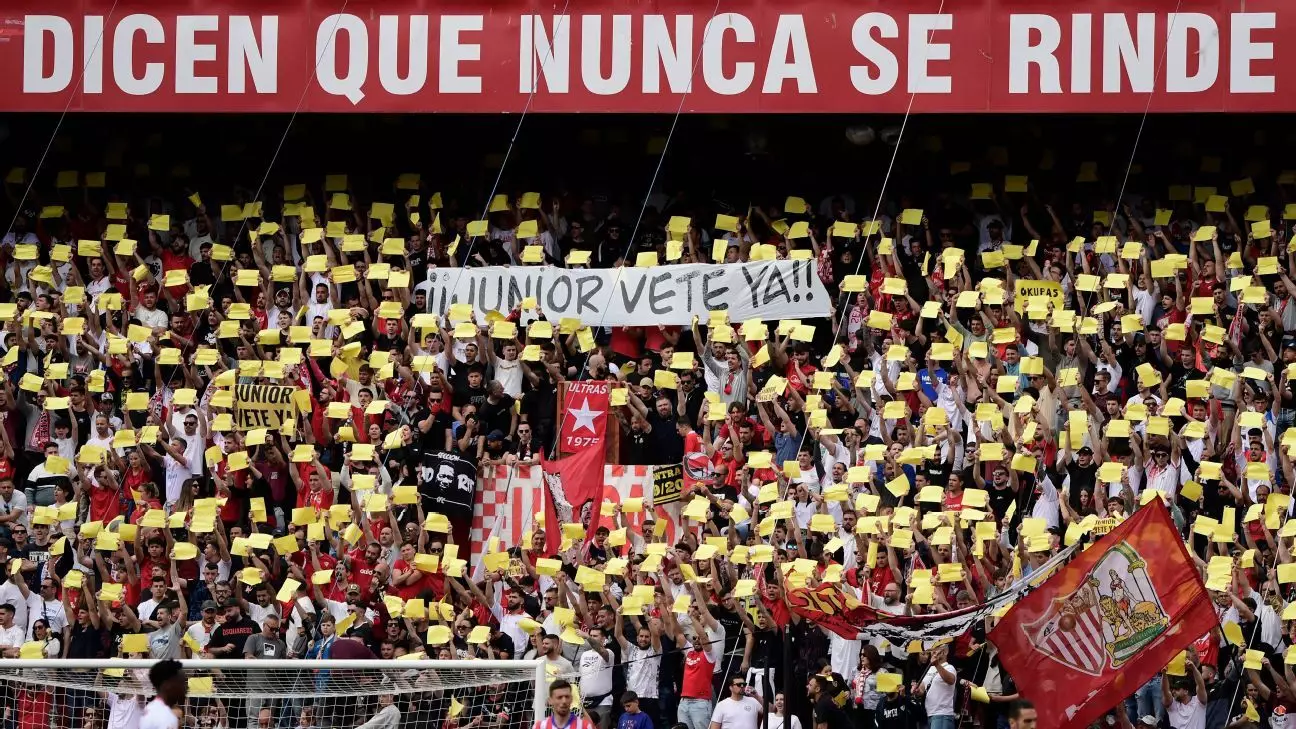
In a dramatic turn of events during a LaLiga match, Sevilla FC found itself in the eye of a storm caused by its devoted yet disillusioned fan base. The clash against Atlético Madrid was marred—not just by the game on the pitch—but by a powerful display of fan dissatisfaction aimed directly at the club’s leadership. This incident at the Ramón Sánchez-Pizjuán Stadium was not just a momentary disruption; it highlighted a growing rift between the supporters and the management, manifesting itself in a fervent call for accountability and change.
Management Under Fire
At the center of this upheaval is club president José María del Nido Carrasco, whose tenure is characterized by increasing friction, challenged not only by poor results on the field but also by internal disputes that threaten to destabilize the club. Fans, feeling unheard and disenfranchised, resorted to a visible and theatrical protest, wielding yellow cards emblazoned with demands for Del Nido Carrasco’s resignation. The collective action of supporters, holding up banners and scattering cards across the pitch, underscored their urgency and frustration—a powerful reminder of the emotional investment that football evokes.
The Echo of Historical Rivalries
The timing of such protests is particularly poignant, coming on the heels of a bitter defeat to arch-rivals Real Betis, a loss that has left a bitter taste among the fan base. This historical rivalry is more than just about points; it embodies pride and identity for the supporters of Sevilla. The erosion of that identity, coupled with back-to-back losses, fosters an environment ripe for discontent. This current state of affairs prompts one to question whether the tradition of excellence that once marked Sevilla’s identity is under threat due to mismanagement at the top.
Intra-Club Conflicts and Future Implications
Adding fuel to the fire is the rift between Del Nido Carrasco and his father, the club’s former president, who is also a major shareholder. This familial conflict poses a dilemma for Sevilla, casting shadows over the club’s stability and leading to a possible power struggle that could further alienate fans. The lingering tensions not only reflect the personal dynamics at play but also raise questions regarding leadership effectiveness in terms of strategic direction during a period where the club needs stability and unity.
The Path Ahead
As Sevilla currently sits mid-table in LaLiga, the urgency for change grows more apparent. With the specter of their glorious past—seven Europa League titles haunting their current struggles—the fans are left grappling with disillusionment. It’s time for Del Nido Carrasco and his board to recognize that the pulse of Sevilla Football Club lies in its supporters. They deserve more than just surface-level fixes or vague reassurances; they demand a club that is as passionate about its management and future prospects as it is about its past glories. Taking decisive actions is imperative not just for the team’s performance, but to reassure a fan base that feels betrayed and angered by a perceived lack of direction.