
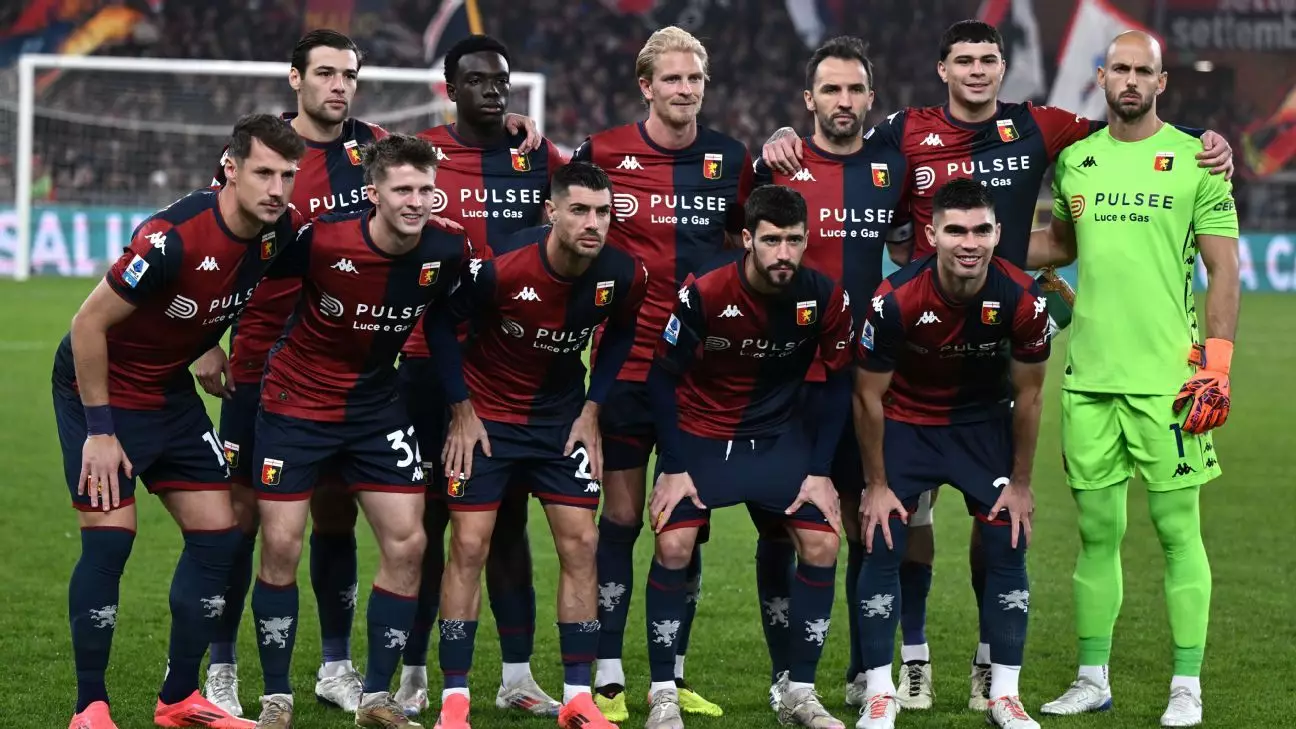
A notable wave of interest has emerged from several U.S. investors aiming to acquire Genoa FC, a historic club in Italy’s Serie A. Reports indicate that the current ownership is seeking between €150 million and €170 million ($180 million) for the sale. The pressure to divest has intensified following the loss of management control by 777 Partners over their extensive multi-club portfolio, which they relinquished to their primary creditor, U.S.-based A-CAP Insurance. This shift in ownership dynamics highlights the financial fragility that often lingers behind the glamorous facade of professional football ownership.
Interestingly, unlike some clubs under the 777 Partners umbrella — such as Belgian club Standard Liege and Brazilian side Vasco da Gama — Genoa does not currently stand as a distressed asset. Rather, it seems poised for a promising future, as projections for the 2023-24 season suggest that the club will report profits before interest, taxes, depreciation, and amortization (EBITDA). This is significant, especially given the club’s past struggles where they reported losses of €42.3 million in 2021 and €61.7 million in 2022.
The pivotal transformation within Genoa has been overseen by CEO Andres Blazquez, who has implemented rigorous cost-cutting measures and improved revenue streams, hinting at a growing financial vigor. The club recently made lucrative player sales totaling approximately €68 million, including notable transfers of Mateo Retegui and Radu Dragusin to Atalanta and Tottenham, respectively. These strategic moves have not only bolstered the club’s finances but have also reinforced its competitive position in the Serie A landscape.
Genoa’s management decisions reflect a concerted effort toward stability and performance. The recent dismissal of coach Alberto Gilardino, replaced by Patrick Vieira, underscores a commitment to realigning the team’s strategies and achieving better results on the field. Such changes are crucial, especially considering that the club concluded the last season in 11th place—an impressive feat for a newly promoted team in one of Europe’s most competitive leagues.
This emphasis on both on-field success and off-field management indicates a comprehensive approach to revamping the club’s identity, an aspect that potential investors may find attractive.
As the sale process develops, the U.S. investors, who currently remain unnamed, could significantly influence Genoa’s future direction. The global interest in the club showcases its potential as a viable investment, especially for those looking to capitalize on the opportunities within one of Italy’s oldest sporting institutions. Given the current trajectory of Genoa’s finances and performance, securing a sale by the end of the season could mark a pivotal chapter for both the club and its future overseers.
In a world where football clubs are often viewed through the lens of financial instability, Genoa stands as a beacon of hope. With the right investment and strategies in place, the club could very well navigate its way back to the upper echelons of Italian football.