
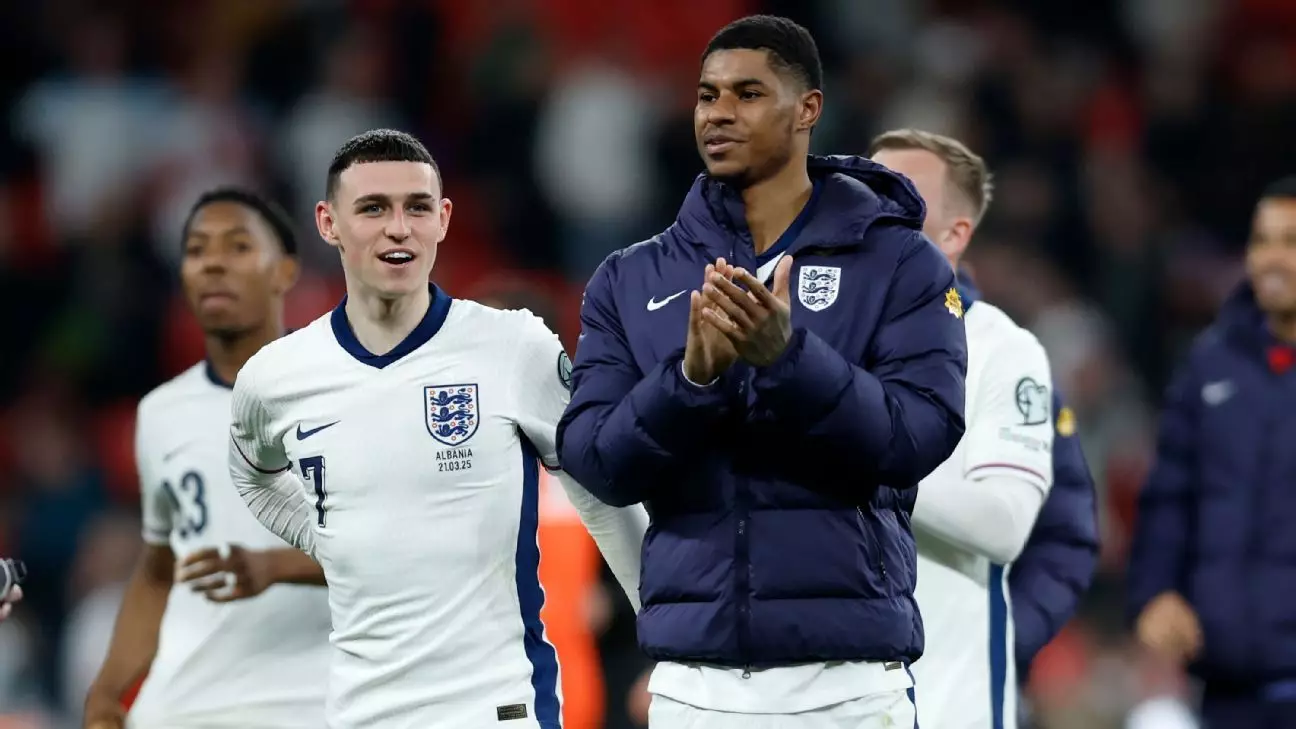
In the world of elite football, criticism and guidance often go hand in hand, especially when a team is not performing at its peak. Thomas Tuchel, England’s head coach, has emerged as a leader determined to steer his squad toward success. Following a less-than-stellar performance against Albania, Tuchel has taken a proactive approach in engaging with pivotal players such as Marcus Rashford and Phil Foden. Instead of dwelling only on their subpar contributions—both being substituted during the 2-0 victory—he has sought constructive discussions that are essential for growth and improvement.
Rashford, a player known for his explosive speed and creativity, and Foden, with his impressive technical skills, are crucial assets for the national team. Despite their pedigree, they have been observed to dissipate their impact on the game. Tuchel’s conversations with them highlight a commitment to holding his players accountable while also cultivating their potential through positivity. This balance of scrutiny and encouragement is essential for nurturing young talent, particularly in high-pressure environments.
Demand for Aggressiveness
Tuchel’s emphasis on requiring “more aggressive runs towards the box” is not just a tactical adjustment; it is a fundamental change in mindset that he expects from his players. Football is as much about mental fortitude as it is about physical abilities. Encouraging Rashford and Foden to be more tenacious is an attempt to break down the defensive solidity that teams like Albania bring to the pitch, incorporating a more fearless and assertive attitude in the attacking phase.
The England boss pointed out that there were numerous moments where Rashford made promising runs, only to be overlooked. Such observations underline the importance of synergy on the pitch—when offensive players like Rashford and Foden begin creating connections with each other, as well as with the midfield, England’s attacking prowess could flourish beyond current expectations. The collaborative nature of football cannot be understated; it is upon the coach to forge these relationships and instill confidence in his players to capitalize on their strengths.
Adapting the Squad
The dynamics of an international squad change swiftly, and Tuchel has responded by suggesting that fresh faces might feature in their upcoming World Cup qualifier against Latvia. His approach reveals an adaptable coaching style that is crucial for success in tournaments. The decision to rotate players to maintain energy levels while also rewarding deserving performers suggests a deep cognition of team management.
The withdrawal of Anthony Gordon due to injury has opened doors for new blood in the lineup, specifically the inclusion of players like Morgan Gibbs-White, who has quickly become a beacon of positivity. The attitude that he exhibited in overcoming the disappointment of not making the initial squad encapsulates the spirit of resilience necessary for a competitive team. Tuchel’s acknowledgment of Gibbs-White’s character validates the significance of mental toughness in athletes and identifies a cultural foundational pillar of the England team.
Team Ethos and Character Cultivation
As Tuchel drew attention to, wearing the England shirt must come with a sense of pride and responsibility. The notion that “the egos have to be put aside” rings particularly true in modern football, where individual stardom often overshadows teamwork. Building a cohesive team spirit is essential, especially with emerging talents. As the squad evolves, Tuchel is not just laying tactical groundwork; he is also sculpting an identity.
By focusing on the collective over the individual, Tuchel is fostering a supportive environment, where players like Rashford, Foden, and Gibbs-White can thrive together. This is significant, given the often toxic nature of competition in football, where egos can clash and undermine collective ambitions. Creating a culture of mutual respect and collaboration is the first step toward sustained success on the international stage.
Thomas Tuchel’s forward-thinking approach highlights how critical player management and open communication can elevate England’s young talents. His vision is not merely to achieve short-term victories but to shape a cohesive and formidable team ready to take on the world.