
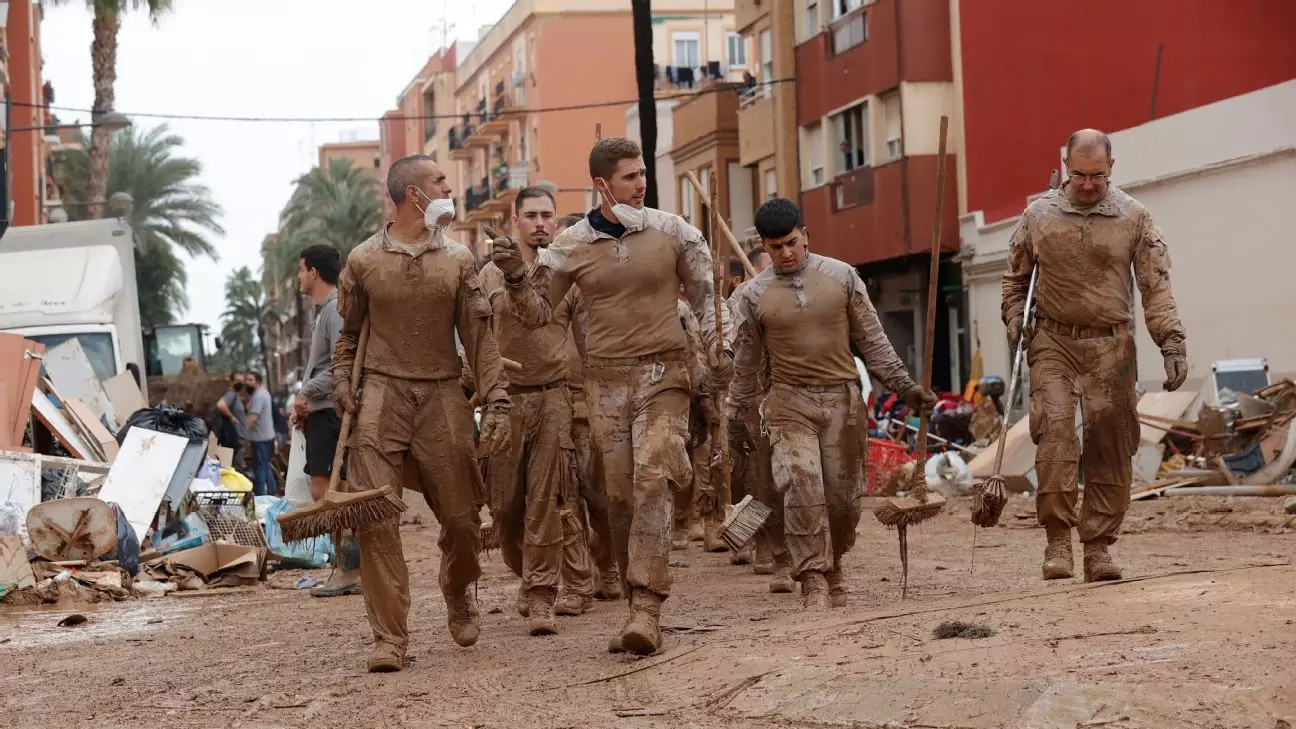
In the wake of catastrophic flooding in Valencia that claimed at least 217 lives, the Spanish football scene is grappling with the implications on scheduling, particularly for the Copa del Rey. The magnitude of this disaster cannot be overstated—flash floods ravaged homes and businesses, leaving communities reeling. As the recovery efforts unfold, sporting events take on a complex role, merging community support with the continuity of professional leagues.
Five Copa del Rey matches, including fixtures for prominent teams like Valencia and Levante, have now been postponed twice. Initially scheduled for last week, under normal circumstances, these matches signify the excitement and passion of Spanish football. However, in light of the unprecedented flood circumstances, the Spanish Football Federation (RFEF) has stepped in to prioritize safety and recovery. Confirming the rescheduling of these ties for later this month, they have effectively acknowledged the need for empathy and sensitivity in the face of calamity. For instance, Valencia’s visit to Parla has now been set for November 26, demonstrating the league’s ongoing adjustments in response to the evolving situation.
The decision to reschedule rather than cancel these matches could offer a nuanced perspective on how sports can serve as a form of therapy and community rebuilding following a disaster. Athletes, coaches, and fans are often seen as a collective unit, and the postponement of games can influence morale and community spirit. Discussions have arisen around the broader implications of continuing sports during such tumultuous times; some, including Real Madrid’s Carlo Ancelotti, have suggested that the entirety of Spanish football should come to a halt out of respect for the victims and their families.
The Italian phenomenon of postponing sports events in reaction to national tragedies poses crucial questions regarding governance and ethical responsibility within sports organizations. Such decisions not only affect logistical aspects, such as team preparations and fan engagements, but also pay homage to the weight of social consciousness in sports, underscoring how intertwined these realms can be. The RFEF’s current stance reflects a keen understanding of the gravity present in the Valencia region and illustrates the dual role sports organizations play as both entertainers and community anchors.
As Valencia and the surrounding areas begin to mend, the role of sports—particularly the rescheduled Copa del Rey matches—will be instrumental in stitching the community back together. These fixtures can serve as a rallying point, a reminder of resilience and the human spirit in the face of adversity. Ultimately, this situation exemplifies not just the unpredictability of weather and nature but also the careful balancing act sports federations must perform between honoring tragedy and returning to the passion of the games fans cherish. The evolving developments of the Copa del Rey thus represent a microcosm of resilience against a backdrop of loss and recovery.