
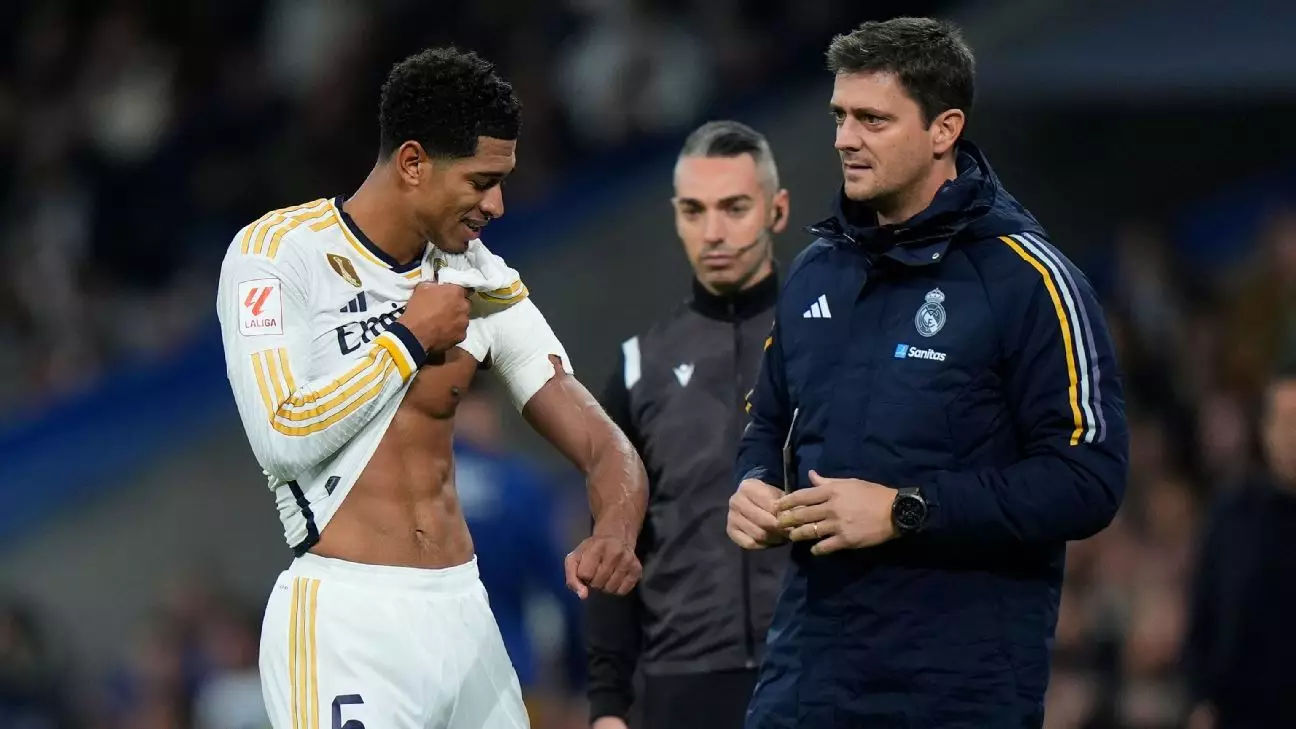
Jude Bellingham’s journey at Real Madrid has been nothing short of remarkable, but like many football prodigies, his rise has been accompanied by physical setbacks that threaten to stall his momentum. The young English midfielder, celebrated for his maturity and versatility, now faces a significant hurdle: shoulder surgery. While injuries are an inherent risk in professional sports, Bellingham’s recurring shoulder issues highlight the physical toll that high-level competition exacts on even the most promising talents. What differentiates a resilient athlete from one who falters is not only talent but also the ability to adapt and recover quickly. Bellingham’s current predicament underscores the importance of effective medical intervention, even if it means temporarily stepping away from the pitch.
The Decision for Surgery: A Sign of Commitment and Long-Term Perspective
Choosing to undergo surgery after battling shoulder problems for months demonstrates Bellingham’s pragmatic approach to his career. His previous decision to stay on the field despite persistent pain revealed a desire to contribute to Madrid’s success at all costs, but it also meant delaying a definitive solution. Now, with the planned surgical intervention, he prioritizes his health and future performance. Bellingham’s candidness about his discomfort and determination to restore full function indicates a mature understanding of his own body—a trait that bodes well for his long-term prospects. Surgery, though daunting, offers a pathway to regain his previous level of physical resilience, which is critical for a player so integral to Madrid’s ambitions.
The Broader Impact on Madrid’s Tactical Setup and Future Plans
Bellingham’s injury comes at a pivotal moment for Real Madrid, especially as they aim to defend their titles and compete fiercely across La Liga and the Champions League. Under coach Xabi Alonso, Madrid’s tactics now need to evolve temporarily to accommodate his absence, emphasizing the importance of squad depth. This period will test the team’s resilience, tactical flexibility, and the ability of other midfielders to step up. The message is clear: a star like Bellingham is irreplaceable, yet the club’s success depends on collective effort. The timing of his return—anticipated in early October—means Madrid must navigate crucial fixtures without their rising star, potentially impacting their early Champions League campaign and league standings.
Beyond the Pitch: Reflecting on Athlete Longevity and Mental Fortitude
Bellingham’s injury saga also prompts a reflection on the physical demands placed on young athletes in modern football. His proactive approach indicates a maturity that will serve him well in extending his career’s longevity. Recovery isn’t solely about healing bones or muscles; it involves mental resilience, patience, and a focus on rehabilitation. Bellingham’s transparent communication about the discomfort and his commitment to returning stronger exemplifies the mental toughness necessary for elite athletes. His experience should serve as a reminder that setbacks can be catalysts for greater resilience, provided they are met with a strategic mindset and unwavering dedication.
Jude Bellingham’s current challenge presents a crucial test—not just for his recovery but for his evolving role within Madrid’s ecosystem. How he navigates this obstacle will shape his trajectory—and the team’s—far beyond the immediate horizon.