
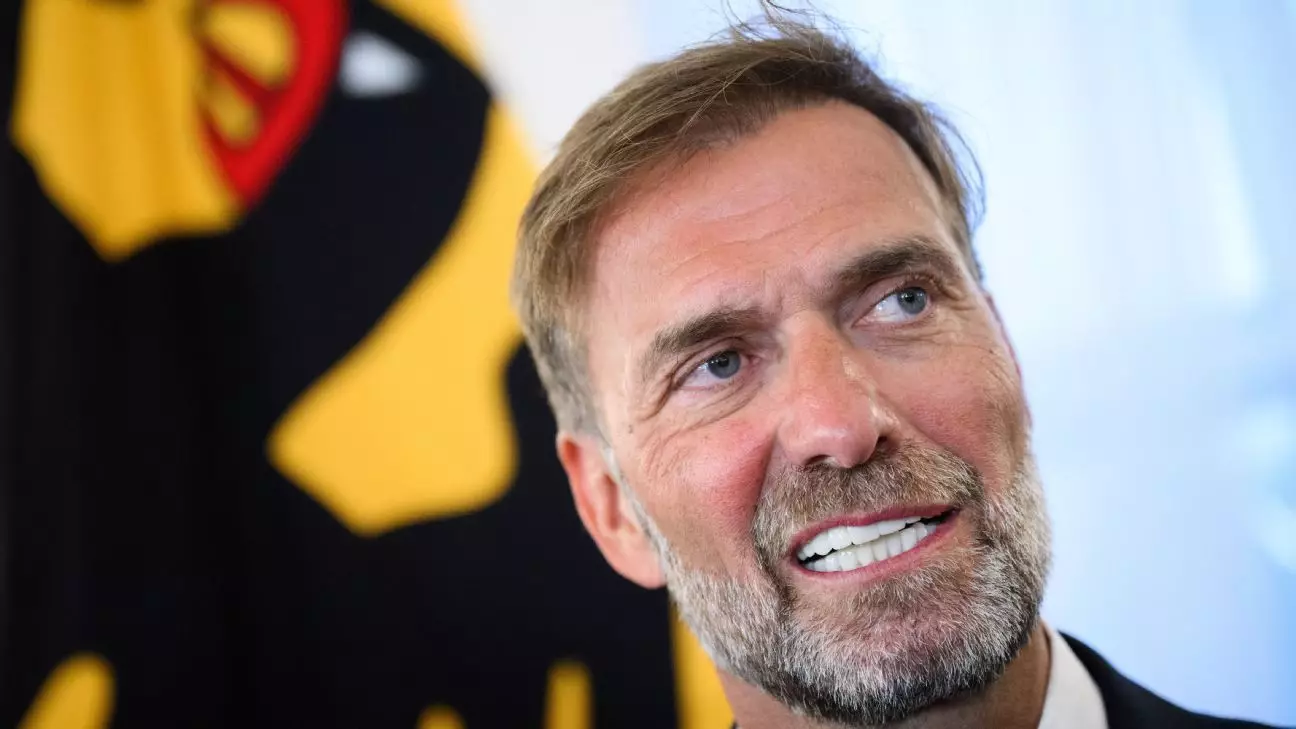
Jürgen Klopp’s ascendancy in football management has been marked by passion and a genuine connection to his teams, particularly during his time at Liverpool and before that at Borussia Dortmund. However, his recent decision to embrace a pivotal role in Red Bull’s football group has ignited a wave of criticism, particularly among supporters of his former clubs. This shift, which will see Klopp assume responsibility from January as the head of global football for the beverage giant, raises significant questions about loyalty, corporate influence, and the future of football in Germany.
At the heart of the controversy lies the perception of Red Bull within the German football fraternity. Critics argue that the company’s involvement, particularly through clubs like RB Leipzig, represents a commercialization of football that prioritizes profit over tradition. For many, this is more than just business; it’s a matter of maintaining the grassroots identity that they believe is fundamental to the sport. The backlash from fans of Borussia Dortmund and Mainz highlights the deep emotional ties that supporters have to their clubs, and how Klopp’s new affiliation feels like a betrayal to some.
Klopp’s sentiment of not wishing to “step on anybody’s toes” contrasts sharply with the feelings of many fans who see this move as a direct affront to the cultural integrity of their beloved clubs. The emotional weight of Klopp’s past—18 years at Mainz and significant success at Dortmund—has undoubtedly fueled this backlash. As banners expressing disappointment were displayed by Mainz fans, it became apparent that the move had ramifications beyond mere career progression for Klopp.
In a podcast appearance with former Real Madrid midfielder Toni Kroos, Klopp defended his decision, stating, “I really don’t know what exactly I could have done for everyone to be happy.” This perspective reveals a man caught in a dilemma—balancing career fulfilment with his emotional ties to past establishments. Klopp emphasized that he did not approach Red Bull with a critical lens previously, suggesting that he acknowledges the role the company has played in revitalizing football in East Germany.
The discussion around corporate influence in sports often oscillates between pragmatism and idealism, and Klopp seems to find himself leaning towards the former. His acknowledgment of Red Bull’s contributions, particularly through the RB Leipzig project, reflects a willingness to embrace change while attempting to maintain his personal and professional integrity.
The decision to enter this partnership was seemingly not born out of instant impulse. Instead, Klopp had previously indicated a desire for a “long break” after leaving Liverpool, hinting at a possible re-evaluation of his aspirations in management. At 57, he stands at a crossroads where the thrill of coaching might take a back seat to a broader advisory role within the intricacies of football management.
His argument that he sees himself primarily as an “adviser” reveals a shift in focus from the sidelines to a more strategic, perhaps mentoring, capacity. He expressed the isolation that coaches often feel within clubs, highlighting the need for guidance and support in a high-pressure environment that can be incredibly solitary.
Ultimately, Klopp’s choice to work with Red Bull is emblematic of a critical juncture in modern football management. While he may frame his role as one of mentorship and collaboration, the underlying implications of aligning with a corporate giant cannot be glossed over. The sentiment of disenfranchised fans serves as a reminder of the rich tapestry that makes up football’s cultural legacy, intertwining emotions of loyalty, passion, and identity.
As this transition unfolds, the long-term impact on Klopp’s legacy and on the teams involved in the Red Bull network remains to be seen. Can Klopp bridge the gap between corporate interests and the emotional authenticity that fans desire? Is his involvement a harbinger of a new era in football management, or will it further alienate him from the roots of his career? The coming months will be telling, as both Klopp and the German football community navigate this challenging, evolving landscape.