
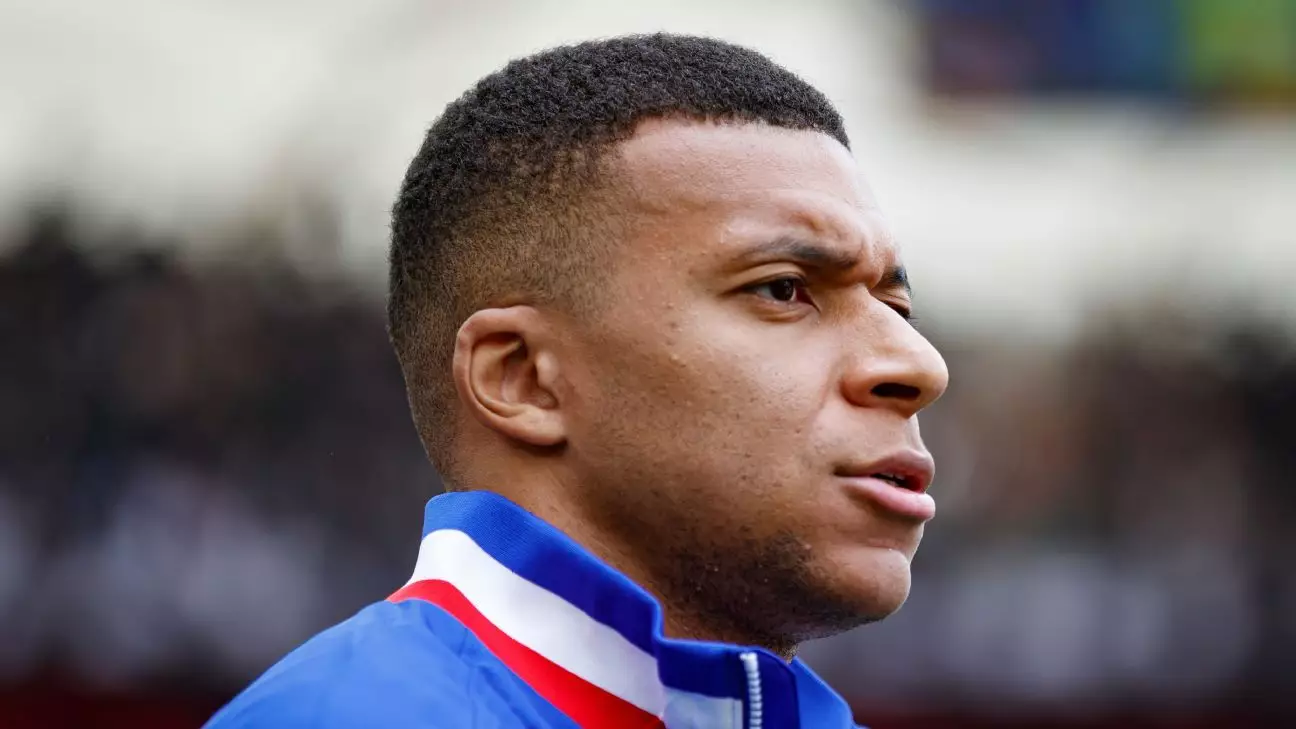
Kylian Mbappé’s recent legal actions against Paris Saint-Germain (PSG) reveal a dramatic rift that has far-reaching implications, not just for the players involved but also for the football world at large. The French superstar has accused PSG of moral harassment, a serious claim that stems from his treatment during the tumultuous final months of his contract. This legal filing, confirmed by the Paris prosecutor’s office, adds a shocking narrative to his already high-profile exit from the club.
Mbappé’s contention that PSG owes him €55 million (approximately $61 million) in unpaid wages serves as the financial backbone of his dispute. However, the emotional and psychological dimensions cannot be overlooked. Reports suggest that the club’s actions, which included isolating him from the main squad—a practice referred to in France as “lofting”—have left him feeling marginalized and unjustly treated. Such allegations challenge not just the ethics of PSG’s management but also call into question the treatment of high-profile athletes in the high-stakes world of professional sports.
The Contractual Conundrum
When Mbappé signed with PSG in 2022, he did so under the promise of a lucrative contract that was supposed to place him in the highest echelon of footballers. Yet, as the year advanced, it became clear that the promises made were not wholly fulfilled. Frustrated by what he perceived as a lack of transparency and an inability to attract key signings to strengthen the team, Mbappé’s relationship with the club deteriorated. This dissatisfaction reached a tipping point when he announced in June 2023 that he would not exercise his option to extend his contract, inserting PSG into a precarious situation where they risked losing their star player for nothing.
The ramifications of Mbappé’s decision were immediate and severe. His non-extension led to a series of confrontations, culminating in his exclusion from crucial preseason activities and, later on, from the opening game of the new season. The strategic decisions made by PSG—to sideline their star player rather than negotiate a sale—raise serious questions about the club’s managerial acumen and highlight the struggles inherent in professional team dynamics.
A Clash of Expectations
The tension between Mbappé and PSG is emblematic of a larger problem within football—a systemic disconnect between player expectations and club operations. From the perspective of PSG, having invested heavily in Mbappé as a face of the franchise, the team was likely unprepared for him to walk away. However, for Mbappé, it appears that the promises placed before him during negotiations were not matched with actions, leaving him feeling betrayed.
This complexity invites deeper analysis of player contracts and the implicit trust that binds athletes to their teams. In the high-stakes realm of sports, where emotions run deep, such breakdowns can result in devastating consequences for both parties involved. As Mbappé embarks on this legal battle, the underlying issues point to a culture where players feel undervalued and clubs operate under immense pressure to deliver results at any cost.
The Implications for the Future
The legal proceedings launched by Mbappé against PSG could potentially set a groundbreaking precedent regarding player rights and the moral responsibilities of football clubs. While the football community often romanticizes the player-club relationship, Mbappé’s situation serves as a bitter reminder that this relationship can quickly turn adversarial. Such high-profile cases can inspire future players to assert their rights, potentially shifting the landscape of contract negotiations and player empowerment.
Furthermore, as football grapples with ethical concerns surrounding player welfare, the Mbappé vs. PSG saga might spark discussions on creating more robust support systems for athletes facing similar dilemmas. The sheer weight of this case resonates beyond the immediate context, as it provokes questions about loyalty, fairness, and the moral obligations that come with the stewardship of young sports talents.
In the world of professional sports, Kylian Mbappé’s accusations against PSG are more than just a legal matter; they are a clarion call for reevaluation, reflection, and reform in the treatment of athletes by their clubs. This unfolding drama serves as an example of how the intersection of talent, business, and ethics in football can yield transformative shifts, potentially reshaping the football landscape for years to come.