
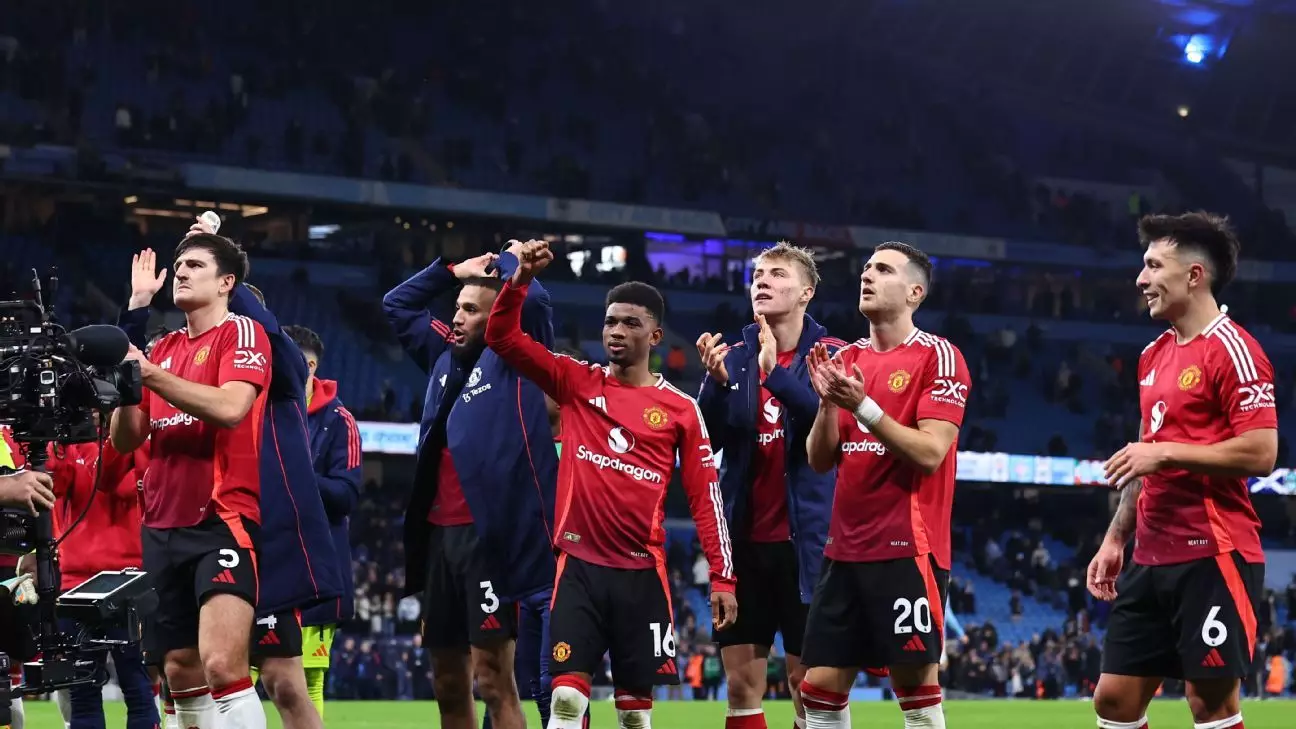
In the world of professional football, the integrity of team information is critical. For clubs like Manchester United, leaks concerning starting line-ups and tactics can undermine strategic planning and competitive advantages. Recently, the leaking of Ruben Amorim’s starting team for the highly anticipated Manchester derby has shed light on a recurring problem within the club. As sources from ESPN detail, this incident has prompted the club to take measures to safeguard their internal communications.
The leak of Amorim’s line-up nearly 24 hours before the match against Manchester City points to a significant lapse in confidentiality. Such premature revelations can unduly influence both opponents’ preparations and the dynamics of the match itself. Amorim himself acknowledged the situation, stating, “it’s not a good thing.” This admission reflects not only a concern for the team’s tactical integrity but highlights broader implications for player morale and strategic coherence. If team news becomes openly accessible, it can undermine trust within the camp and provide rivals with a strategic edge.
Manchester United is keen to stress that the origins of such leaks do not point to individual negligence. Instead, sources within the club suggest that this information might be filtering from various channels, potentially due to conversations between players and their representatives or even informal discussions within social circles. Amorim’s statement concerning the difficulty of clamping down on information leaks—given the multitude of personnel involved—signals a recognition that this issue might not have a straightforward resolution.
In light of these concerns, United has resolved to implement strategic measures aimed at safeguarding their operational confidentiality. Players and staff have been issued reminders about their responsibilities in maintaining privacy and trust regarding team news. By reinforcing the importance of discretion, the club hopes to foster a culture where secrecy is not only respected but is pivotal in maintaining a competitive edge. While these interventions might not eradicate the problem entirely, they exhibit a proactive approach to mitigating risk in a landscape where leaks are increasingly common.
As Manchester United prepares for their upcoming fixture against Tottenham in the Carabao Cup, the question remains whether these measures will be effective in curbing future leaks. The integrity of team communication is just as vital as the physical performance on the pitch. The club’s leadership will have to remain vigilant and adaptive, continually assessing how best to encapsulate their strategies while preparing for the unpredictable nature of modern sport.
While Amorim and his team navigate this rocky terrain of information confidentiality, the overarching message is clear: the fight against leaks must be an ongoing commitment, rooted in strong internal culture and awareness. As the landscape of football evolves, so too must the measures clubs like Manchester United undertake to protect their strategic secrets.