
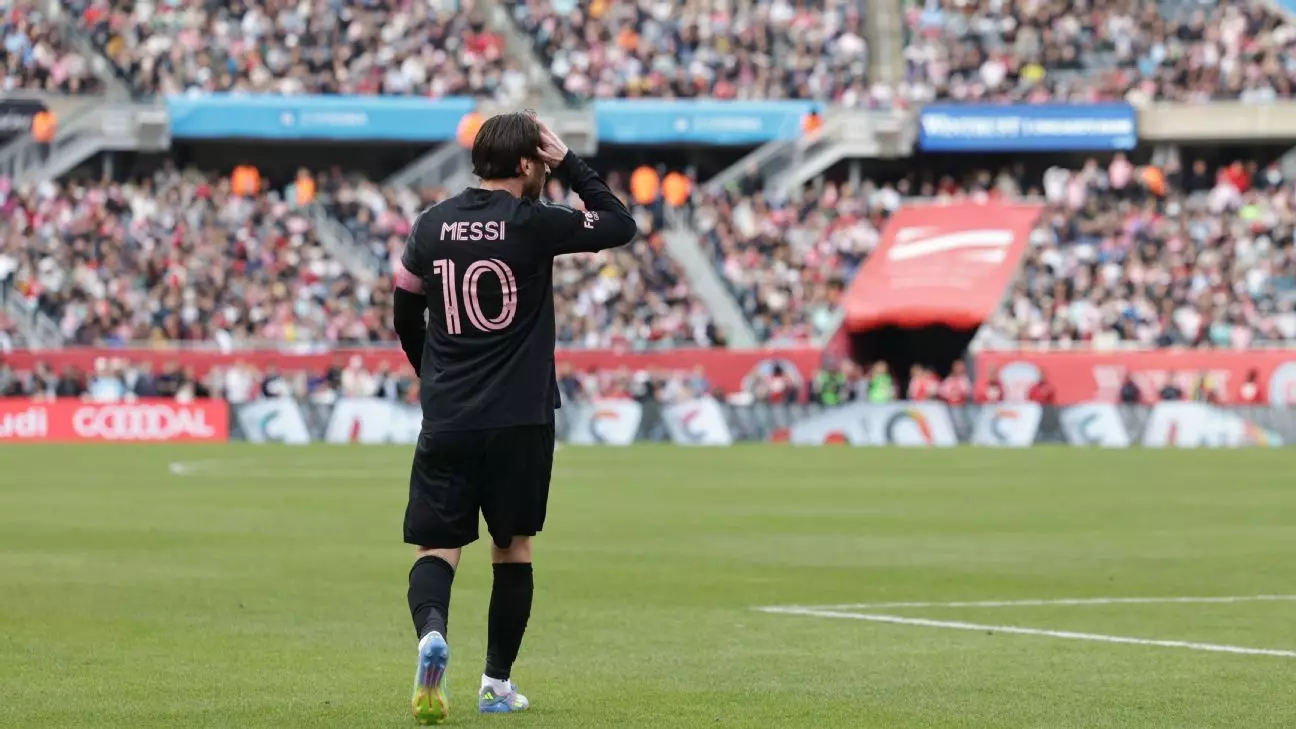
Lionel Messi’s arrival at Inter Miami has undeniably altered the landscape of Major League Soccer (MLS) in ways that extend beyond mere statistics or game highlights. Under the stewardship of coach Javier Mascherano, the club and the league are witnessing an unprecedented level of visibility and engagement, especially in markets that were previously indifferent to soccer. In a recent match against Chicago Fire, where the score ended in a 0-0 draw, Mascherano reflected on Messi’s significant influence since his signing in 2023. He poignantly stated that the world is beginning to perceive MLS through a different lens—one that is more vibrant and attractive, thanks to Messi’s star power.
Messi’s first visit to Soldier Field undeniably made waves, as the match saw an all-time attendance record for the Fire, with a staggering 62,358 fans showing up. This statistic not only underscores Messi’s drawing power but also illustrates his role in creating a soccer culture that thrives well beyond the confines of the pitch. Mascherano captures this sentiment perfectly by noting, “The people came to see him, that’s the reality.” Such sentiments echo throughout the league as other teams have moved their matches against Inter Miami to larger venues, aiming to cater to the swelling demand for tickets—signaling that soccer culture is indeed flourishing in America.
Rethinking the Future of MLS
However, while Messi’s presence is a boon for the league, it has also thrown down the gauntlet for MLS itself. Mascherano has asserted that the league bears the onus of continuing to capitalize on the excitement that Messi ignites both on and off the field. “It’s made progress, but it’s necessary to continue supporting… to continue developing soccer in this country,” he remarked, emphasizing the need for holistic growth that encompasses not only star athletes but also grassroots programs, marketing strategies, and fan engagement.
The touchstone of any great league is how it builds upon the success of its icons. In this regard, the league must not only rest on its laurels but strive for further improvements to better facilitate the requirements of a league experiencing a renaissance of sorts. Messi is often viewed as a singular phenomenon, one that is “unique” and “unrepeatable,” and the challenge becomes how to ensure that the momentum he has created persists well into the future.
Squad Challenges: Balancing Workload and Performance
Despite Messi’s magnetic impact, the on-field performance of Inter Miami has faced scrutiny, particularly following their drawn match against Chicago Fire. Mascherano addressed this topic by attributing the lack of scoring to the rigors of a demanding schedule that has his team competing in multiple tournaments. With games packed closely together—often every three to four days—the wear and tear on players is palpable. This raises important questions about how clubs balance the need for rest and recovery with the desire to maintain momentum in a highly competitive league.
While Miami’s form may fluctuate, the team’s ability to secure results—like a hard-fought draw—shows resilience, a characteristic that Mascherano admires. The implication here is significant: in an era where physical fitness and mental sharpness go hand-in-hand, clubs must re-evaluate their approach to player management, ensuring that key players like Messi remain fit and available while fostering squad depth.
Looking Ahead: The Road to Glory
The next challenges loom large for Inter Miami, not only as they prepare to face Columbus Crew but also as they embark on their semifinal journey in the Concacaf Champions Cup against the Vancouver Whitecaps. Both of these upcoming matches will serve as a litmus test for the team as they navigate the dual pressures of league play and international competition.
Javier Mascherano’s remarks offer a blend of optimism and realism, acknowledging the uphill task ahead while celebrating the transformational era that Messi has ushered in. It is a moment where the entire landscape of American soccer stands at a crossroads, eager to embrace the challenge of building upon its newfound popularity. This era, defined by Messi’s influence, beckons to not just be a fleeting moment in history, but rather a sustainable growth trajectory for soccer in the United States. The responsibility of making this vision a reality now lies with MLS, its teams, and its community of fans.