
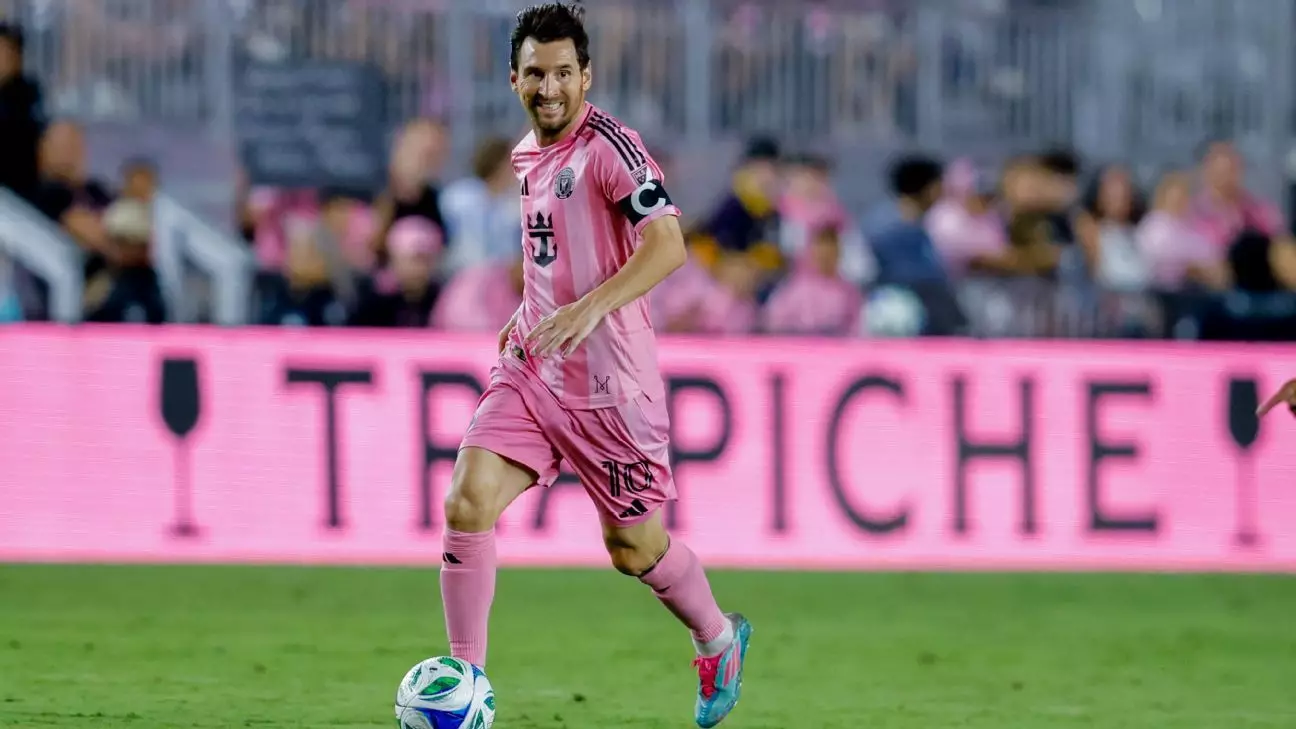
The Major League Soccer (MLS) landscape is evolving, but challenges lie ahead for American clubs attempting to gain a foothold in international competitions. With a meager track record in events like the Concacaf Champions Cup, where only three titles have been secured since its inception, the league is yearning for recognition beyond its home borders. As the FIFA Club World Cup draws closer, questions arise about whether MLS teams are ready for the daunting task of competing against the world’s football elites.
The Harsh Reality of Recent International Performances
Historically, MLS teams have not fared well when pitted against Liga MX sides in critical matches. The most recent Concacaf Champions Cup final illustrated this reality vividly, as the Vancouver Whitecaps suffered a disheartening 5-0 defeat against Cruz Azul. The thrashing wasn’t merely a flattering scoreline; it highlighted the chasm in talent and experience between the two leagues. MLS sides, particularly during crucial encounters, often falter under the pressure where mistakes become capitalized on swiftly by more seasoned opponents. This raises a stark question: Have MLS teams reached their peak, or are they still languishing in mediocrity on the international stage?
The need for rigorous performance and improved outcomes is clear. Vancouver player Brian White’s acknowledgment of their mistakes serves as a poignant reminder that in high-stakes games, the margins for error are razor-thin. The depth and capabilities of Liga MX squads continue to outshine their American counterparts, presenting significant hurdles for any MLS team seeking success in continental tournaments.
The Club World Cup: A Double-Edged Sword for MLS
The FIFA Club World Cup embodies both peril and potential for MLS. As clubs like Inter Miami, LAFC, and the Seattle Sounders prepare for a formidable array of international opponents, the gulf in quality becomes glaringly evident. Competing against storied organizations such as Paris Saint-Germain and Chelsea, there is an undeniable shadow looming over MLS’ chances.
Despite an influx of star talent—like Lionel Messi—joining Inter Miami, opinions among players and coaching staff remain tempered. Head Coach Javier Mascherano openly admits that the gulf in competence between MLS and elite teams is stark. Similarly, veteran midfielder Sergio Busquets echoes this sentiment, indicating that even with star power, the operational level of MLS is below that of the global giants. If MLS teams find themselves overwhelmed in the group stages, perceptions of the league could suffer further damage.
Changing Narratives: Beyond the ‘Retirement League’ Label
One major narrative surrounding MLS is its perceived identity as a “retirement league,” a designation that diminishes the efforts of local talent and undervalues the evolving quality of play. The entry of marquee players like Messi was supposed to help shift this perception, yet there remains skepticism about whether the league can assert itself on a larger stage. Performance at the Club World Cup could be pivotal in changing that narrative.
If MLS teams can assert themselves against international competition, it may serve as proof that the league is developing beyond just being a retirement home for aging stars. The growing trend of players using MLS as a launching pad to further their careers—evidenced by stars like Miguel Almirón—demonstrates that the league is home to thriving talent, not just fading stars. A strong showing on the world stage could help bolster this narrative change, spurring interest and investment in MLS and possibly raising its global image.
Potential Pathways to Success
For teams entering the Club World Cup, expectations will undoubtedly vary. Inter Miami fans may harbor hopes for a deep run, while the Seattle Sounders appear poised for a more defensive strategy, prioritizing damage limitation against formidable foes. Success could be measured differently among teams; while merely escaping the group stage could signify a substantial achievement for Seattle, Miami and LAFC are expected to advance based on their reputations—and investment in talent.
The talent pool across MLS continues to expand, yet it remains crucial to establish a deeper understanding of the game and the strategies that work against top-tier clubs. With clubs frequently participating in international competition, the experience gained could bolster their chances of performing well during key encounters. This ripple effect of experience could potentially translate into stronger competitive footing as the league continues to advance.
As the Club World Cup nears, the overarching question remains: will MLS finally shed its underdog status and carve out a place for itself among established global football narratives? The pathway to respect could hinge on the outcomes in this pivotal tournament. The stakes have never been higher, and for MLS, the opportunity for transformation is just around the corner.