
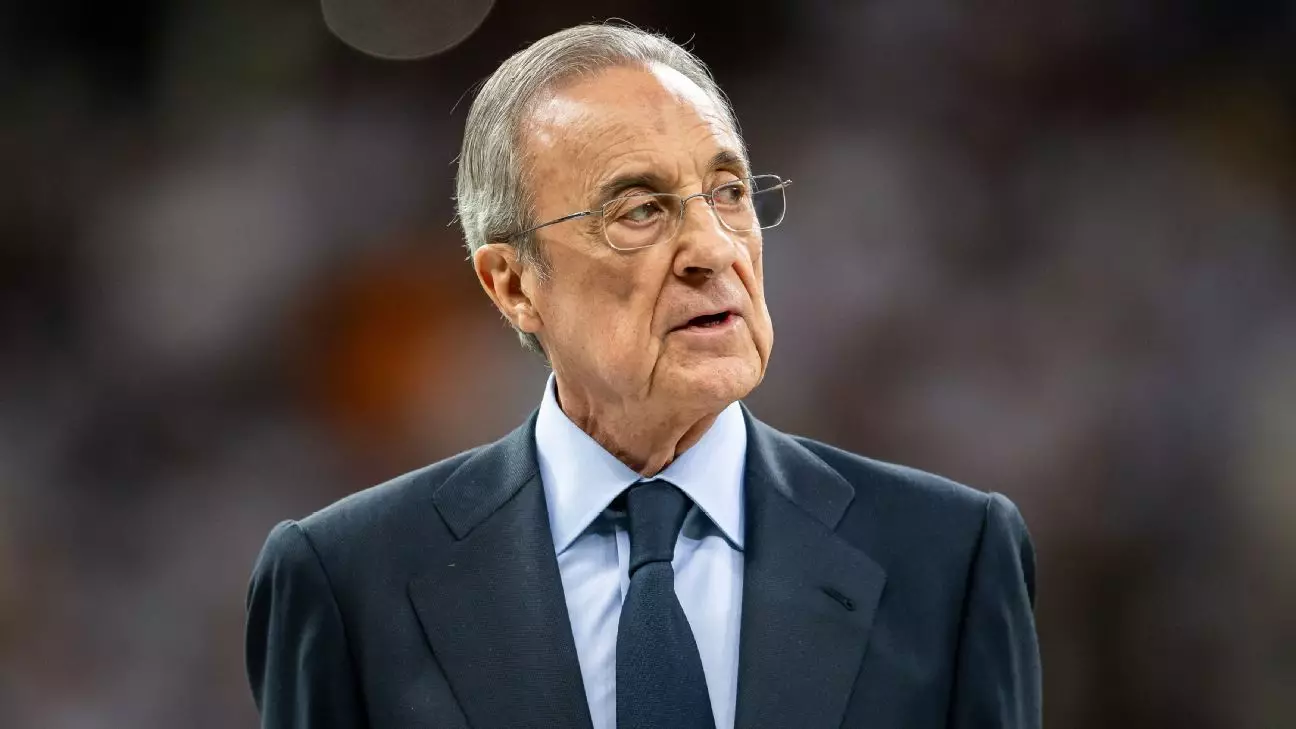
Real Madrid, one of football’s most storied franchises, is at a potential crossroads as its president, Florentino Pérez, articulates a vision for corporate reorganization. His recent statements, made during the club’s annual assembly, reflect a deeper concern regarding the financial feasibility of maintaining its member-owned structure amidst evolving market conditions. With LaLiga’s shift towards privatization standing in stark contrast to Real Madrid’s unique governance model, Pérez is advocating for a reevaluation of their operational framework to better protect their financial assets.
At the heart of Pérez’s proposal lies a conflict with LaLiga and its handling of external investments, particularly highlighted by the controversial CVC deal. This arrangement, which funneled approximately €2 billion to various clubs in exchange for future broadcast revenues, has reignited debates over fiscal equity among Spanish football clubs. Pérez’s position reflects a staunch commitment to ensuring that Real Madrid’s financial resources remain intact and are not redistributed in a manner that undermines their competitive edge.
Pérez emphasized that a new corporate structure is paramount to safeguarding the club’s interests, stating, “We’re working on defending ourselves against attacks on our financial wealth.” This declaration points to a proactive approach aimed at reinforcing the integrity of Real Madrid’s assets against external pressures.
Real Madrid stands out as one of only a few clubs in Spain that remain firmly member-owned. While this model fosters a unique sense of community among supporters, it also presents challenges in an era where football clubs frequently operate as public limited companies. As Pérez hinted at possible adjustments in governance, members will be called upon to deliberate on the proposed changes. This democratic approach in decision-making could enhance transparency but may also invoke resistance among traditionalists who value the club’s historical identity.
Pérez’s vision for preserving member ownership while modernizing operational strategies indicates a delicate balance between tradition and necessitated evolution. The president’s upcoming assembly will serve as a crucial forum for elucidating the rationale behind his proposal and engaging members in the reshaping of their beloved club’s future.
In addition to financial restructuring, Pérez did not shy away from openly criticizing the decision-making practices surrounding the prestigious Ballon d’Or award. His remarks regarding Vinícius Júnior being overlooked for the accolade underscore a broader disenchantment with football’s evaluative structures. He asserts that such awards should prioritize talent recognition and suggests a need for an independent organization to manage this prestigious honor—free from perceived biases that may exist within sports journalism.
Moreover, his unfiltered critique extends to UEFA and the evolving landscape of European football. Pérez has long championed the idea of reforming the Champions League structure, referencing the risk of clubs stagnating under outdated formats. “We don’t want to go down in history like Blockbuster,” he remarked, illustrating the urgency for innovation within football. This sentiment cuts to the core of a broader challenge facing the sport: the need to embrace advances in technology and embrace new ideas if football is to recapture its past glory.
Future Considerations
Pérez’s address also encompassed pragmatic aspects of club operations, such as the impact of postponed concerts at the Santiago Bernabéu Stadium. While acknowledging that concert revenues contribute a minor fraction to the club’s overall budget, Pérez underlined their significance to the local community’s cultural landscape. This reinforces the concept that Real Madrid, while being an elite football institution, bears societal responsibilities to its surrounding environment.
As Real Madrid grapples with these multifaceted challenges, Pérez’s proposal for a corporate reorganization is a pivotal element in ensuring the club’s ongoing success. As they stand on the cusp of financial and operational change, the forthcoming assembly will be a critical juncture for reaffirming their commitment to member ownership while navigating new market realities.
In the shifting sands of modern football, Real Madrid’s leadership—under the guidance of Florentino Pérez—must balance heritage with forward-thinking strategies. The proposed corporate reorganization could be a transformative step in reinforcing the club’s financial stability and competitive positioning. As the Titans of football continue to adapt, one thing remains clear: the decisions made today will shape the narrative of Real Madrid’s future for generations to come.