
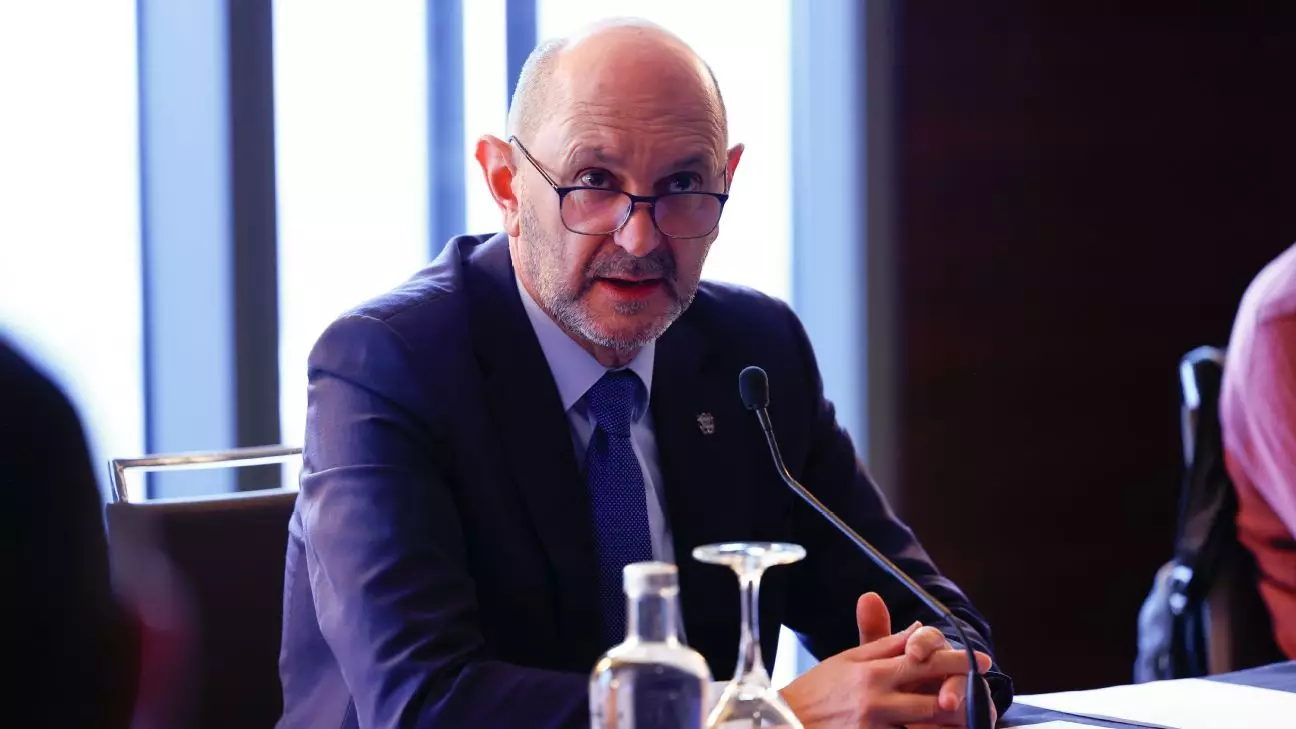
The recent election of Rafael Louzan as the president of the Royal Spanish Football Federation (RFEF) marks a critical juncture in Spanish football, especially in light of recent controversies and the upcoming hosting of the 2030 World Cup. Louzan’s election, while a significant development, comes at a time when the RFEF faces considerable challenges both internally and externally.
Rafael Louzan was elected on Monday, just days after FIFA confirmed that Spain will host the 2030 World Cup alongside Morocco and Portugal, a decision that promises to elevate the nation’s football profile on the global stage. At 57, Louzan brings experience from his role as the representative of the Galician Football Federation and as a member of the RFEF’s executive committee since December 2019. His election means he will serve a four-year term, providing a chance for him to stabilize an organization in turmoil. Louzan faced only one opponent, Salvador Gomar, in the election, underscoring a sense of urgency to restore order within the organization.
However, Louzan’s ascendance to the presidency is overshadowed by his personal controversies. He is currently appealing a seven-year ban from holding public office due to misconduct during his previous presidency at the Pontevedra Provincial Council. This circumstance raised eyebrows and questions about the integrity of the RFEF’s leadership during a time when the spotlight is on restoring credibility within Spanish football.
The backdrop of Louzan’s election is particularly troubling for the RFEF, which has experienced a severe crisis following the unspeakable actions of former president Luis Rubiales. His unsolicited kiss to player Jenni Hermoso after Spain’s Women’s World Cup victory sparked outrage and led to his resignation. The aftermath has not only tarnished the image of the federation but has also highlighted the need for a robust governance structure to address such behavior effectively.
The situation worsened under Rubiales’s successor, Pedro Rocha, who was suspended for two years due to serious infractions, compounding the federation’s reputational damage. The turmoil prompted the Spanish government to form a special committee to oversee the RFEF, indicating the level of intervention required to restore confidence. FIFA’s warning that Spain could lose its opportunity to host World Cup matches if a new president was not elected soon enough only added to the urgency for effective leadership at this pivotal moment.
As Louzan steps into his new role, he faces the daunting task of unifying a fractured federation and addressing the broader issues that have come to light. The responsibility now lies on his shoulders not only to implement reforms but also to reinstate public trust in the RFEF. His leadership will be scrutinized based on his ability to transcend past misjudgments and stabilize an organization poised for international attention.
Looking forward, Louzan must prioritize transparency, accountability, and inclusivity within the federation. Engaging stakeholders—from players and coaches to fans and government officials—will be critical in healing the divisions created by the controversies of the past. The journey toward recovery for the RFEF is fraught with challenges, but under Louzan’s leadership, there exists an opportunity to redefine the federation’s narrative on both national and world stages. How effectively he addresses these challenges will, ultimately, dictate the future of Spanish football.