
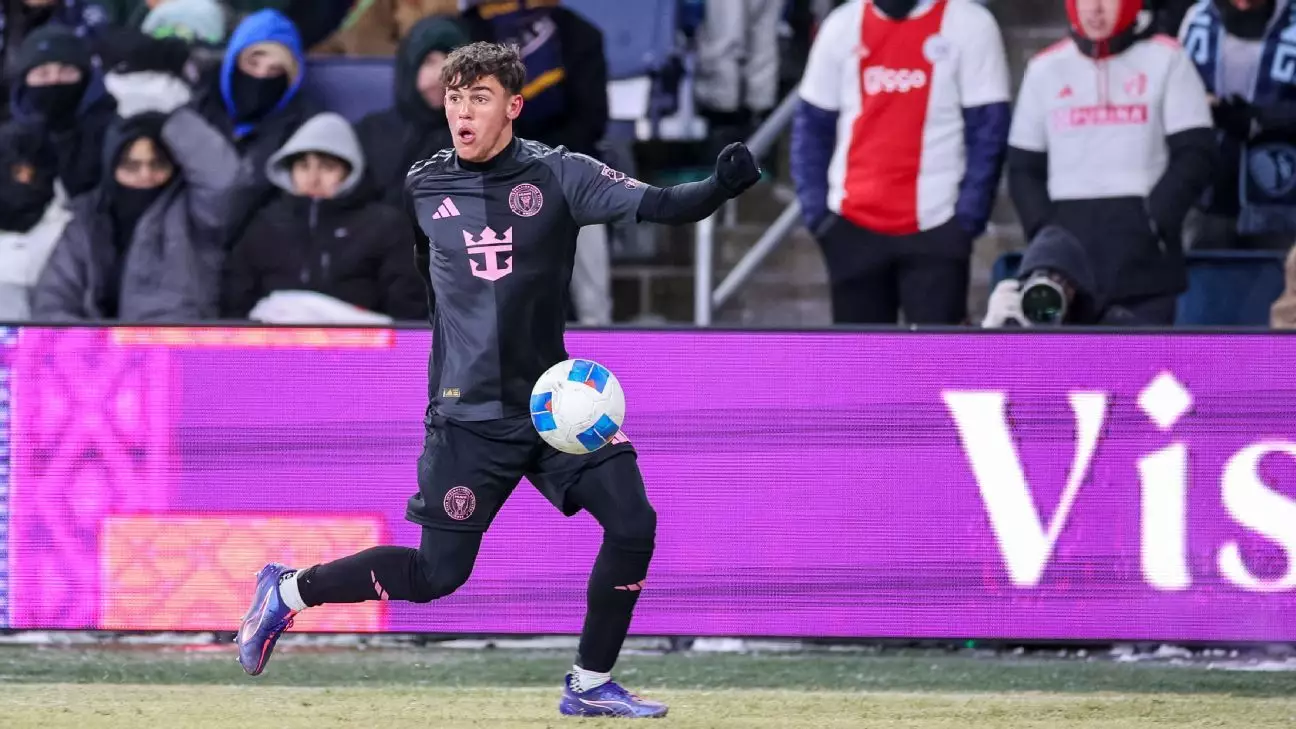
Noah Allen, a promising young defender for Inter Miami CF, has taken a significant step in his international career by filing for a one-time switch with FIFA to represent Greece instead of the United States. This decision, which reflects both his personal and cultural heritage, showcases the unique circumstances faced by players with dual nationalities in modern football. Born in the United States to a Greek mother and an American father, Allen is a product of a multicultural background that allows him eligibility to represent either nation.
Furthermore, Allen’s decision is not merely about nationality; it is an exploration of identity and opportunity within the footballing world. With recent approval from FIFA, as confirmed via the Change of Association platform, the 20-year-old defender is poised to wear the Greek national colors after having previously represented the U.S. at the youth level. This switch is emblematic of a growing trend where players oscillate between national identities as they seek their rightful place on an international stage.
Allen’s journey within Major League Soccer (MLS) has been marked by notable achievements since he joined Inter Miami as a Homegrown player in March 2022. Over the course of his burgeoning career, he has amassed 49 appearances with the Herons, in addition to contributing a goal and two assists. His performances have not only showcased his defensive capabilities but also underscored his potential to develop into a key figure for both his club and, potentially, the Greek national team.
The defender’s tactical awareness and skill set have already made an impact in important matches, including his involvement in the Concacaf Champions Cup where he played a role in securing victories for Miami. Such experiences are invaluable for young players, offering a stepping stone towards future international responsibilities and enhancing their overall game understanding.
Allen’s transfer to the Greek national team raises questions about the broader implications of such decisions in international football. His choice reflects a growing frustration among players with competitive prospects limited by national team selection. Similar cases, like that of MLS player Obed Vargas switching allegiance to Mexico, underline a particular trend in football where emerging talents seek greater international opportunities.
From the perspective of Greece, acquiring a player of Allen’s potential can inject fresh energy into the national squad, revitalizing a team that is continuously seeking to assert itself on the European stage. Conversely, for the United States, the loss of a former youth national team player may reflect a need to reassess how they nurture and retain young talents in the face of enticing options abroad.
Noah Allen is on the threshold of a new chapter in his football career, one that could see him represent Greece on the international stage. The implications of his switch reverberate beyond just personal ambition; they reflect the complexities facing athletes in an increasingly globalized sport. As he gears up for this new phase, fans are left to wonder not only how he will impact the Greek national team but also how this decision will influence the dynamics of player transfers in the global football landscape. Allen’s journey exemplifies the intricate balance of heritage, identity, and opportunity that defines modern football, setting the stage for what promises to be an exciting career ahead.