
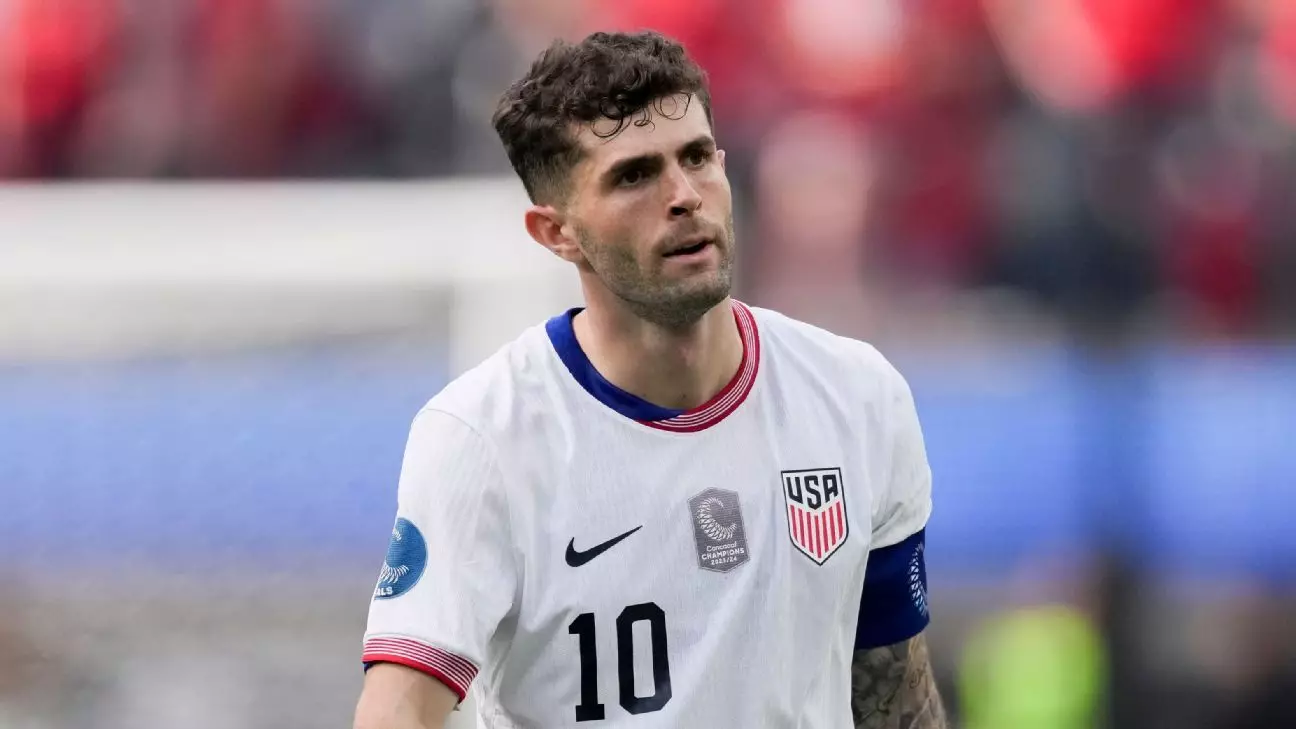
The realm of sports boasts innumerable intricate narratives, but few contain the deep-rooted emotions tied to national representation. Recently, a fiery debate erupted within the U.S. soccer community, centering on Christian Pulisic’s choice to forgo participation in the upcoming Gold Cup. This decision, while strategic in its immediate motivation—ensuring recovery after a grueling season with AC Milan—sets off a philosophical storm about what it truly means to don a national jersey. With figures like Landon Donovan vocalizing their discontent over Pulisic’s decision, the conversation transcends the playing field into deeper realms of commitment and expectation.
The Weight of Expectations: Donovan’s Criticism
Landon Donovan, a U.S. soccer icon, aired his grievances during the UEFA Nations League broadcast, seemingly aimed at Pulisic and others who opted out of the Gold Cup. His statements resonated as more than mere criticism of a player’s choices; they echoed the collective sentiments of fans and former athletes regarding dedication. “This is what it means to represent your country,” Donovan proclaimed, highlighting his view that any soccer player should prioritize national duty over individual needs. Such comments echo the traditional view that commitment to one’s nation supersedes personal considerations, particularly in the world of sports.
Donovan’s comparison to Cristiano Ronaldo’s tireless performances—even at age 40—suggests a standard of professionalism that he believes Pulisic and his contemporaries should aspire to. It’s a compelling argument but one that raises questions about the balance between sacrifice for the team and self-care, especially in an era where athlete mental health is increasingly at the forefront.
Generational Perspectives: The Evolvement of Player Well-being
Mark Pulisic took exception to Donovan’s remarks, using a modern tool—ChatGPT—to reflect on Donovan’s own past when he took a sabbatical in 2012-13. This juxtaposition illuminates a generational disparity in how athletes view the pressures of competition. While Donovan embodies a “play through the pain” ethos, the younger generation, including his own son Christian, recognizes the necessity of mental and physical recuperation.
This response not only defends Pulisic’s decision but subtly hints at a growing awareness within sports of the toll competitive athletics can take. The era where players are celebrated solely for their endurance and grit is waning. Instead, athletes today, like Pulisic, are carving out space for self-care, understanding that their longevity and performance may hinge on periods of intentional rest.
A Broader Context: Team Dynamics and Future Goals
The Gold Cup represents more than just a series of games; it’s a crucial stepping stone for building a cohesive national team leading up to the World Cup. Former U.S. players like Alexi Lalas have publicly voiced concerns that declining to compete in tournaments like the Gold Cup may hinder the team’s synergy. As the U.S. prepares to co-host the World Cup, ensuring players build rapport and on-field chemistry will be vital.
However, the efficacy of sacrificing personal health for collective gain comes under scrutiny. Is forcing players into tournaments the best way to ensure team success? Or could a well-rested athlete yield significantly better outcomes in critical matches? This debate taps into broader themes of professional sports, mentality, and whether the sacrifices often glorified in sports narratives should truly dictate player choices.
The Role of Social Media in Modern Athletes’ Dialogues
The aftermath of this controversy has unfolded on social media, with Mark Pulisic taking to platforms to express his thoughts and share the ChatGPT-generated commentary. This act exemplifies how current athletes and their families leverage social media as an avenue for dialogue and defense. The intent is clear—there’s a desire to redefine what accountability and responsibility mean for modern athletes.
Moreover, the mixed reactions on social media illuminate the divided sentiments within soccer’s fanbase. While some fans staunchly support Pulisic’s need for rest, others validate the traditional ethos championed by figures like Donovan and Lalas. This divergence reflects changing societal values concerning work-life balance and emotional health, particularly in high-performance environments.
In the end, the tension between honoring a national duty and ensuring personal well-being resonates with deeper societal discussions about balance and self-care, making this debate all the more poignant in today’s sporting landscape.