
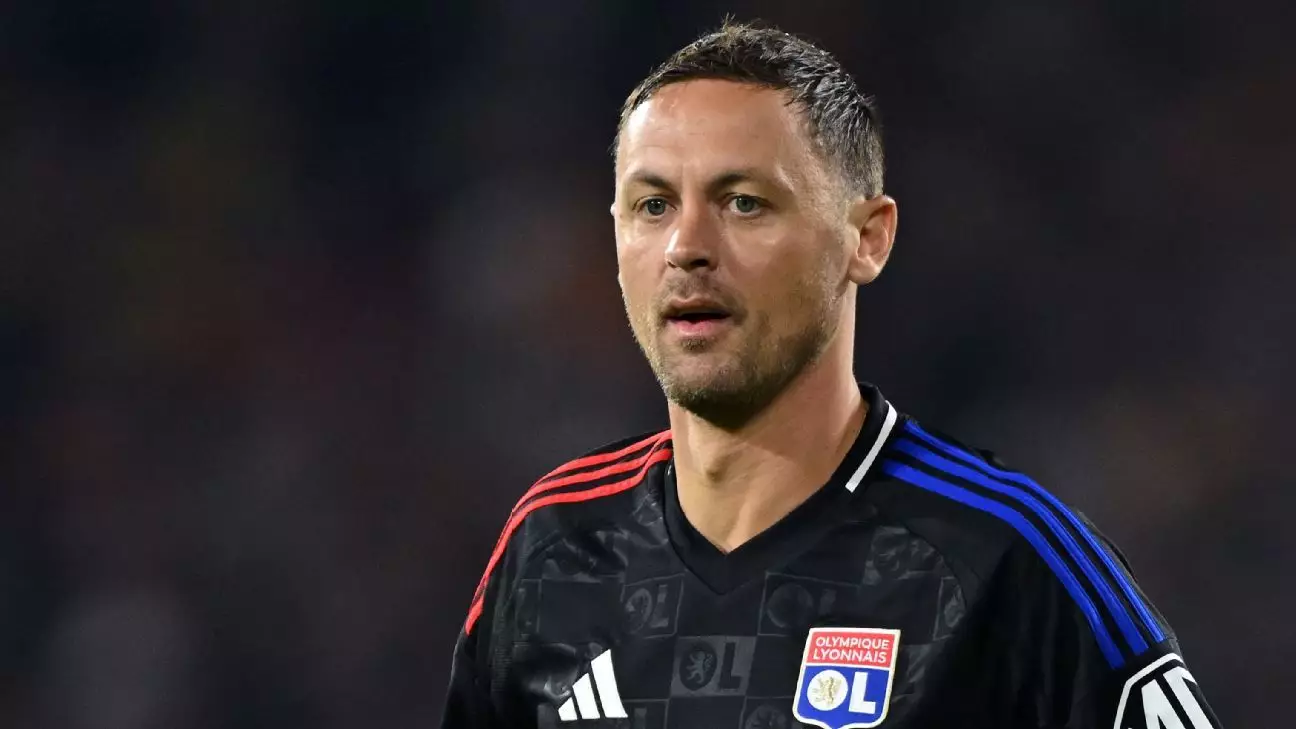
In the high-stakes world of football, verbal exchanges between players can often incite intrigue just as much as the games themselves. Recently, Nemanja Matić did not hold back when responding to André Onana’s controversial assertion that Manchester United is “way better” than Lyon. This incident underscores not only the competitive nature of sport but also the fragility of player reputations, particularly in a club as storied as Manchester United.
Matić’s retort branded Onana as “one of the worst goalkeepers in United’s history,” sparking headlines and intense speculation. Such powerful language isn’t merely about banter; it reflects deep-seated frustrations. After all, Matić, a former United midfielder, had dedicated five years to the club without tasting success, which makes Onana’s arrogance all the more galling. One wonders if there’s more than mere rivalry at play; perhaps it’s a reflection of the ongoing struggle within a club itself grappling with its identity and recent performances.
The Struggles of a New Era
Onana’s arrival at Manchester United was met with considerable fanfare, expected to fill the substantial void left by long-serving goalkeeper David De Gea. However, the statistics tell a different tale. Since joining, Onana’s mistakes have raised significant doubts about his capabilities in the demanding environment of Old Trafford. Criticism from the likes of Matić reflects a wider sentiment among supporters and pundits alike who are understandably wary given that United currently languishes in 13th place in the Premier League, with just four wins from their last twelve games across competitions. The pressure is mounting, and Onana’s bravado appears ill-timed.
Matić’s comments reveal not just a professional rivalry but an underlying discontent with the state of the club. He noted that if a goalkeeper with an esteemed legacy—like De Gea or legendary figures such as Peter Schmeichel—had made a similar declaration, he might think twice about his performances. Yet, when such assertions come from a player who is struggling statistically, it provokes understandable backlash. There’s a broader question here about accountability, especially in a team environment that thrives on collective strength.
The Essence of Club Identity
What’s fascinating is how Onana attempted to deflect the conversation by highlighting the importance of trophies, posting an image of himself lifting the FA Cup last season. While accolades undoubtedly matter in football, how those achievements are perceived varies significantly based on the club’s narrative. Matić, who left without silverware, serves as a stark reminder of unfulfilled promises and dashed expectations. His remarks, therefore, are not merely criticism of Onana but a broader statement on the evolving identity of Manchester United—one that now encompasses disappointment along with its historic successes.
This clash of perspectives sheds light on the shifting dynamics within football clubs where personal pride often clashes with the collective ambitions of the team. Onana’s compelling need to bolster his status through dismissive declarations reveals an urgent desire for validation in the face of mounting scrutiny. As future matches unfold, all eyes will certainly be trained not only on the performances on the pitch but on how these narratives evolve amidst the public glare and expectations surrounding these two competitive players.