
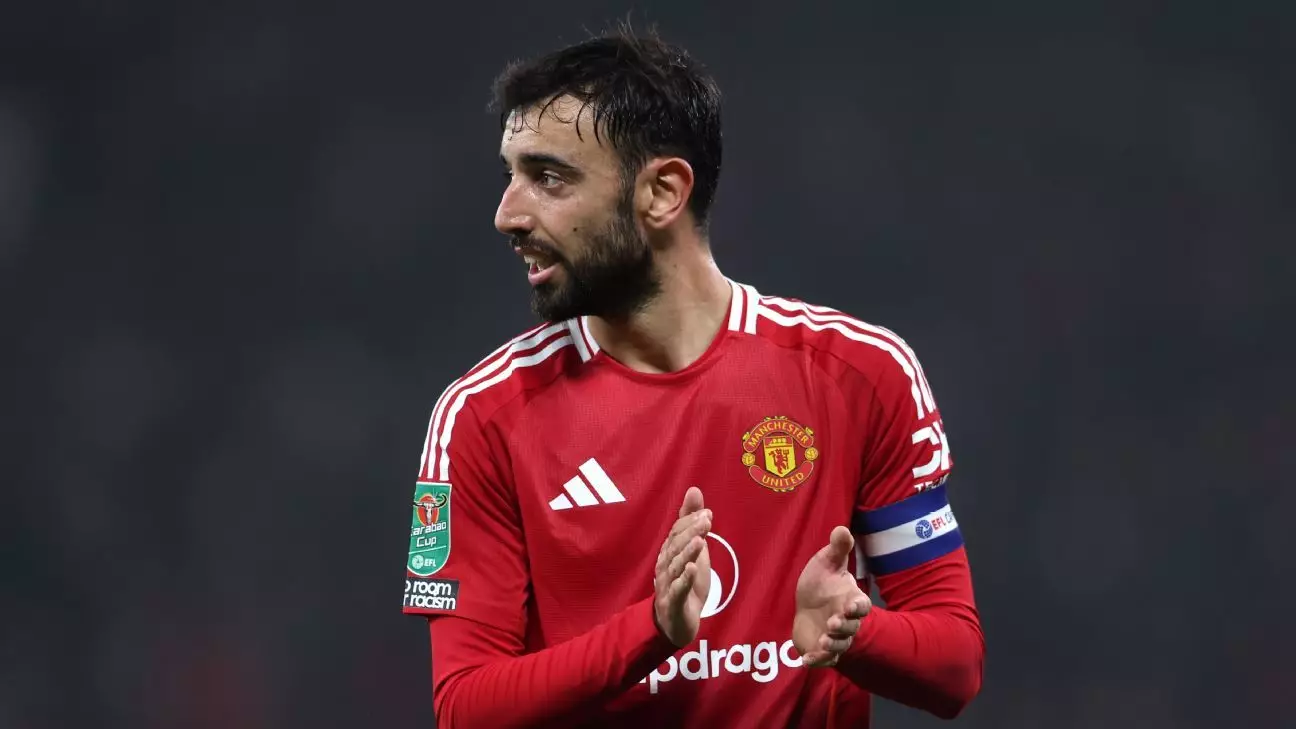
The recent sacking of Erik ten Hag has sent shockwaves throughout Manchester United, a club steeped in history and expectations. Bruno Fernandes, the team’s midfield linchpin, shared his perspective on the situation, revealing a deep sense of disappointment and accountability following the Dutchman’s departure. As Manchester United continues to grapple with inconsistent performances and results, Fernandes recognizes that the players themselves must shoulder some of the blame. His apology to Ten Hag underscores both a personal and collective responsibility within the team—a theme that resonates profoundly in the realm of professional sports.
In a candid interview with Sky Sports, Fernandes stated, “Whenever you see a manager go you have to take some of the blame on yourself.” This admission reflects an introspective leader who understands the nuances of team dynamics. Rather than directing all the blame toward the coach, Fernandes’ acknowledgment that “it is easier to get rid of a manager than 15 players” highlights a systemic issue prevalent in many football clubs, where swift decisions are made at the managerial level, often as a misguided effort to rectify deeper-rooted issues within the team.
Fernandes’ comments point to a broader question regarding player accountability. In football, managers are often seen as the first line of defense against poor performances; however, the responsibility doesn’t lie solely with them. It’s the players who, after all, execute the strategies in the heat of the match. In expressing his personal sense of responsibility—particularly in his own struggle to find the back of the net—Fernandes sheds light on an uncomfortable truth: that many players may not be performing to their full potential.
The recent draw against Chelsea in the Premier League further exemplifies this point. Although Fernandes scored from the penalty spot, the match left a lingering feeling of dissatisfaction. The club’s struggles this season are manifested not only in results but in a palpable decline in confidence and morale among key players. This reflection serves as a clarion call for the United squad to reassess their commitment and contributions, not just for the sake of the club but for themselves as professional athletes.
Transitioning Forward
In the wake of Ten Hag’s departure, Manchester United appointed Ruud van Nistelrooy as the caretaker manager. His immediate goal? To stabilize the team amid tumultuous emotional upheaval. Van Nistelrooy articulated the difficulty of the task at hand, noting, “It has been very difficult… a rollercoaster of emotions.” The challenge is two-fold: to prepare the team for matches and to help them navigate the psychological toll of witnessing a coaching change. His words resonate with anyone who’s faced sudden shifts in their work environment; it’s never merely about strategy on the field but also about managing emotions off it.
As the players face the task of looking “in the mirror” and confronting their inadequacies, a question lingers: can they rise above their current challenges? The pressure mounts with every match, and van Nistelrooy is aware of the expectations placed on United to perform well in front of their loyal fanbase. The team’s performances must evolve rapidly; otherwise, they risk further alienation from the supporters who fill the iconic Old Trafford week in and week out.
With the imminent arrival of new managerial talent in Rúben Amorim, van Nistelrooy’s future remains uncertain. The decision to bring new staff to Old Trafford could lead to a significant shift in how the team operates both on and off the field. It invites questions about cohesion and adaptation; how will the existing players respond to a new voice and new tactics?
In closing, the sacking of Erik ten Hag serves as more than just a momentary disruption for Manchester United; it’s a pivotal juncture that demands reflection, accountability, and above all, a commitment to improvement. As the managerial transition unfolds, the combined efforts of Fernandes, van Nistelrooy, and a reenergized squad will be crucial in steering the club back on the path to success. The future of Manchester United depends not just on the decisions made in the boardroom, but equally on the character and resolve of its players.