
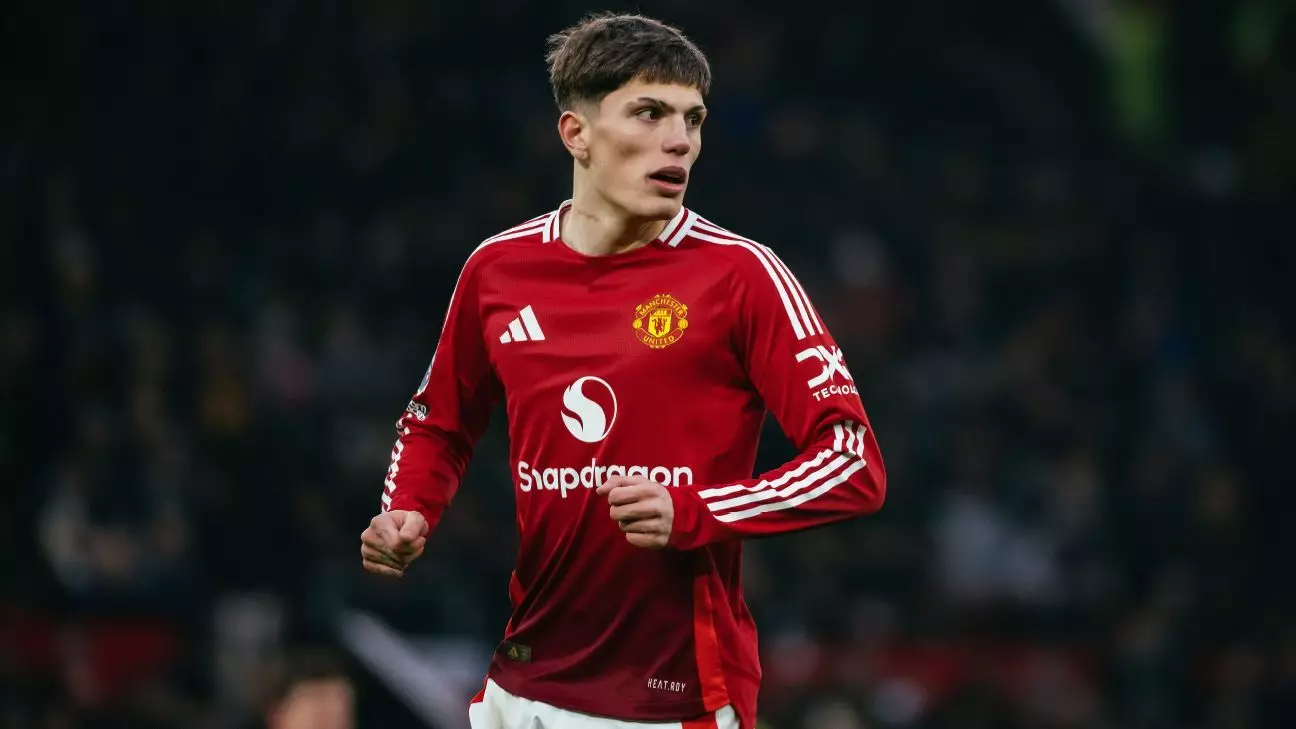
In the spotlight of a high-profile football match, moments of tension can sometimes lead to decisions that require intervention from management. Recently, Manchester United’s manager, Ruben Amorim, found himself addressing an incident involving young talent Alejandro Garnacho, who reacted poorly after being substituted during the team’s match against Ipswich Town. Garnacho’s decision to head straight to the dressing room instead of remaining on the bench presented an opportunity for reflection, highlighting both the player’s immaturity and the club’s commitment to professional conduct.
The reaction from Amorim demonstrates the delicate balance between disciplinary action and mentorship in professional sports. Rather than taking a hardline approach, Amorim opted for a solution that incorporates an informal punishment—having Garnacho pay for a team dinner. This gesture not only aims to foster camaraderie among teammates but also serves as a reminder of the behavior expected in a prestigious club like Manchester United. Amorim’s measured response illustrates a growing understanding of how to nurture young players while ensuring they are aware of the implications of their actions.
Management’s Role: Guiding Young Talent
Amorim’s strategy reflects an astute understanding of the psychological elements at play in team dynamics. He emphasized the importance of addressing not just the disciplinary aspect of Garnacho’s behavior but also the need for open dialogue between the player and management. The opportunity for Garnacho to engage with Amorim following the incident—making a proactive effort to clear the air—speaks volumes about the player’s commitment to personal growth and accountability.
Indeed, young athletes must navigate the pressures of professional sports within the broader context of societal expectations. As Amorim pointed out, perception plays a key role; however, it is equally vital for players to develop self-awareness. The learning curve for Garnacho is steep, and under Amorim’s guidance, there is potential for him to mature into not only a skilled player but also a role model for others following in his footsteps.
Moving Forward: Focus on the Future
Looking ahead, Garnacho’s availability for upcoming fixtures, such as the FA Cup fifth-round tie against Fulham, signals a crucial moment for both him and the club. Though he is contending with an injury sustained during the match against Ipswich, his potential for recovery and subsequent performance will be closely watched. The incident serves as a reminder to both players and fans that setbacks can arise, but it is how players choose to respond that ultimately determines their trajectory.
Moreover, Amorim’s emphasis on learning from mistakes, alongside supporting young players through tough lessons, positions him as a valuable mentor in the high-stakes environment of professional football. As Garnacho continues to hone his on-pitch skills, the lessons learned off the pitch about humility, teamwork, and discipline are equally essential for his development.
The incident involving Alejandro Garnacho underlines the complexities of managing youthful talent in a highly competitive arena. It highlights the importance of maintaining professionalism and the necessity for young athletes to cultivate a strong sense of responsibility. The thoughtful approach taken by Ruben Amorim not only addresses the immediate issue but also creates an environment where players can learn, grow, and ultimately contribute to the team’s success.