
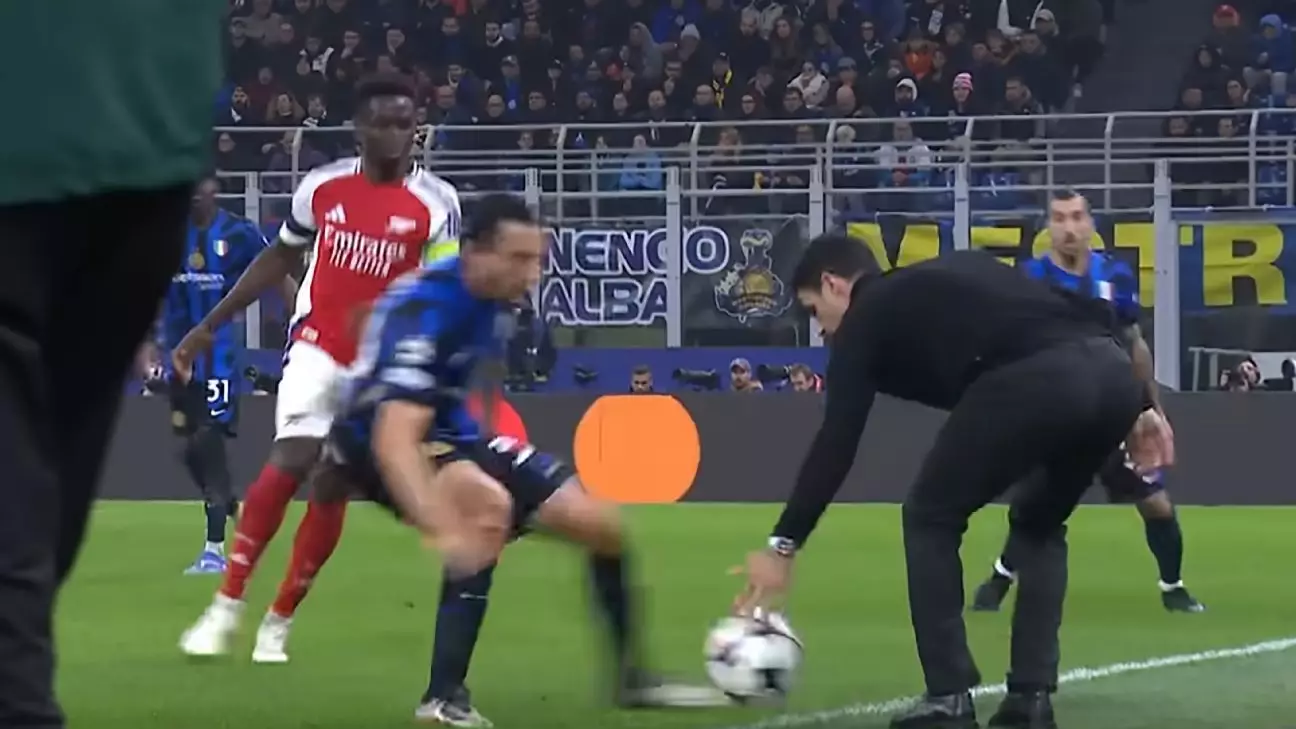
In light of recent controversial incidents involving coaches interfering with play, the International Football Association Board (IFAB) is revisiting its disciplinary framework. This pivotal movement follows a noteworthy event during the Champions League match between Inter Milan and Arsenal, when Gunners’ manager Mikel Arteta managed to evade a red card after an apparent infraction. This situation has catalyzed broader discussions regarding the role of coaches on the sidelines and their influence on the regulation of the game.
During the clash at San Siro, defender Matteo Darmian attempted to clear the ball on the sidelines. In an attempt to hasten the game’s pace, Arteta picked up the ball before it had fully crossed the touchline. Referee Istvan Kovacs displayed a yellow card to Arteta, but this ruling was inconsistent with existing guidelines, which stipulated that such interference should warrant a red card. The inconsistency in officiating and the subsequent uproar brought about by this oversight are reflective of a larger issue regarding how infractions by coaches are currently managed.
The scenarios faced by both Carlos Corberán of West Bromwich Albion and Kilmarnock’s Derek McInnes earlier in the season only reinforce the need for this legislative review. Both managers were sanctioned with dismissals under comparable circumstances, prompting discussions that ultimately led to the IFAB’s Annual Business Meeting where these regulations were scrutinized. The collective understanding among stakeholders is that the intent behind a coach’s interference—specifically, a desire to expedite the game’s resumption—should be factored into any disciplinary action.
The proposed revisions are poised to shift penalties from harsher outcomes, such as automatic red cards, towards cautions under similar circumstances. This leniency reflects an acknowledgment of acceptable coaching behavior aimed at keeping gameplay fluid and engaging. To cement these changes, the IFAB plans to put this recommendation forward at their Annual General Meeting scheduled for March 1. Such a decision would symbolize a notable evolution in how coaching conduct is interpreted within the sport.
Moreover, additional changes on the horizon include amendments to the dropped ball rule. Currently, the protocol favors the team in possession if their pass inadvertently strikes the referee. The proposed adjustment suggests fairness in instances where a pass is misguided and would advantage the opposing team. By ensuring that the dropped ball distribution aligns more closely with the spirit of the game, such reforms may reduce disputes and promote a smoother flow during gameplay.
As the football community observes these developments, the overarching goal is to enhance the clarity and fairness of the game. By prioritizing the intent behind coaching actions and refining technical rules, the IFAB showcases its commitment to improving the sport’s integrity. Precedents set in these discussions will not only influence how coaches engage in match situations but also foster a culture of sportsmanship and respect both on and off the pitch. The outcome of these changes remains to be seen, but if implemented, they could mark a significant step forward in aligning the game with contemporary expectations of conduct and fairness.