
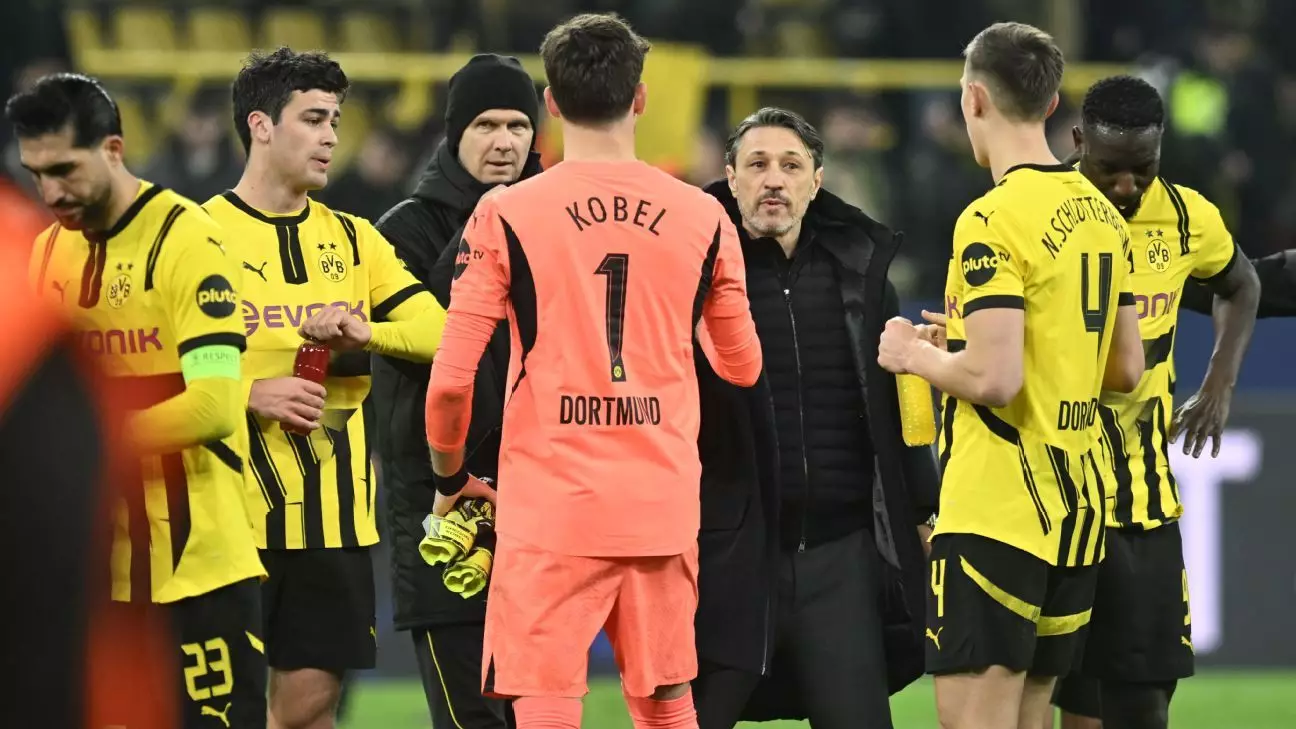
The past few seasons have been nothing short of tumultuous for Borussia Dortmund, a club synonymous with ambition and a storied past. Yet, as we reflect on the eight rounds of Bundesliga action that have come and gone, it raises alarms that Dortmund has not even sniffed the top half of the table. This decline is particularly jarring when you consider the resources at their disposal. Historically, Dortmund has boasted a position among Germany’s elite, consistently contending for domestic titles and engaging in the Champions League. So, what has gone wrong?
The season began with a wave of optimism, fueled by a remarkable UEFA Champions League run last year, which should have instilled confidence among fans and management alike. New signings like Waldemar Anton and Serhou Guirassy, in addition to the exciting potential of Maxi Beier, were seen as key building blocks for a squad that had finished fifth and was reforming under new leadership. However, the departure of longstanding figures like Marco Reus and Mats Hummels served as an alarming signal, indicating that a mighty club was in transitional peril.
The Illusion of Stability
Borussia Dortmund often throws around the term “Stallgeruch,” which implies a certain familiarity and connection to the club’s ethos and culture. This idea was intended to be embodied in the hire of Nuri Şahin, who had spent the last season as an assistant coach, a position that was thought to provide him with invaluable insight into the squad’s dynamics. But despite all intentions, the magic of familiarity has seemingly faltered. The promotion of Lars Ricken to sporting CEO, coupled with Sven Mislintat’s controversial but necessary return as a talent spotter, promised to stabilize the club. Ironically, rather than fortifying Dortmund’s ambitions, these moves have only highlighted their inconsistencies both on and off the pitch.
In particular, the Hinrunde revealed Dortmund’s fractured identity. At home, they are a formidable opponent, but on the road, they falter under pressure, raising questions about both mentality and depth in their squad. Their troubled campaign also saw a dismal exit from the DFB-Pokal at the hands of Wolfsburg, a match that revealed nothing short of chaotic disarray with key players sidelined by injuries. Yet the Champions League offered a silver lining, further emphasizing this duality within the club.
Coaching Conundrums
The arrival of Niko Kovač came amidst mounting frustrations, positioning him as the hard-nosed figure who could potentially regenerate the ethos within the locker room. However, the timing of his hiring could not have been worse; a mid-winter appointment rarely affords a new coach an adequate opportunity to implement a vision without the full context of a pre-season to galvanize the team. Kovač’s immediate task? Assess a poorly conditioned squad. The team’s shortcomings were brutally exposed during their clashes in the Champions League, notably against Lille, where a promising start blurred into exhaustion, mirroring the team’s lack of cohesion.
The next few weeks are critical for Kovač to infuse a renewed vigor into his players. Upcoming matches against Augsburg, Lille, and Leipzig will create pivotal moments that could define the trajectory of the entire season. Despite their current position, BVB has a glimmer of hope; they find themselves just a few points behind Leipzig, whose own consistency has been shaky this year.
A Struggle for Identity
Amid this chaos, one of the fundamental questions persists: where does Borussia Dortmund go from here? Previously a magnet for rising stars, BVB has seemingly lost its allure to rivals like Eintracht Frankfurt, who now capitalize on developing young talent into soccer’s next big stars. The likes of Erling Haaland and Jude Bellingham once flourished in the black-and-yellow jersey, yet now there is a growing concern over whether any current player would even make a starting lineup for Bayern Munich or Bayer Leverkusen.
Comparing individuals within the squad underscores this issue. Players like Julian Brandt, previously heralded as a talent, are clearly overshadowed by contemporaries such as Jamal Musiala and Florian Wirtz. The previous promise of vibrant attacking football appears stymied by a lack of innovation and sharpness. Meanwhile, Gio Reyna has not been able to seize control of the opportunities presented to him, deepening the concerns over Dortmund’s talent pool.
As we gaze into the coming fixtures, the news isn’t all grim. If Dortmund’s management and coaching staff can harness the right strategies and instill a winning mentality, they could navigate out of the quagmire they currently find themselves in. The upcoming matches against Augsburg, Lille, and Leipzig serve not just as tests of skill, but as critical junctures that could jet propel the club’s revival or drive them deeper into stagnation.