
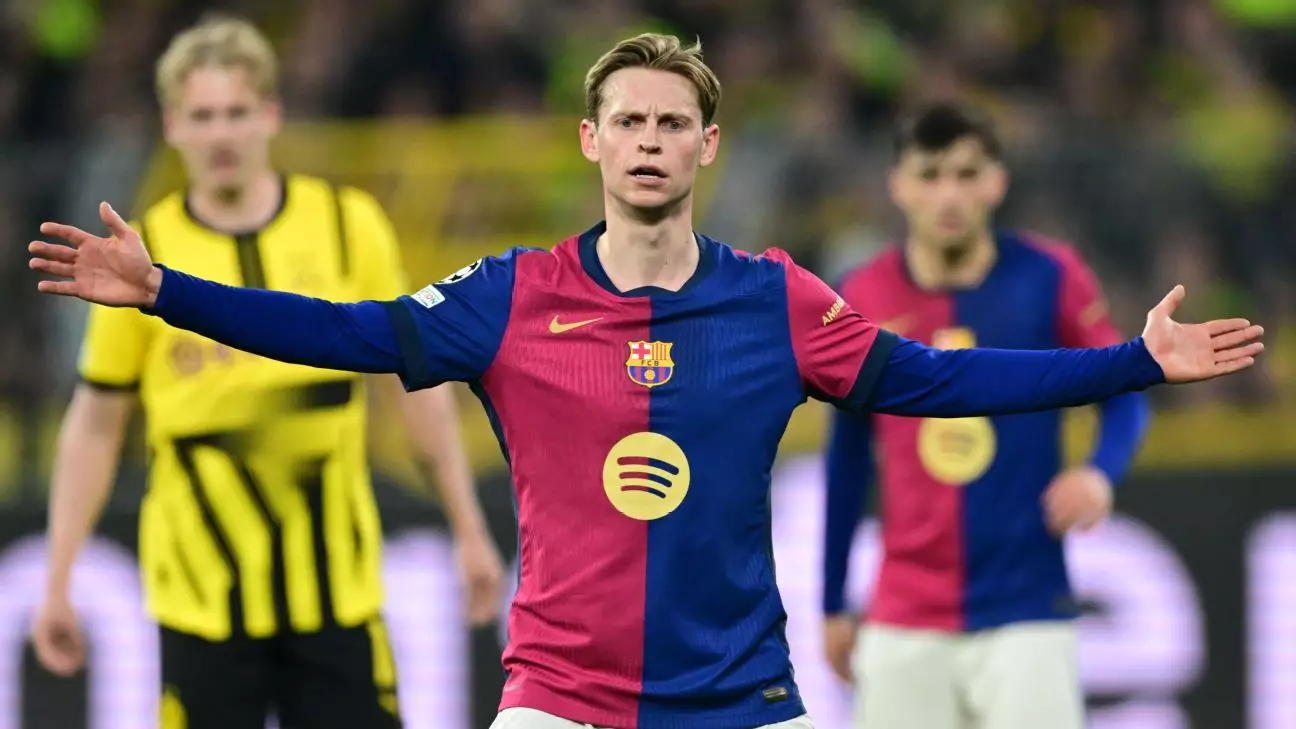
Barcelona’s recent progression to the semifinals of the UEFA Champions League embodies a complex emotion that dances between triumph and caution. The exhilaration of reaching this prestigious stage for the first time since 2019 is undeniably overshadowed by a 3-1 defeat at the hands of Borussia Dortmund. This victory for Dortmund, highlighted by the exceptional performance of Serhou Guirassy—who netted a hat trick—initially left fans wondering if the once-mighty Barcelona was truly back or still grappling with ghosts of European failures.
The contrasting emotions observed amongst Barcelona’s players after the game painted a vivid picture of their state of mind. One would expect exuberant celebrations following progression in a tournament of this magnitude, but the reality was more somber. This conflicted atmosphere raised questions about the team’s mentality and the expectations they carry. In an age where instant gratification dominates the sporting landscape, a fleeting sense of pride shows that perhaps the path ahead remains littered with uncertainties and challenges that the players are still learning to navigate.
Shadows of History Loom Large
As the match unfolded, Barcelona appeared to replay the tapes of their past disappointments against formidable adversaries like AS Roma and Liverpool. Fans could not help but feel the echoes of these disastrous nights, wherein hope flickered only to be extinguished in moments of defensive vulnerability. Although Barcelona secured advancement with a 5-3 aggregate victory, the undulating nerves experienced during the second leg in Dortmund exemplified the fragility that accompanies high-stakes football. Each shaky pass and defensive lapse spoke volumes, revealing that even rejuvenated teams carry the weight of history upon their shoulders.
Head coach Hansi Flick aptly recognized the team’s mixed emotions, acknowledging that the air in the dressing room was tense. He opined that the players’ high expectations are both a virtue and a burden, maintaining that his young squad needs to focus on the overall progress that has led them to this crucial juncture. The disappointment felt after a vital victory signifies the innate ambition rooted within the team—the very same ambition that once characterized the era of dominance in Catalonia.
Emergence of Young Talent
While the overall performance against Dortmund showed flaws, one cannot overlook the stunning emergence of Barcelona’s youth talents, who have been key drivers of their progress this season. Strikers like Raphinha and Robert Lewandowski have become the backbone of their attack, offering both goals and creativity. Their combined tally of 82 goals is an astounding figure that puts them among Europe’s elite attacking forces. The delightful nuance in their play continues to provide hope, yet the absence of key players like Alejandro Balde and the resting of others led to struggles that left Barcelona exposed.
The harsh reality of such matches often boils down to how well teams can adapt under pressure. Barcelona seemed ill-prepared in moments, with crucial defensive errors that allowed Dortmund back into a game they could have easily controlled. Coupled with the intensity provided by a lively crowd at Signal Iduna Park, the team faltered when it mattered most. Flick’s words echoed in the minds of supporters: “We were not good enough.” It’s an assessment that requires introspection, as they prepare for tougher tests ahead.
The Road Ahead: An Opportunity for Redemption
As Barcelona’s players carefully step into the spotlight of the semifinals against larger clubs like Bayern Munich or Internazionale, the experiences gleaned from such turbulent encounters could ignite a fervor within them. The team must transform the discomfort felt against Dortmund into motivation, using it as fuel for their journey forward. They sit atop LaLiga and have a Copa del Rey final on the horizon, making it clear that there is much at stake.
The fervent spirit of the Barcelona fans has certainly reignited hope and belief in their potential for a brighter future. The banner declaring “Barça are back” serves as a reminder of the club’s vast historical significance. However, the results of a practice session in the coming weeks will beautifully unfold the narrative—whether they will ensure that past failures are merely shadows or reaffirm their status as champions once again. This paradox encapsulates the beauty of football: it demands a resilient heart amidst the storm, and in this lies the greatest essence of its magic. As Barcelona navigates this critical crossroads, one does not need to look too far to find that the past only serves as a stepping stone to an unforeseen sporting renaissance.