
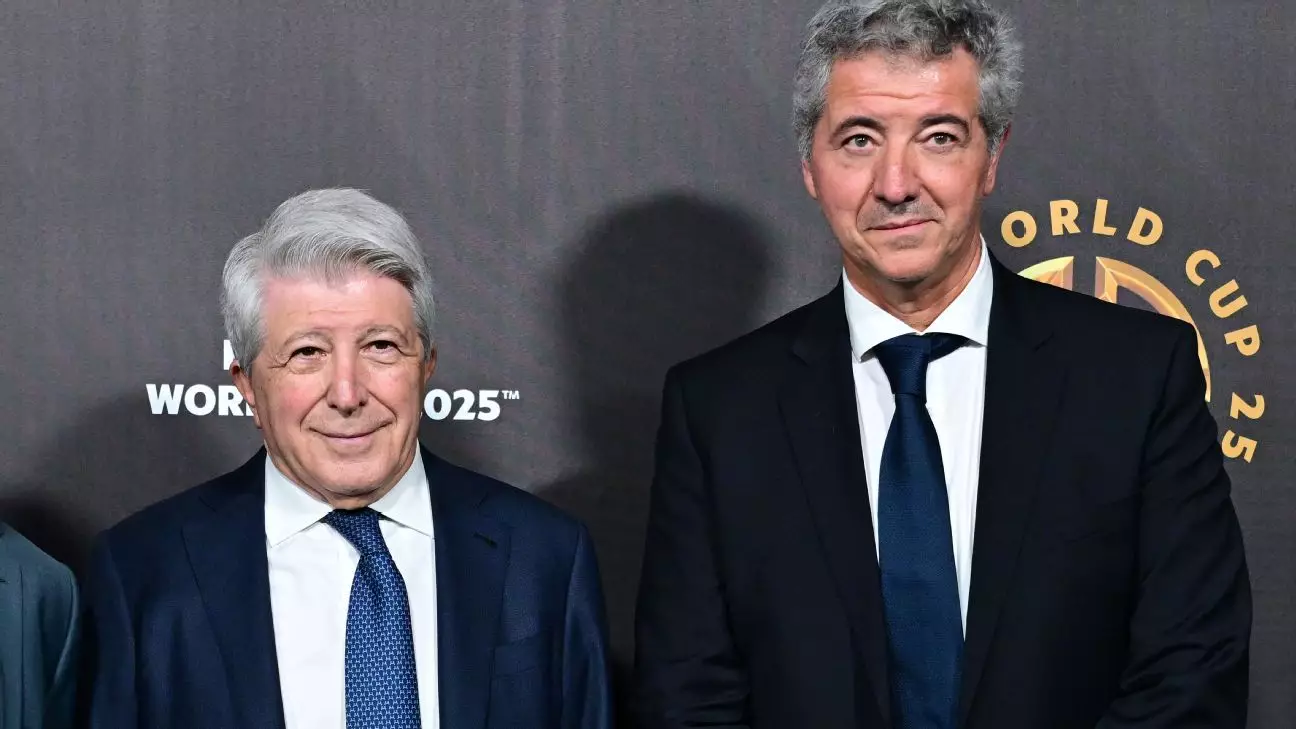
In recent months, the football landscape has been dramatically reshaped by ongoing discussions regarding the Super League, a controversial project that has emerged as a focal point for debate among clubs, fans, and governing bodies. Central to this dialogue is Miguel Ángel Gil Marin, the chief executive of Atlético Madrid, who has publicly expressed his skepticism about the project’s viability and implications. His criticisms shed light on broader concerns regarding the future of football governance and competition.
Gil Marin’s statements reflect a growing disenchantment with the Super League, which he accuses of fostering uncertainty rather than providing clear benefits to the football community. According to him, the original vision of the Super League was driven by an exclusive model that threatened to undermine the existing structure of European football. Initially backed by a dozen prestigious clubs, the project has since faced significant backlash leading to Atlético Madrid’s withdrawal, one of the first signs of dissent among its founding members.
One of the primary critiques leveled by Gil Marin is that the latest incarnation of the Super League—now referred to as the “Unify League”—has devolved into a pursuit of vindication for a select few clubs. This sentiment is particularly evident in his remark, “Now it’s just about vindication for one club, in its stubborn fight against the system.” His assertion underscores a critical concern that the project, rather than being a collective effort to enhance European football, appears to serve the interests of a few powerful entities. This realization might fuel further disenfranchisement among smaller clubs, which depend on the existing competitive framework to ensure their financial stability and continuity.
Gil Marin suggests that the path to reform should occur from within the established systems rather than through the imposition of external challenges. He argues that trying to disrupt UEFA’s current framework—one that has expanded avenues for club participation across Europe—will only exacerbate uncertainties for television networks, sponsors, and fans alike. This insight places significant emphasis on collaboration and the necessity for a balanced approach in dealing with governance issues in football.
Another vital point raised by Gil Marin revolves around player welfare amidst an increasingly packed schedule. He has called for limits on the number of games players can be involved in, indicating a deep concern for their health. This focus on players is critical, as the professional demands often put enormous pressure on athletes, leading to burnout and injuries. In light of the congested sporting calendar, increasing awareness and action policies designed for player protection is paramount.
Atlético Madrid’s position as a top contender in LaLiga, reinforced by strategic investments in new talent during the summer transfer window, reflects the club’s adaptive approach to contemporary challenges. With significant signings like Julián Álvarez and Alexander Sørloth, Atlético demonstrates that proactive strategies within established leagues can yield rewards without resorting to disruptive alternatives like the Super League.
As Atlético Madrid continues to navigate its path in top-flight football, the club remains committed to finding sustainable ways to compete while upholding the integrity of the sport. Gil Marin’s reflections are not just a stance against the Super League; they represent a call to reinforce the significance of competitive balance and inclusivity in football. By speaking out against the exclusivity promoted by the Super League, he champions a narrative that emphasizes the importance of maintaining football’s wide-ranging appeal across diverse levels and clubs.
Atlético Madrid’s leadership under Miguel Ángel Gil Marin embodies a thoughtful critique of current football governance trends, particularly concerning the Super League model. His insights place a strong emphasis on collaboration, player wellbeing, and the health of the sport as a whole. As football continues to evolve, the call for sustainable change and collective progress remains more vital than ever. Only through mutually beneficial dialogue and cooperation can the integrity of the game be preserved, ensuring its vitality for generations to come.