
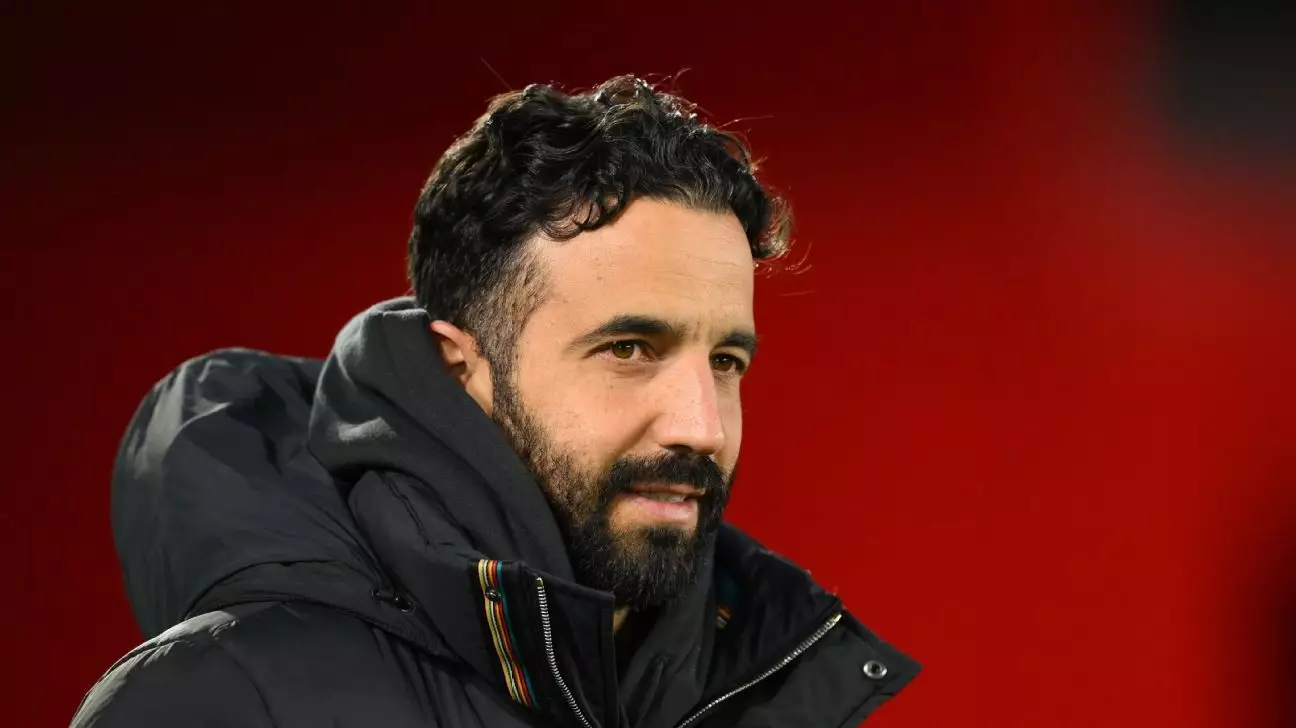
Ruben Amorim, the newly appointed manager of Manchester United, is inheriting a club grappling with its identity and performance in a high-stakes football ecosystem. Currently standing in 13th place in the Premier League, United faces an uphill battle, particularly as it prepares to clash with their formidable local rival, Manchester City. The disparity in points—36 behind the league leaders, Liverpool—emphasizes the vast chasm in performance and expectations. Amorim’s candid acknowledgment that he would be “crazy” to envision a title victory in the immediate future encapsulates the sobering reality of the club’s circumstances.
The expectation on Amorim and his team to reclaim the Premier League title, a feat not achieved since 2013, mirrors the weight of historical legacy that hangs heavily over Old Trafford. Nevertheless, Amorim is realistic about the transformation needed within the club. His approach balances ambition with patience, acknowledging that changing the culture and standards at such a storied institution requires time and strategic planning.
Building a New Culture
In a recent press conference, Amorim articulated his commitment to implementing rigorous standards within the squad, emphasizing the necessity for players to adapt to a new philosophy. “We are suffering a lot to be a lot better next year,” he stated, reflecting the daunting task ahead. The club’s vision is clear: they aim for the 2027-28 season to mark their return to title-winning glory, coinciding with the club’s 150th anniversary. This is an ambitious, albeit daunting, target that provides a three-year timeline for significant improvement.
Yet, the journey toward reclaiming the summit of English football will not be quick or easy. Amorim is acutely aware that Manchester United cannot expect to compete with the likes of Manchester City, Liverpool, and Arsenal overnight. The task of redefining team dynamics and instilling a winning mentality will take precedence over immediate results. Amorim’s transparency about his ‘rush’ to succeed is palpable; however, he is equally cognizant of the colossal gap that exists—a gap that goes beyond just skills on the pitch.
The Footsteps to Competitiveness
It’s imperative to recognize that Manchester City’s dominance over the past six years poses a significant benchmark for Amorim’s squad. The stakes are high, and there is a consensus that while time is necessary to cultivate competitiveness, a sense of urgency must also permeate the club’s culture. “What I don’t want to think is that we need a lot of years to be competitive,” Amorim noted, highlighting his belief in the potential to accelerate progress.
A key aspect of this transformation lies in recruitment. Amorim expressed intentions to bring in one or two marquee players—a notion that comes with its own set of challenges. The definition of a ‘big player’ can vary significantly, but it is clear that transformative signings will be crucial to catalyze the ambitious vision he holds for the team.
Moreover, the fitness and availability of players will critically influence United’s momentum. Recent developments regarding midfielder Kobbie Mainoo’s return to training bring a glimmer of hope, indicating the importance of squad depth and recovery as the team navigates a demanding schedule. Simultaneously, the loss of Matthijs de Ligt, who has become a vital cog in the squad, underlines the fragility that can derail aspirations if not managed effectively.
Amorim’s management style will likely be scrutinized, not only for tactical acumen but also for how he can weave the narratives of history, ambition, and resilience into a cohesive team that not only plays for wins but for a renewed sense of pride. The journey may seem daunting, but with clear objectives and a commitment to gradual improvement, there is potential for Manchester United to emerge not only competitive but formidable once again in the landscape of English football.