
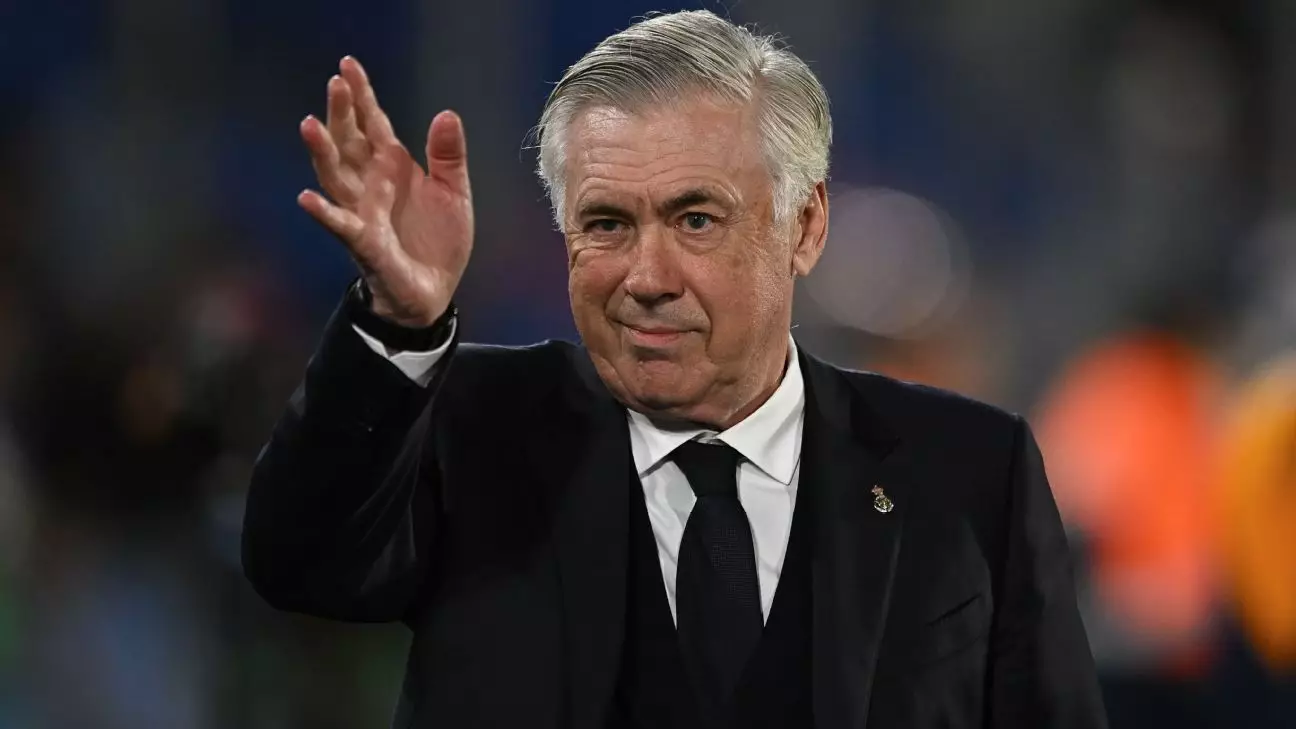
Real Madrid finds itself at a significant crossroads, one characterized by the need to revamp a roster laden with experience but weakened by injuries. Carlo Ancelotti, the venerable manager, recently articulated his perspective on the club’s current trajectory following a disappointing season. While rivals Barcelona secured the LaLiga title, Madrid’s ambitions in the Champions League and Copa del Rey crumbled under the weight of unanticipated player absences and a lack of decisive action in previous transfer windows.
Ancelotti’s assertion that he couldn’t have asked for more could be perceived as both a testament to the club’s ambition and an acknowledgment of its flaws. The disappointment of the past season illustrates a deeper issue: Real Madrid’s ability to adapt and address its needs in real-time. While injuries undoubtedly played a role, the question remains—could a more proactive stance on player buy-ins in key positions have altered the narrative?
Dilapidated Defense: A Call for Reinforcement
Injuries to key defenders, including Éder Militão and Dani Carvajal, left Madrid vulnerable during critical moments, exacerbating vulnerabilities that rivals readily exploited. The club’s response to this weakness has been to secure young talents like Dean Huijsen and engage in discussions over established players like Trent Alexander-Arnold and Álvaro Carreras. This strategy reflects a shift toward a more youthful, dynamic squad that can secure both immediate and future success.
However, Ancelotti’s retrospective optimism about past decisions raises eyebrows regarding the club’s strategic foresight. With the glaring absence of an effective defensive line during pivotal matches, one might question why the managerial staff hesitated to strengthen the squad in the last summer or winter transfer windows. While injuries are an unfortunate part of the sports narrative, the lack of depth and planning within the squad suggests a need for a more thorough evaluation of future strategies.
Understanding the Bigger Picture
Ancelotti’s comments on the decisions made mirror the broader dynamics of football management, wherein leadership and ownership often intersect. His reflection on the lack of mid-season reinforcements highlights the interconnected nature of management and team performance. While celebrating the past contributions of signings such as Eduardo Camavinga and Jude Bellingham, it’s crucial to evaluate whether the current roster is equipped to meet the rigorous demands of top-level competition.
“All decisions have been taken with me,” Ancelotti affirmed, emphasizing the collaborative decision-making structure within Real Madrid. As Madrid prepares for the shifting sands of managerial change, with Ancelotti nearing a transition to the Brazilian national team, the next chapter may redefine the club’s identity. The forthcoming arrival of management figures like Xabi Alonso could herald a refreshing ethos, one that prioritizes talent acquisition and squad fortification.
Barcelona’s Triumph: A Moment for Introspection
Barcelona’s ascendance to the championship reignites discussions about the competitive landscape within LaLiga. Ancelotti’s gracious acknowledgment of their success underscores a sense of sportsmanship but also showcases the stark contrast in consistency and tactical innovation displayed by both clubs. While Madrid grappled with injuries, Barcelona cemented its place at the pinnacle through strategic gameplay and a robust roster, revealing gaps that Madrid must urgently address.
Ancelotti’s remarks reflect a broader understanding of football where success is not solely defined by individual brilliance, but rather by cohesive team mechanics. As Real Madrid prepares for a new era, it’s apparent that the synthesis of strategy, resilience, and adaptability will define its journey. The lessons learned in this season of turbulence could serve as touchstones for building a fortress capable of reclaiming its place atop the football hierarchy.
A Management Shakeup: New Directions Ahead
The impending departure of Ancelotti marks more than a managerial change; it signifies a philosophical pivot for the storied club. Embracing a new coach like Alonso entails more than fresh tactics—it’s about rejuvenating the spirit within the locker room and re-embedding a winning culture. Madrid’s legendary status is both a strength and a burden, as expectations loom large over every decision and performance.
As the club begins to finalize its squad rebuilding and management overhaul, the focus must include a comprehensive analysis of player roles, mentorship, and tactical adaptations suitable for the modern game. The urgency for Real Madrid isn’t merely in catching up with rivals; it’s about reinforcing its legacy as a powerhouse capable of innovation and rebirth amidst challenges. As fans eagerly await the next chapter for their beloved club, the anticipation for revitalized hope rests heavily on strategic foresight and actionable plans that pave the way for a bright future.