
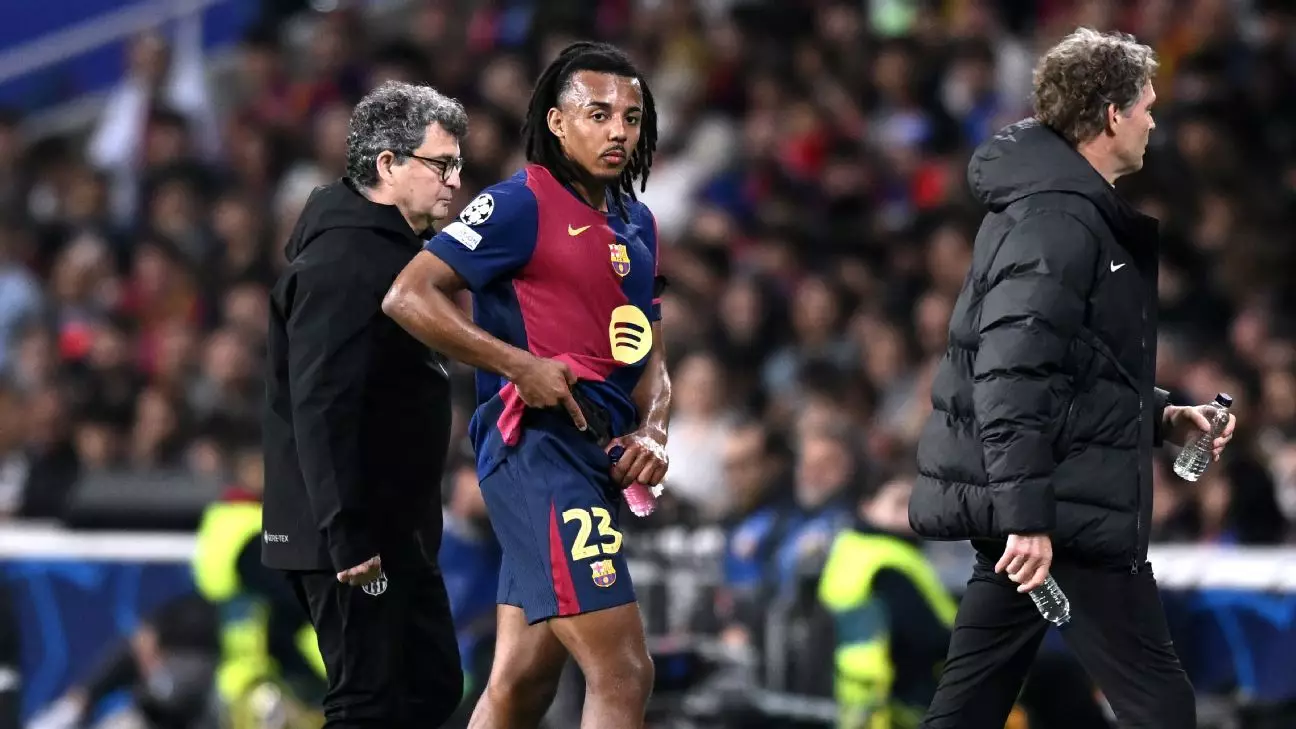
In the modern landscape of football, where youth often collides with experience, the narrative surrounding budding talents becomes increasingly intriguing. One such storyline was brought to life during the recent Champions League semifinal clash between Inter Milan and Barcelona, where 17-year-old Lamine Yamal made headlines for his impressive performance. Yet, his feats were met with unexpected criticism from Inter Milan’s own striker, Marcus Thuram, who insists that the young Spaniard doesn’t yet merit the title of ‘best player in the world.’ Instead, Thuram prioritizes his fellow Frenchmen, Ousmane Dembélé and Kylian Mbappé, as superior talents, sparking a debate about the essence of greatness in the sport.
The Phenomenon of Youth
Yamal’s performance was electrifying; having scored a stunning individual goal, he somehow rallied Barcelona from a daunting 2-0 and 3-2 deficit, ultimately contributing to a thrilling 3-3 draw. Inter coach Simone Inzaghi lauded Yamal as a “phenomenon,” invoking the idea that talents like him are rare, appearing once every half-century. But what does this really quantify? While Yamal’s achievements, including his 100th appearance for Barcelona so soon after debuting at a mere 15, are undoubtedly impressive, Thuram’s phrasing paints a broader picture of the dynamic between emerging and established players. Youthful exuberance can light up a match, but when discussing the best in the business, longevity and consistency in high-stakes scenarios often come into play.
The Weight of Experience
Thuram’s assertion that Dembélé and Mbappé eclipse Yamal speaks volumes about the value placed on experience versus potential. In a world where players like Dembélé have racked up 33 goals this season and made substantial contributions to PSG’s pursuit of trophies, it’s clear why such accolades often accompany veteran players. Likewise, despite facing adversity in a new environment following his transfer to Real Madrid, Mbappé’s capability to find the back of the net 34 times this season showcases his adaptability and resilience. These elements contribute to their current superiority in Thuram’s eyes and underline the fact that greatness is often measured not just by peaks, but by a consistent flow of performance over years.
A Critical Reflection on the Future of Football
Thuram’s remarks are not merely a defense of his peers—they serve as a critique of the changing landscape of football fandom, which readily elevates young talents to god-like status based on a handful of brilliant performances. Should we not respect the nuances that come with years of refining one’s craft? Lamine Yamal certainly represents the future; however, placing undue expectations on him to match his older counterparts could be detrimental to both his development and the sport.
As the second leg of this Champions League bout looms on the horizon, the football community remains on edge, eager to witness how this drama unfolds. Will established stars maintain their reign, or will new talents rise to claim their place in the annals of football history? The line between present glory and future promise is often blurry, making for one of the most captivating narratives in sports today.