
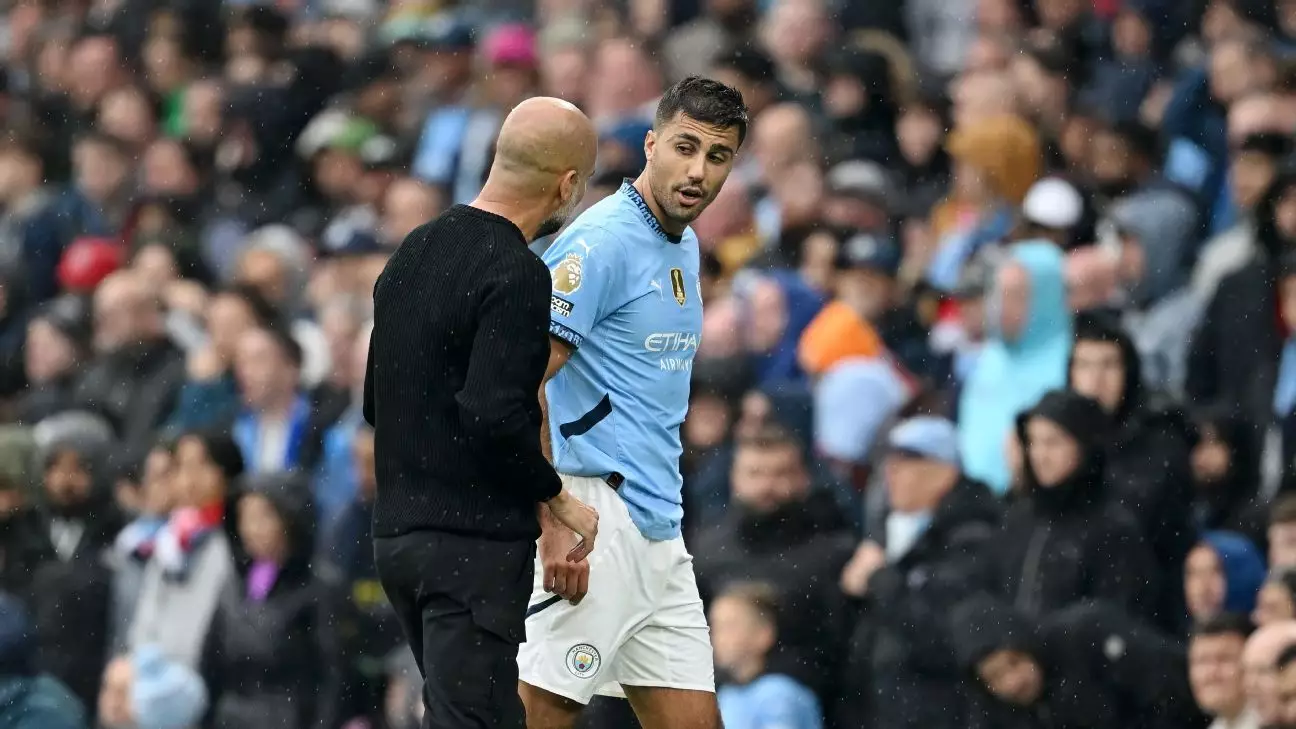
Rodri’s recent comments regarding Pep Guardiola’s contract extension offer a compelling glimpse into the dynamics at Manchester City. For the Spanish midfielder, the news of Guardiola committing to the club until June 2027 serves as “an important incentive” for his own future at the club. It’s evident that Guardiola’s presence has been transformative for Rodri’s career; the 28-year-old has expressed immense gratitude for the coach’s role in his development since joining City in 2019. His words reflect not just a sense of professional loyalty but also a personal connection with a coach who has proven to be instrumental in his success.
Guardiola’s extension provides a stable backdrop for Rodri as he navigates through a challenging recovery from a torn ACL injury. This stability can be critical for players like Rodri, who are trying to balance personal aspirations with the demands of professional football. The joy he expresses about Guardiola’s extension is palpable, indicating that this decision may influence his future plans and commitment to the team.
Future Plans and Transfer Speculations
While Rodri indicates he feels valued at Manchester City and hints at the possibility of ending his career there, he is not dismissive of Real Madrid’s rumored interest. His acknowledgment of Madrid as “the best and most successful club in history” demonstrates a mix of respect and ambition. This duality in his statements paints a picture of a player who is both fiercely loyal yet simultaneously aspirational.
Rodri’s perspective on transfers reveals a nuanced understanding of modern football’s unpredictable landscape. Even as he celebrates Guardiola’s tenure, he has left the door open, recognizing the allure of Madrid while reaffirming his commitment to Manchester City. The player deftly balances admiration for potential future opportunities with a strong attachment to his current club, making his future all the more enticing for fans and analysts alike.
Currently focused on recovery, Rodri emphasizes the importance of regaining his peak fitness before contemplating his next move. “Right now I’m not thinking about football,” he mentioned, highlighting a mature approach to rehabilitation. Injuries can be tumultuous periods for professional athletes, and his comments reflect a positive mindset, concentrating on incremental improvement rather than immediate returns to competitive play.
With an eye toward eventual participation in high-stakes tournaments, Rodri’s ambition to return to form before season’s end is reassuring for City supporters. The prospect of competing in the Nations League and Club World Cup adds layers of motivation for him—a narrative that drives not just personal goals but also the aspirations of his national team.
Rodri’s assessment of Manchester City’s current standings unveils another layer in this narrative. City is grappling with a dip in performance, as evidenced by their position in the Premier League and Champions League. Rodri’s acknowledgment of the team’s struggles, coupled with his confidence in their ability to rebound, presents a rare glimpse into the psychological fortitude that pervades the club’s culture.
His statement, “If there’s a team that has shown that it can bounce back, it’s our team,” serves as a rallying cry for players and fans alike. This resilience reflects the ethos that Guardiola has instilled within the squad—a belief that they can overcome challenges, regardless of setbacks.
Rodri stands at a crossroads, entwined with his club’s fate and shaped by the influential figure of Guardiola. His future, though uncertain, brims with promise as he balances personal aspirations with collective challenges. The insights provided by Rodri not only enhance our understanding of his individual journey but also frame the broader narrative of Manchester City as they evolve and strive for success in the realm of elite football. The coming months will be critical, and the outcome could redefine not just Rodri’s career but also the trajectory of Manchester City.