
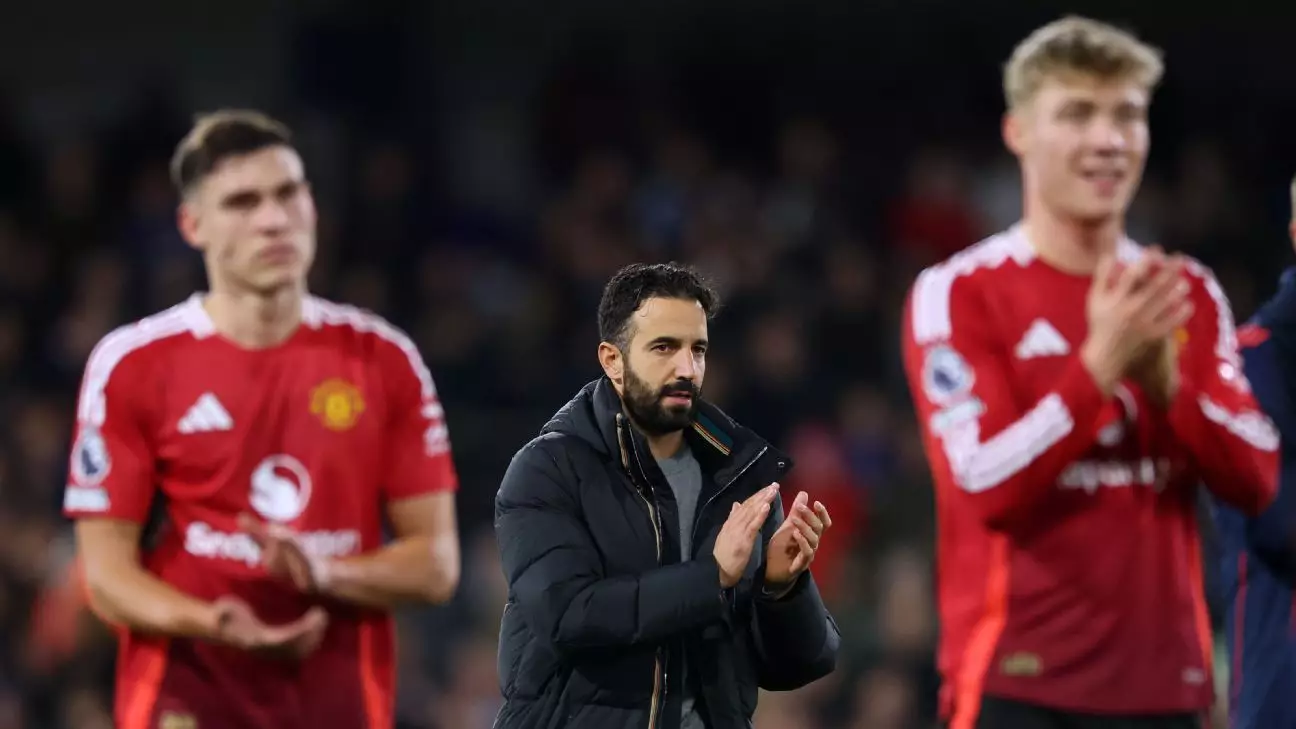
Ruben Amorim, the newly appointed head coach of Manchester United, has quickly garnered the attention and affection of fans. The supporters have taken to serenading him with a catchy chant during matches, which reflects their excitement about his leadership. However, Amorim himself has expressed unease about this attention, emphasizing that the focus should remain on the players rather than on him as the coach.
Since taking the reins at Old Trafford, Amorim has become a figure of intrigue and enthusiasm. The fans have embraced him, echoing his name in chants that resonate through the stadium. Yet, Amorim’s reaction to this phenomenon highlights a fundamental aspect of his coaching philosophy: a strong sense of humility. He has publicly stated that he would prefer fans to channel their enthusiasm into support for the players on the pitch. “I don’t like my chant,” he admits, revealing an almost self-deprecating attitude. This response speaks volumes about his priorities—he wants the emphasis to be on team performance rather than individual acclaim.
By expressing this sentiment, Amorim underscores a critical tenet of effective coaching—a leader’s role is to uplift the collective, not to seek elevation for themselves. His comments reflect a maturity that could foster a more cohesive environment within the team, where players feel acknowledged and valued for their contributions.
While Amorim’s discomfort with fan adulation may come from a place of humility, it also reflects an acute awareness of the relationship dynamics within football. The bond between a coach and supporters can be fragile; thus, reinforcing the focus on the players could lead to a more stable and symbiotic relationship. Amorim’s appeal for more chants directed at the players can serve to enhance morale, especially when the team is facing rigorous challenges, such as their upcoming clash against Arsenal.
A coach’s relationship with fans is critical, as their backing can elevate the squad’s performance. Amorim clearly recognizes the importance of maintaining this connection and is committed to nurturing it. He acknowledges the need for positive results on the pitch to bolster this connection, thereby reinforcing the importance of teamwork across all levels of the club.
As Manchester United gears up for a highly anticipated match against Arsenal, the significance of squad depth comes to the forefront. Amorim has hinted at the return of key player Bruno Fernandes, whose presence will be pivotal for the team’s creative output. Additionally, the potential debut of Leny Yoro introduces an exciting element for both the coach and supporters.
Yoro’s journey back to fitness after a lengthy injury lays bare the challenges of preparing a team while navigating player health. Amorim’s cautious optimism for Yoro showcases his adaptability as a coach—acknowledging the necessity to integrate new talents within the existing framework strategically. This balanced approach not only emphasizes the skill set of the individual but also seeks to maximize team chemistry, ultimately enhancing performance on the pitch.
Moreover, Amorim’s focus on Yoro as a modern defender suggests his tactical aspirations for the team. The need for speed and agility in contemporary football cannot be overstated, and Amorim’s insight into Yoro’s abilities indicates a clear vision for how he wants his team to function.
Ruben Amorim’s tenure at Manchester United is still in its early days, but his approach reveals a distinct combination of humility, strategic thinking, and a strong focus on teamwork. His discomfort with fan chants directed at him rather than the players highlights a remarkable trait: a commitment to elevating others ahead of oneself. As he prepares to lead the team into a critical match against Arsenal, the expectations are high, yet the foundational elements of his coaching philosophy remain steadfast. By maintaining a balanced focus on both player recognition and team dynamics, Amorim is poised to navigate the challenges ahead while forging a positive, unified environment at the club. The coming weeks will not only reflect the results on the field but also showcase the essence of Amorim’s leadership approach.