
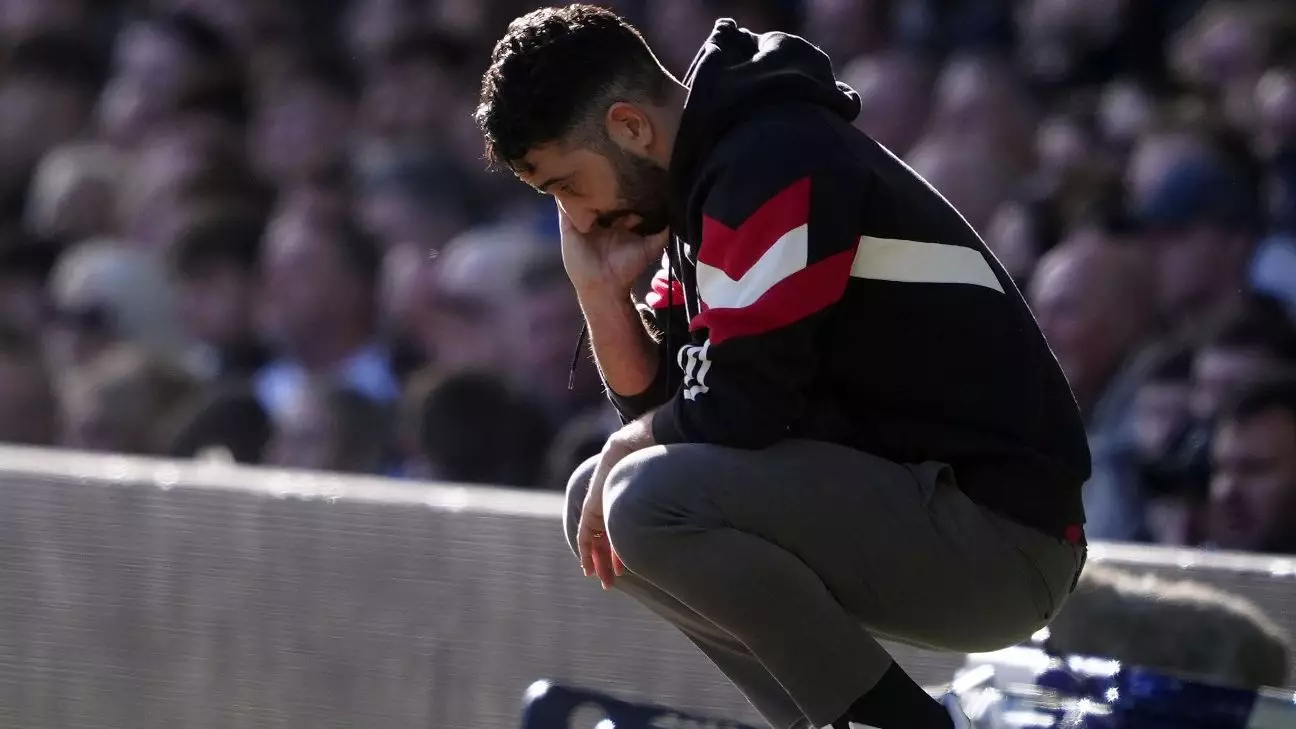
In the fierce world of Premier League football, the pressure to succeed is colossal. Coaches live or die by results, and in this unforgiving environment, Ruben Amorim has emerged as a focal point for Manchester United’s tumultuous season. After a notable defeat to West Ham, which marked United’s 17th league loss, Amorim audibly considered his future at Old Trafford. His candid remarks suggested a precarious balance between determination and the heavy burden of responsibility. Most intriguingly, he proclaimed that though he would not quit, he anticipated being dismissed if results didn’t turn in United’s favor. This duality in his stance raises critical questions about the nature of leadership and accountability in modern football.
Understanding the Standards
At the heart of Amorim’s philosophy is a commitment to maintaining high standards. He has often emphasized the necessity for results that match the prestige of Manchester United. This reflects a passionate belief that once a coach takes the reins, it’s their duty to drive performance upwards, especially given the gloried history of the club. His statement, “I cannot see the team having these results… and not take responsibility,” speaks volumes about his self-awareness and determination. However, the crux of the matter lies in whether this level of accountability is too much for any one individual to bear at a club with the weight of expectations like United.
While Amorim showcases resilience, it prompts reflection on the broader implications. Does a coach struggling to align performance with standards provoke discontent among players or within the fan base? It does. The stakes are exceedingly high, and Amorim’s conviction that he understands the existing problems is commendable. Yet, one must wonder if such transparency, coupled with an acknowledgment of flaws, carries the risk of undermining team morale.
Upcoming Tests and Tactical Considerations
As the team stands on the precipice of pivotal matches against Chelsea and a Europa League final against Tottenham, the atmosphere within the squad will be critical. Amorim has expressed uncertainty regarding the workload on players as they navigate between the rigors of domestic league duties and the intensity of European competition. His insights reveal a manager not just caught up in immediate results, but one who grapples with broader strategic implications. The reflection that “we need more time with the team” suggests an understanding that longevity and continuity are essential for building a competitive squad.
However, time is a luxury that many managers simply don’t have, particularly in elite football, where expectations are relentless. The dilemma Amorim faces is emblematic of a larger trend: managers are often ensnared in a cycle where every match is a referendum on their capability. The fragility of job security makes Amorim’s next steps ever more crucial. Will he adapt quickly enough to the relentless demands, or will the historical giants of Manchester United be yet another casualty of mismanagement and inconsistency?
Future Prospects Under Scrutiny
According to sources, even after a disappointing stint characterized by only six wins in 26 league games post his appointment in November, the club remains committed to Amorim. This presents an interesting dichotomy. While the organization appears supportive, the burden of expectation looms large. The looming Europa League final against Spurs holds immense weight for Amorim—it could shape the narrative for his first full season in charge. Should he fail to secure a victory, the latent dissatisfaction among fans and media could erupt, pushing the coach closer to the edge of instability.
Yet, the paradox lies in the fans’ desire for a turnaround vs. their appetite for patience. Amorim himself acknowledged the fan’s patience would wear thin if performances don’t improve, forecasting a tumultuous journey ahead. The implications are stark; for a club with Manchester United’s history, merely performing “well enough” may not suffice. The quest for excellence must come swift, or Amorim could find himself wrestling with the very future he seemed so committed to rebuilding.
Through Amorim’s candid discourse, it’s evident that he grapples with the essence of modern football management—where results reign supreme, but beneath the surface, the nuances of player welfare, team cohesion, and personal ambition intertwine. His leadership will undoubtedly be scrutinized as Manchester United navigates these stormy waters, but the thrill of sports lies in the unpredictable—will Amorim rise to the challenge, or will he become another chapter in the club’s storied, yet tumultuous journey?