
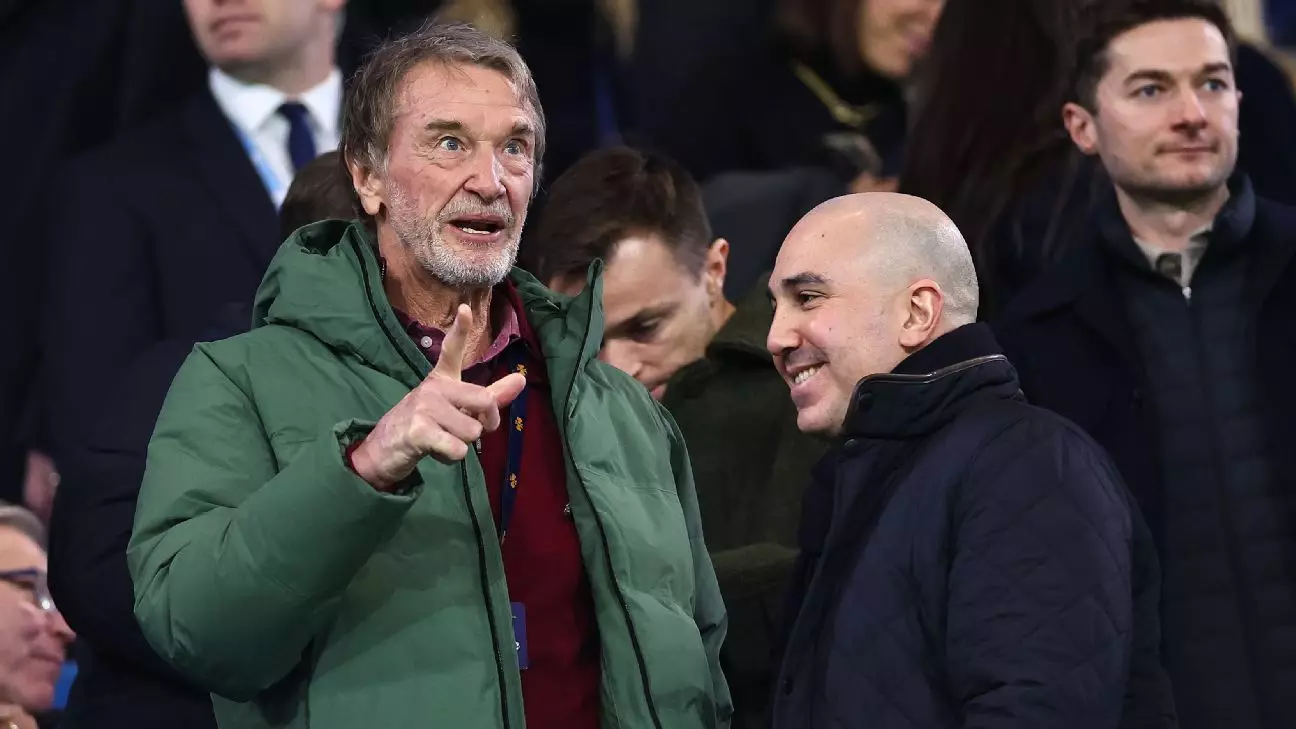
British billionaire Sir Jim Ratcliffe has made headlines with his recent investment in Manchester United, as disclosed in filings with the U.S. Securities and Exchange Commission (SEC) this past Thursday. The report highlights that Ratcliffe has purchased an additional 1.24% stake in the Premier League giants for approximately £79 million (or $99.6 million), bringing his total shareholding to 28.94%. This investment comes on the heels of his earlier commitment made in December, where he agreed to pay £1.2 billion for a 27.7% stake. Notably, Ratcliffe’s shares are now held under his company INEOS, cementing his deeper financial footprint in the club.
Despite Ratcliffe’s growing investment, the Glazer family remains the majority shareholder, having acquired Manchester United back in 2005. This ongoing ownership situation has contributed to a contentious atmosphere among fans, many of whom are eager for change amidst concerns over the club’s financial health and performance on the pitch. The latest SEC filings also indicate that Ratcliffe’s additional funds will not be used for player acquisitions in the upcoming January transfer window but will instead be reallocated throughout various departments of the club.
The financial struggle is evident, with the club announcing losses exceeding £300 million over the past three seasons. This reality has forced management decisions rooted in stringent cost-cutting measures, which have resulted in layoffs affecting more than 250 employees. Such drastic actions raise questions about the club’s long-term strategic vision and Ratcliffe’s genuine commitment to reviving Manchester United’s fortunes.
Ratcliffe’s tenure at Manchester United has not been without challenges. Numerous criticisms have surfaced since his involvement began, including significant backlash regarding ticket price increases aimed at fans. Moreover, his perceived neglect of the women’s team has drawn particular ire from supporters and advocates for gender equity in sports. Perhaps most controversially, Ratcliffe was part of the decision to extend Erik ten Hag’s contract shortly before the coach’s firing, coupled with the dismissal of sporting director Dan Ashworth merely months after investing in his recruitment.
These missteps suggest a lack of clear and cohesive strategy in managing both the men’s and women’s teams, further complicating Ratcliffe’s public image during his early days at the club. His actions paint a picture of an owner caught between financial obligations, fan expectations, and the daunting task of restoring Manchester United to its former glory.
While Sir Jim Ratcliffe’s increased investment may signal a commitment to Manchester United, the realities on the ground reveal significant challenges ahead. The Glazers maintain their grip on the club’s majority ownership, and financial losses are forcing a re-evaluation of priorities. Ratcliffe’s strategies will undoubtedly continue to be scrutinized by a passionate fan base yearning for revival and transparency as Manchester United navigates its future on and off the pitch.