
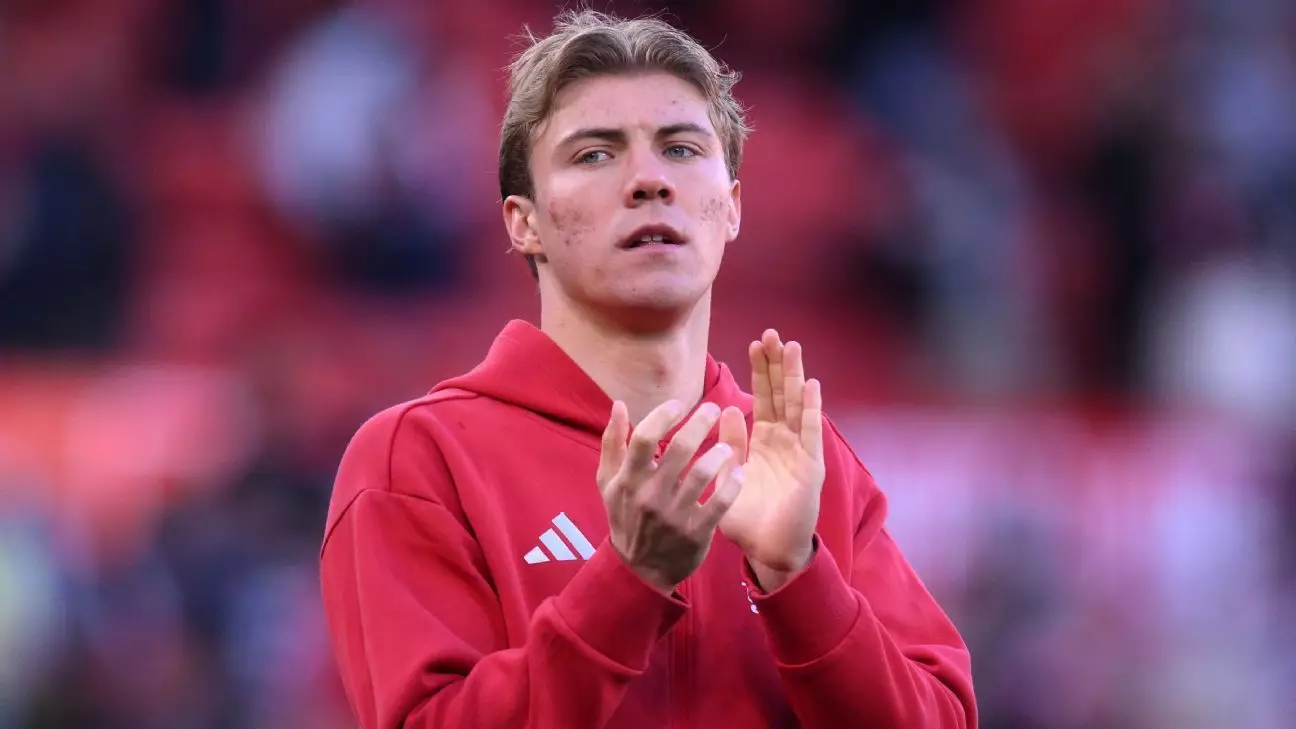
In the charged atmosphere of football transfers, decisions can reshape the fate of clubs, turning dreams into nightmares and vice versa. The current landscape is teeming with rumors and speculations that keep fans and analysts alike engaged. The significant fees and apparent power struggles in major European leagues highlight a transformative yet controversial market. Standing at the epicenter is Manchester United, a club embroiled in both internal and external turmoil as they look to offload misfit players while reinforcing their squad.
Manchester United: Balancing Act of Selling and Buying
Manchester United appears to be on the brink of a significant transition, particularly concerning their striker, Rasmus Højlund. A reported price tag of €60 million is not just about financial profit; it embodies the club’s broader strategy to eliminate underperforming assets. Despite signing Højlund from Atalanta for €75 million, his meager tally of 24 goals in 85 appearances presents a troubling narrative. If Manchester United hopes to reshape their attacking options, moving on from Højlund could be a necessary evil. However, placing such a high valuation on him raises questions about the club’s ambition. Are they truly aiming to revitalize their squad or merely trying to recoup financial losses while admitting past mistakes?
The sell-off extends beyond Højlund as the club reportedly considers parting ways with prominent names like Marcus Rashford and Jadon Sancho, which begs the question: Has the club lost its way in player selection? While financial constraints may dictate these actions, the outgoing transfers could potentially erode the established core necessary for a resurgence. The club’s pursuit of Wolverhampton’s Matheus Cunha, carrying a release clause of £62.5 million, further exacerbates concerns about their long-term strategy.
Arsenal’s Tactical Ambitions
On the other side of North London, Arsenal looks to weave its own success story. The reported interest in Bayern Munich’s Kingsley Coman indicates a proactive strategy aimed at bolstering their attacking options. Coman, with his prowess on the flanks, could help elevate Arsenal’s game next season but may come with its complications given his inflated wage expectations and the emerging market in Saudi Arabia. Here, the factorial interplay between wage management and player performance comes to the fore. Arsenal’s management must ensure they strike a balance to avoid financial disarray while aiming for silverware.
The juxtaposition of Arsenal and Manchester United reveals two contrasting philosophies. While United’s approach appears reactive, banking on substantial returns from costly investments, Arsenal’s move for Coman seems more organic, targeting specific needs. This contrasts starkly with United’s broader, more chaotic strategy of cycling through multiple players.
Real Madrid’s Pursuit of New Blood
Meanwhile, Real Madrid is focusing its efforts on acquiring young talent, evaluating prospects like Trent Alexander-Arnold for right-back and Dean Huijsen, a 19-year-old center-back from Bournemouth. Madrid’s apparent shift to courting younger players unveils a deeper operational introspection, seeking rejuvenation amidst inevitable player attrition. The club’s aging squad is becoming increasingly evident, as they grapple with the potential departures of stalwarts like Luka Modric and David Alaba. The question remains whether their scouting department can unearth the diamonds in the rough required to bolster a faltering squad.
The tension between needing immediate results versus long-term investment presents Madrid with a critical juncture. Their projected overhaul could very well determine the trajectory of the club in the next era. The announced interest in players like Real Sociedad’s Martín Zubimendi signals an approach to reinforce key positions with versatility and pedigree, addressing weaknesses starkly evident during their latest Champions League exploits.
Market Dynamics: Beyond the Big Clubs
Outside of the mainstays, other clubs are making pivotal moves that may redefine both their identities and competitive edge. For instance, Everton is currently eyeing Feyenoord defender Dávid Hancko, described as a transformative signing to revitalize their defense. This narrative around mid-tier clubs identifying talents banks on strategic foresight in the face of fierce competition from established giants. As clubs like Bayer Leverkusen and AC Milan also scout potential replacements, the ever-shifting dynamics of the transfer market remind stakeholders that even outside the limelight, significant upheavals can and do unfold.
In the end, the transfer market stands as an exhilarating battleground where fortunes are made or lost, ambitions built or dashed. The complexities in player valuation, wage bills, and long-term strategies are ever more pronounced, as clubs seek to navigate a competitive maze. The coming months will unveil the full drama, reshaping the football landscape for seasons to come.