
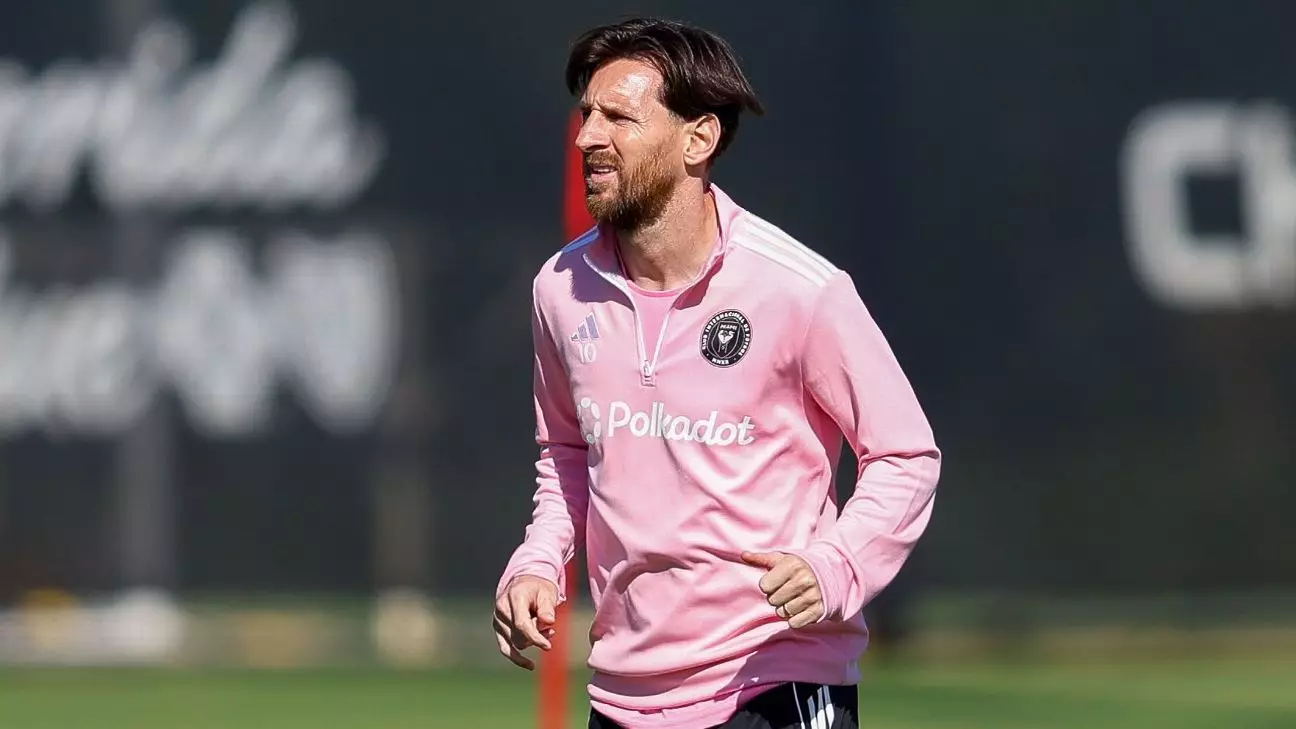
The world of professional soccer often involves making difficult decisions, particularly when it comes to managing star players. Recently, the spotlight fell on Inter Miami’s Lionel Messi when it was confirmed that he would not travel with his team for their match against the Houston Dynamo at Shell Energy Stadium. This decision, made by head coach Javier Mascherano, sparked a myriad of conversations about the balance between player availability and health throughout a grueling season. With Messi not sidelined by injury but rather rested, we are compelled to analyze the broader implications of such choices in the context of Inter Miami’s ambitions and the ever-demanding nature of the sport.
Messi’s absence, while disappointing for fans eager to witness his electrifying play, is rooted in the tactical decision-making that is increasingly essential in modern soccer management. The opening stage of the 2025 season has placed a substantial physical load on the players, with Inter Miami playing three matches in just ten days, including a crucial Concacaf Champions Cup series. In the context of this packed schedule, Mascherano’s choice can be seen as a necessary step to preserve Messi’s stamina and overall health for vital upcoming matches.
By prioritizing a strategic rest for Messi, Mascherano showcases an understanding of player wellness that transcends immediate outcomes in the season. Rather than risking a potential injury that could sideline Messi for an extended period, the head coach is making a proactive move to optimize his star player’s performance in the long run. The objective is clear: to contend seriously not just in the MLS but also in continental competitions like the Concacaf Champions Cup.
The decision not to feature Messi in the matchup against the Dynamo had implications beyond just team strategy; it also impacted fan engagement and expectations. The Houston Dynamo released a statement to acknowledge Messi’s absence, expressing their anticipation for the game while providing a token of appreciation for ticket holders by offering complimentary tickets to a future match. This initiative underscores the reality that in sport, the business of managing player health directly intersects with customer satisfaction, especially when global icons like Messi are involved.
However, it is not uncommon for fans—especially those who may have purchased tickets with the hopes of watching their favorite players—to express frustration at a star’s absence, especially given Messi’s monumental status in soccer. The dynamism between player management and fan experience serves as a critical reminder of the multifaceted priorities clubs must juggle throughout the season.
Understanding the “why” behind Messi’s absence requires placing it within the intricate context of a jam-packed schedule. Playing multiple high-stakes matches within a short timeframe places significant demands on players, emphasizing the importance of rotational strategies in a coach’s toolkit. Mascherano articulated this necessity when he explained that players could only be adequately managed in light of the schedule’s realities—something every coach must confront.
The rigorous demands of knockout rounds and league openers necessitate a layered approach to team management. Inter Miami’s decision to rest key players translates to prioritizing long-term performance over short-term gains. Messi’s proven ability to perform at an elite level can be further enhanced through periods of rest, thereby aligning team objectives with player health.
As the season progresses, considerations surrounding Messi’s role within the squad remain paramount. With a future fixture against Cavalier FC looming in the Concacaf Champions Cup, the management’s foresight in choosing to rest him demonstrates a commitment to sustainable performance. The strategy supports not only Messi but the collective strength of Inter Miami as they embark on competitive encounters ahead.
Ultimately, the approach taken by Mascherano and the Miami coaching staff signals a progressive understanding of athlete care—a necessary evolution in an era where clubs must balance ambition with responsibility. As Inter Miami continues its journey in the 2025 MLS season, the careful orchestration of player usage will be essential to their success on and off the pitch. In doing so, they exemplify the art of managing superstar athletes within the pressure cooker that is modern professional soccer.