
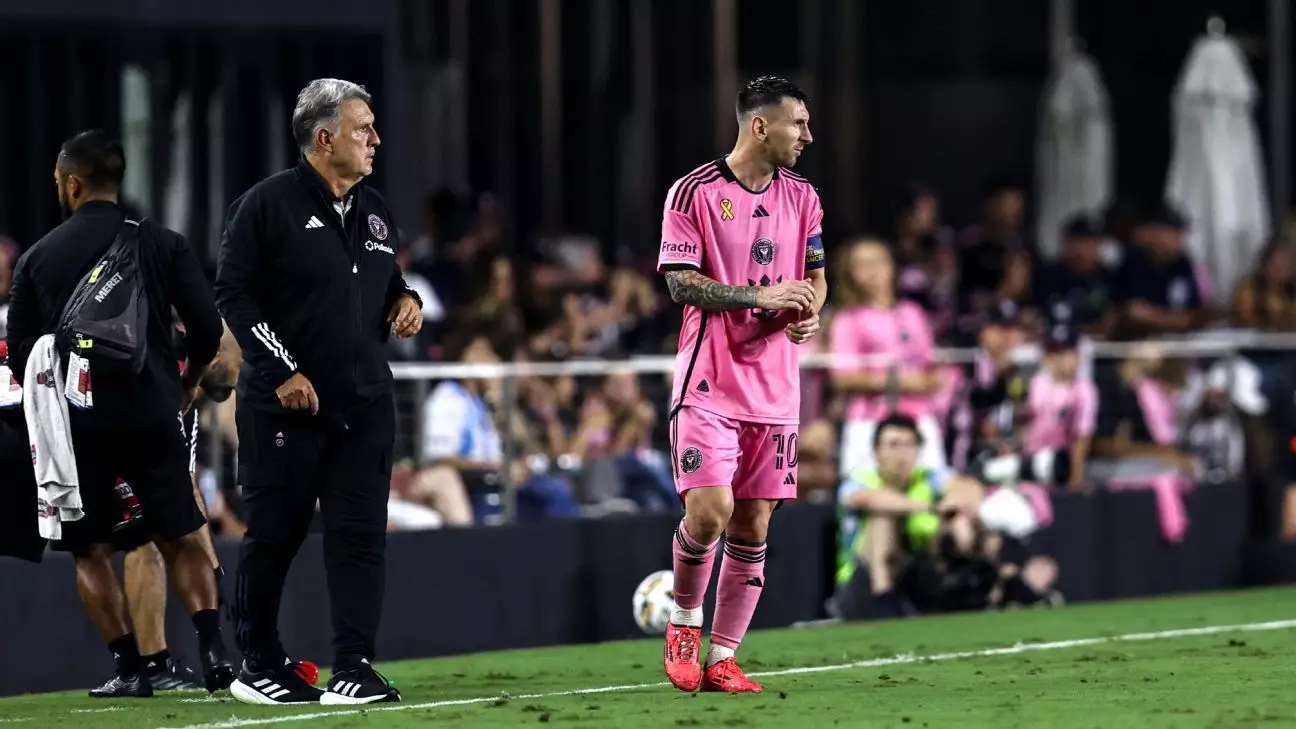
The Ballon d’Or Debate: Vinícius Júnior vs. Lionel Messi.
The Ballon d’Or, one of the most prestigious individual accolades in football, often sparks intense debates among fans, players, and coaches alike. This year, the conversation appears to be centered around two exceptional players: Vinícius Júnior of Real Madrid and Lionel Messi, recently transitioned to Inter Miami. With each player boasting a unique set of achievements, the selection process for the award raises questions about criteria and biases that may influence the outcome.
Vinícius Júnior, at just 24 years old, enjoyed an impressive season contributing significantly to Real Madrid’s success. He netted 24 goals and assisted 11 in various competitions, highlighting his evolution into one of the essential cogs in the Madrid machine. His decisive contributions were particularly evident during critical matches, including the Champions League final against Borussia Dortmund, where he helped clinch the team’s victory. The marks he left on this past season have led to a strong case for him to be crowned the winner of this year’s Ballon d’Or, especially with his consistency and impact evident on the pitch.
On the other hand, Lionel Messi, who recently joined Major League Soccer’s Inter Miami, has found himself in an unusual position—omitted from the Ballon d’Or nominations for the first time since 2003. Despite this, Messi’s legacy as arguably the greatest player of all time remains intact. His phenomenal output in his first season in the MLS, with 20 goals and 16 assists in just 19 games, showcases that he continues to perform at a high level, even if not recognized by this year’s awards. The sentiments expressed by veteran players like Jordi Alba underline the notion that Messi’s influence goes beyond just statistics; he consistently affects games in a way few others can.
Perspectives from Coaches and Peers
Inter Miami’s coach, Gerardo “Tata” Martino, offered his perspective, acknowledging Vinícius’ merit for the award while reiterating his belief that Messi still holds the title of the best player in the world. Martino’s remarks reflect a broader sentiment encountered in football—one that separates individual accolades from acknowledgment of greatness. The complexities involved in such debates often draw attention to the subjective nature of defining “the best,” which may include various factors such as individual flair, gameplay influence, and overall contributions to the sport.
As the world of football continues to evolve, the emergence of new talent like Vinícius Júnior brings fresh energy into the debate of greatness in the sport. While Messi’s accolades are monumental and hard to dispute, there is a promising horizon in the careers of upcoming stars. Whether Vinícius secures the Ballon d’Or this year or Messi reestablishes his status, the conversation around who defines “the best” in football will surely endure, demonstrating the sport’s rich tapestry of talent and legacy. The ongoing dialogue about players’ contributions will only intensify as both established luminaries and rising stars continue to leave their mark on the game.