
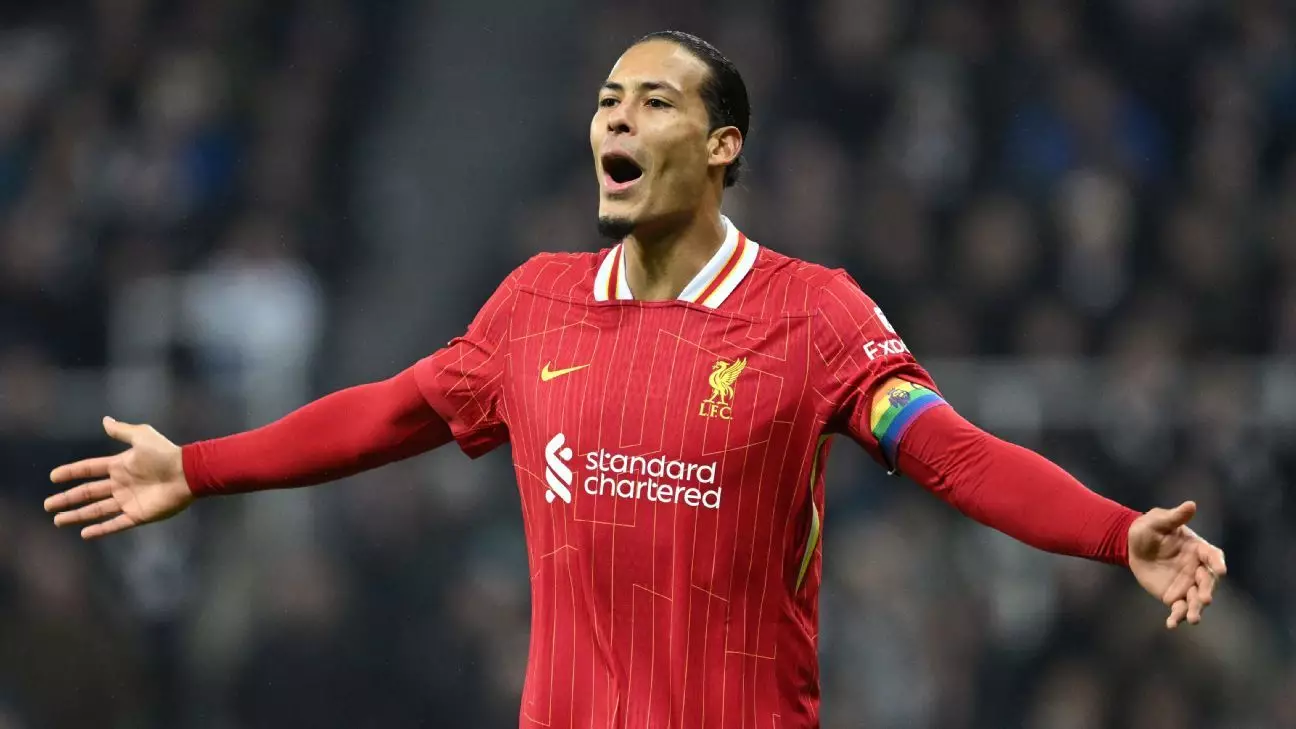
In a sport where physical endurance is paramount, the recent findings from the CIES Football Observatory have illuminated a troubling trend: the excessive amount of playing time endured by professional footballers. Leading this alarming list is Barcelona’s Jules Koundé, who logged an astounding 5,872 minutes of gameplay in the past year. The implications behind these statistics resonate deeply within the football community, raising questions regarding player welfare and the sustainability of their careers.
The data reveals a compelling yet worrying picture of player usage. Following Koundé are notable names such as Fluminense’s Jhon Arias (5,599 minutes), Real Madrid’s Federico Valverde (5,573), and Liverpool’s Virgil van Dijk (5,523). The sheer volume of these minutes begs the inquiry: at what cost do these players push their physical limits?
Further scrutinizing the top ten players illustrates a startling reliance on their endurance. Arsenal’s William Saliba, Granit Xhaka from Bayer Leverkusen, and Nicolás Otamendi of Benfica complete the list, showcasing a trend where elite clubs heavily lean on a select group of players for crucial matches. This disproportionate reliance not only questions squad depth but also hints at a systemic issue within club management and player rotation strategies.
A noteworthy revelation from CIES reveals that a staggering 73.2% of the minutes logged by these top players stemmed from domestic league activities, with merely 13.4% coming from national team duties. This statistic points to the relentless grind of club football, where the competition is unforgiving, and the player welfare often remains an afterthought. With clubs pursuing victories at all costs, the physical toll taken on players tends to escalate, leading to potential burnout and injuries.
The Call for Change: A Collective Voice
As player welfare concerns have grown louder, entire teams are beginning to advocate for necessary changes. Rodri, the esteemed midfielder for Manchester City, openly discussed the potential repercussions of overloading players, hinting at a possible strike if the congested football calendar persists. Such dramatic measures underscore the urgency and desperation to spark reforms within the leagues that prioritize players’ health over commercial gains.
Koundé echoed these sentiments, emphasizing the growing discontent among players who feel unheard and disregarded. The neglect regarding the well-being of athletes is becoming untenable, and both Koundé and Rodri have sparked a crucial dialogue—one that recognizes the need for an overhaul in how football is administered.
The Role of Organizations in Reform
Compounding this crisis is FIFPro’s recent antitrust complaint against FIFA, which calls into question the dual roles of FIFA as both tournament organizer and regulator. This conflict of interest can lead to decisions that favor the governing body’s agenda over the athlete’s right to rest and recuperation. The complaint aims to address the magnitude of the problem, pressuring for substantial changes in how matches are scheduled worldwide.
The period of ignoring player fatigue appears to be dwindling, and as the burden on footballers mounts, the need for a paradigm shift has never been more pressing. Ensuring the longevity of a player’s career while considering their long-term health is critical for the future of football. As stakeholders in the sport reevaluate the current structure, it is imperative that players’ voices take center stage to forge a sustainable path forward.