
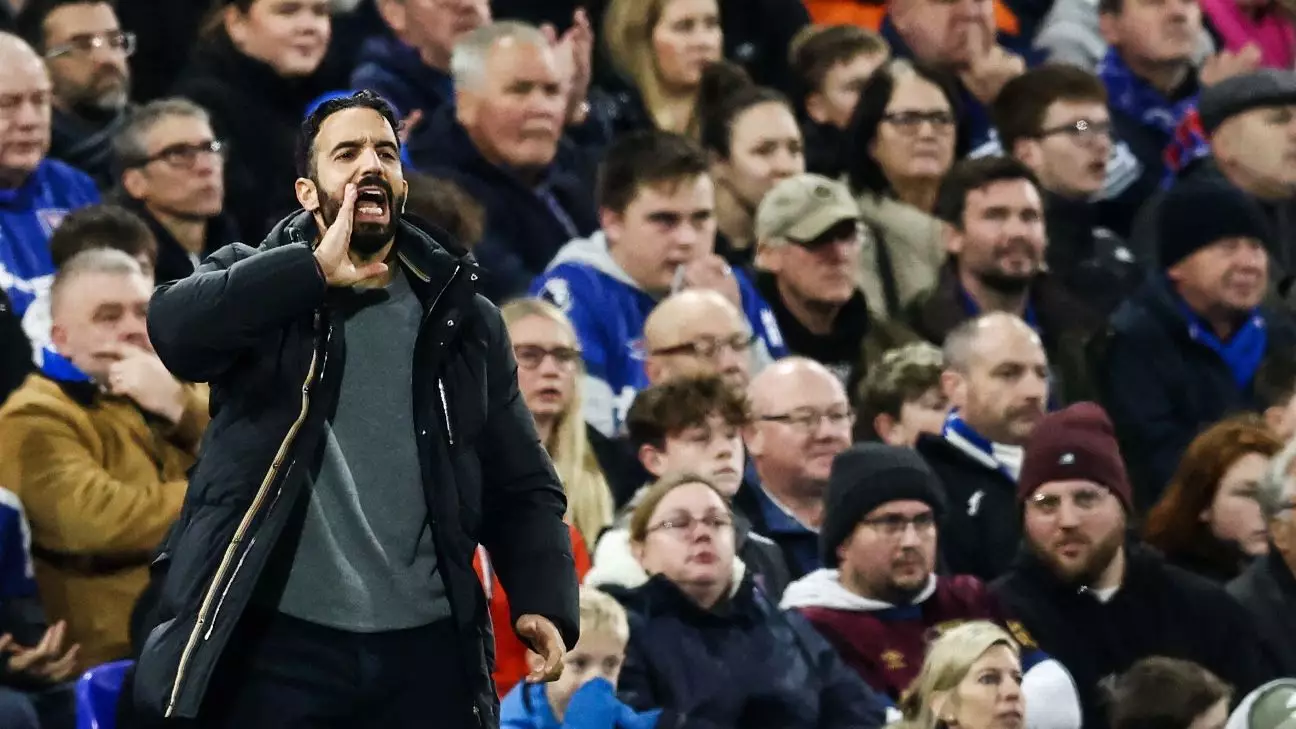
In a breathtaking moment, Ruben Amorim’s debut as Manchester United’s head coach commenced with a swift goal by Marcus Rashford, sparking anticipation among fans. Yet, this fleeting euphoria rapidly dissolved into the reality of managing a team struggling to find its identity. The match ended in a 1-1 draw against Ipswich Town, leaving Amorim with a bittersweet taste of the challenges ahead. The promise of revitalization against Ipswich transformed into a sobering acknowledgment of the gaps in his ensemble — a stark reminder that any task of reestablishing dominance takes more than a quick fix.
As the clock ticked down, Amorim’s frustration was palpable. He was seen gesturing fervently, urging forward Joshua Zirkzee, who had failed to embrace the urgency that was needed. His dissatisfaction isn’t simply a symptom of this match but a glimpse into a deeper malaise plaguing the club. The narrative of a team exiting a prolonged period of underachievement resonates across Old Trafford, and the memory of past glories continues to loom as an imposing shadow.
Amorim’s commitment to maintaining the tactical setup that served him well at Sporting CP is commendable. He opted for a 3-4-2-1 formation, a clear reflection of his philosophy. However, the harsh reality of injuries to key defensive players such as Lisandro Martínez and Harry Maguire hindered his strategy. Consequently, Amorim had to field Noussair Mazraoui in an unfamiliar role, a situation that exemplified the difficulties in adjusting his system with a squad that wasn’t tailored for those dynamics.
Two of his central midfield selections, the 32-year-old Casemiro and Christian Eriksen, presented their own challenges. Both players’ ages and diminishing pace underscored a fundamental issue of physical robustness within the squad — a problem that had plagued Erik ten Hag’s tenure previously. This resulted in an inability to control the midfield, allowing Ipswich to mount pressure and take advantage of United’s weaknesses.
The narrative is far from simple; Amorim acknowledges that the players need time to acclimate to his demands and newfound strategies. His insights after the match revealed a profound understanding of the hurdles before him; he indicated that the players were caught in a mental trap, struggling to define their roles in a shifting tactical landscape. The crux of Amorim’s challenge is breaking through this mental barrier and developing a mindset of confidence and clarity.
While Amorim’s debut may not have delivered the intended three points, it inadvertently managed expectations for both the coaching staff and the fans. Acknowledging the road ahead allows room for patience from supporters who are hungry for success. The positive reception he received, highlighted by a banner stating, “Good Luck Ruben Amorim – Make Our Team Great Again,” encapsulates the hopeful atmosphere that permeated the ground, even amidst frustration with the team’s performance.
Amorim’s aggressive adjustments in the second half portrayed his determination to salvage the encounter. Making five substitutions revealed his intent to infuse vigor into a waning effort. However, changing a team’s dynamic within merely a few days of preparation proves to be a daunting challenge, proving that transformation needs more time and tactical coherence than a single match can provide.
The landscape Amorim inherits is laden with issues that go beyond mere tactical failures. There’s a palpable need for a cultural shift within the squad, attending to the fear and hesitance that marked the latter stages of ten Hag’s era. To foster confidence, Amorim will need to balance tactical instruction with nurturing a positive mindset. His combative spirit could be the key to instilling resolve in his players, empowering them to shake off the chains of past struggles and embrace a mindset of optimism.
Under Amorim’s guidance, the seeds of change will require nurturing, persistence, and time. This transitional period will manifest challenges, but if he can weave together the threads of physical agility, mental resilience, and tactical comprehension, then a new Manchester United may yet arise from the ashes of its recent history. The journey will be long, but with Amorim at the helm, hope resides firmly in the hearts of fans, as they yearn for a return to past glories and a resurgence that blends tradition with innovation. Only time will tell if he can deliver on that promise.