
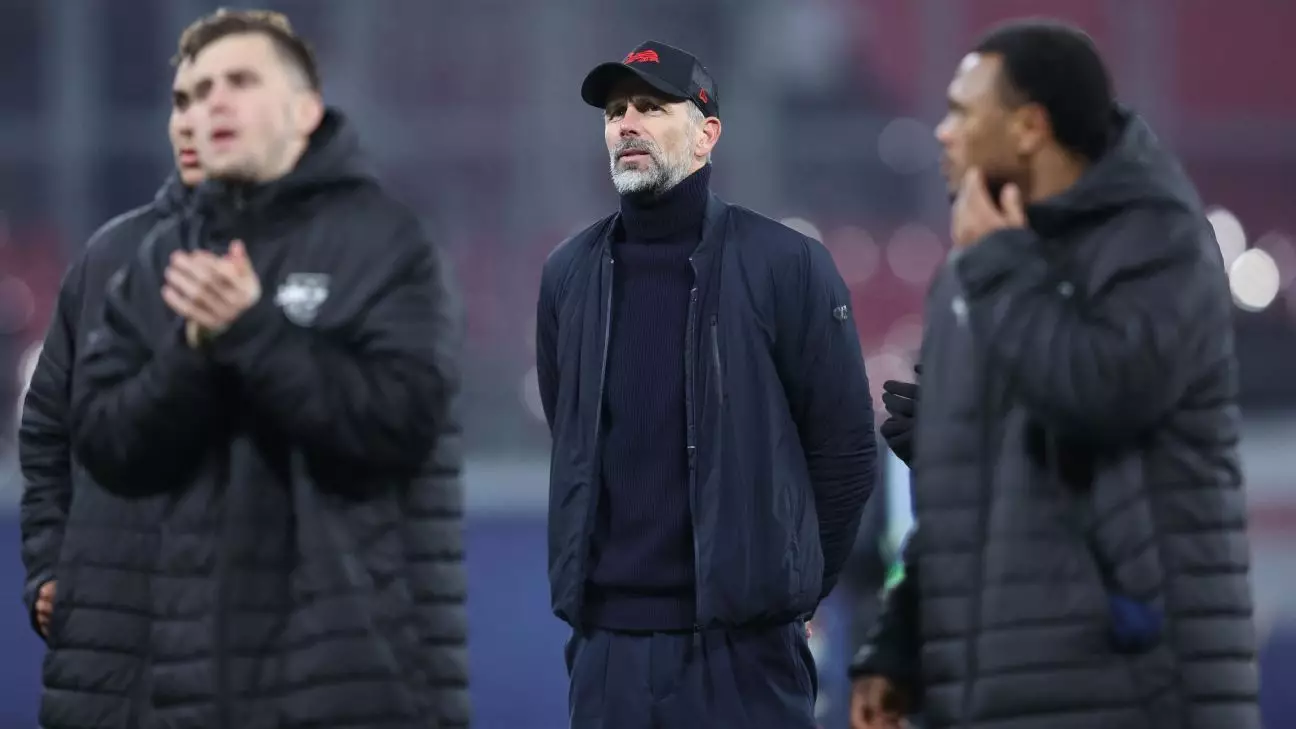
In the world of football, particularly in German football, the notion of “passen”—which expresses the idea of a fit or alignment—is pivotal when evaluating the suitability of players or coaches for teams. This concept is central to assessing whether an individual can mesh with a team’s ethos and ambitions. For RB Leipzig, the expectations are perpetually high, and finding someone who harmonizes with the club’s identity is crucial. Marco Rose, a native of Leipzig, embodies this fit through his extensive familiarity with the club’s culture, both as a local and as a former coach with its sister team, RB Salzburg. His connection to the region and the Red Bull philosophy underscores why he was appointed and why many feel he resonates with the club’s aspirations.
Unlike many of his predecessors at Leipzig, who adhered strictly to a particular tactical approach, Rose champions a flexible philosophy. He values counter-pressing and transitional football, known as Umschaltfussball, but simultaneously recognizes the importance of adapting tactics based on specific opponents. This adaptability highlights his capacity to evaluate situations and implement strategies that suit the occasion—a vital trait when navigating the unpredictable landscape of football. Rose’s ability to maintain his position for 826 days is noteworthy, especially when juxtaposed with the club’s inclination for swift decisions during moments of crisis, as seen with former coaches Jesse Marsch and Domenico Tedesco.
Rose’s tenure has contrasted sharply with the backdrop of considerable pressures. Following a challenging start to the UEFA Champions League season, in which the team suffered repeated defeats—including a particularly devastating loss at Celtic Park—Leipzig’s performance under his guidance came into question. Their track record in this elite competition has been dismal to the point that all hopes for advancing were extinguished after losing all six group matches. Such a string of poor results raises legitimacy issues surrounding the coaching staff and may lead to discussions about future directions for the club.
Yet, the landscape of coaching and football success is rarely linear; injuries to key players like Xavi Simons and David Raum have complicated matters significantly. This precarious situation came to a head during the recent DFB-Pokal quarterfinal against Eintracht Frankfurt. The match was billed as pivotal not only for the aspirations of the team but also for Rose’s future as the head coach. A crucial victory emerged, showcasing depth in the squad and leading to a critical respite in discussions regarding Rose’s position. Nevertheless, it is clear that the conversation around his future remains alive and well, particularly with the looming Winterpause.
With the clock ticking towards significant transitions, including Jürgen Klopp’s anticipated entry into a leadership role at Red Bull, speculation mounts on whether Marco Rose will remain at the helm. Names like Roger Schmidt and Erik ten Hag surface as potential successors, tapping into their previous connections to the Red Bull network. Schmidt’s familiarity with the vision of Red Bull aligns with the club’s ethos, while ten Hag, despite his challenges at Manchester United, boasts respect within the football fraternity. The dynamics at play suggest that the upcoming weeks will be crucial for Rose as he aims to solidify his position amidst swirling rumors.
Despite the turbulence, Leipzig stands at a pivotal juncture in the DFB-Pokal, poised for another shot at glory. The elimination of significant competitors like Bayern Munich and Borussia Dortmund shifts the winds in Leipzig’s favor, presenting a clear path towards another title. Presuming they can best Bayer Leverkusen, the reigning Pokalsieger, Leipzig retains hopes of adding another trophy. The blend of tactical resilience and squad spirit will be essential as they prepare to engage with lower-league teams like Arminia Bielefeld, known for their home advantage and upset potential.
Amidst the backdrop of the current season’s challenges, the insights gained through Marco Rose’s coaching style could serve as a valuable blueprint for future undertakings at RB Leipzig. The team’s potential to adapt tactically and recover from adversity highlights crucial lessons in resilience and strategic foresight. Even as speculation concerning a new managerial appointment looms, it will be imperative for the club’s management to weigh the benefits of stability against the allure of fresh approaches. In an environment where nuance and adaptability are celebrated, the future directions for RB Leipzig will undoubtedly shape their place in German and European football, making the next decisions as consequential as any match outcome.