
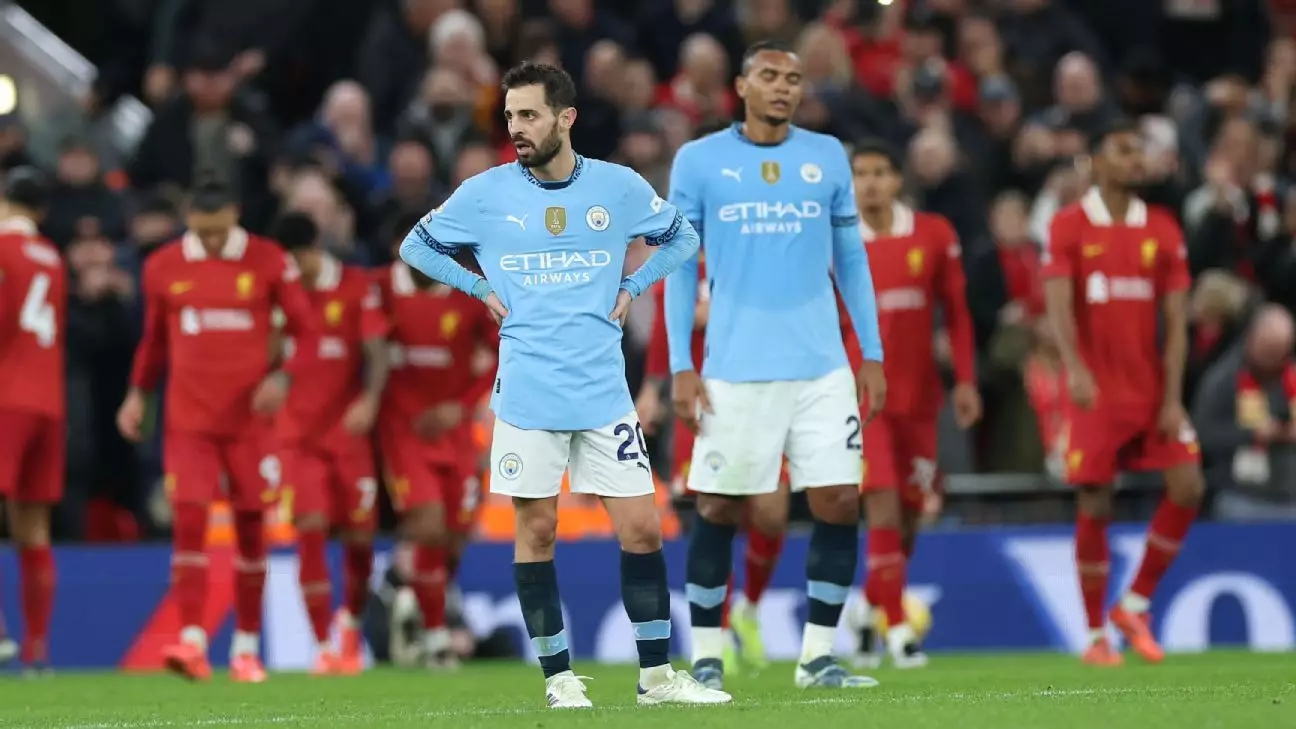
The landscape of football is ever-evolving, rendering past success a fleeting memory in the face of new challenges. Manchester City, once the pinnacle of English football, now finds itself at a crossroads where evidence of decline is increasingly apparent. Despite their remarkable achievements under Pep Guardiola, including six league titles in seven years and a Champions League triumph, the cracks are beginning to show. The narrative of greatness to downfall is not uncommon in the sport; history is rife with clubs like Manchester United and Liverpool that have endured similar trajectories, falling from grace despite a storied past. As City struggles with form and performance, one cannot help but wonder if they are unwittingly following the same path.
The allure of historical success often clouds a club’s judgment, leading stakeholders to hope that the glory days can be reclaimed without significant changes. Manchester United’s reliance on the legacy left by Sir Alex Ferguson is a pertinent example; a decade after his departure, the club remains mired in mediocrity. Liverpool also clung desperately to their past success, culminating in an agonizing 30 years without a league title. The parallels with City are striking, especially after their recent 2-0 defeat to Liverpool, a result that marked their sixth loss in seven outings. As City compares unfavorably to their dominant self, the realization sets in: the past provides guidance, but it cannot alone dictate the future.
One of the key elements contributing to Manchester City’s current predicament is the gradual decline in player performance. Veterans like İlkay Gündoğan, Kyle Walker, and Kevin De Bruyne, once critical to their rise, now appear to be shadows of their former selves. Gündoğan’s hasty re-signing, despite his advancing age, showcases a troubling trend in squad mismanagement. The infusion of youth that typically propels a team to continued success is conspicuously absent. When clubs fail to heed the signs of aging stars, they often find themselves caught in a cycle of decline—one that is painstakingly slow yet devastating when recognized too late.
In their pursuit of stability, City appears to have faltered, opting for short-term solutions that masquerade as long-term strategies. Players such as Matheus Nunes and Manuel Akanji, signed with promise, have yet to deliver consistent performances, exemplifying the pitfalls of poor recruitment. As City grapples with injuries and dwindling squad depth, questions about their talent identification and retention become increasingly valid.
Compounding Manchester City’s on-pitch issues are the off-field complications tied to their financial practices. The ongoing battle against the Premier League regarding breaches of financial regulations casts doubt on the club’s operations and future stability. This backdrop may have influenced recruitment strategy, leading to decisions that have led to a less competitive squad. Historical parallels cannot be ignored; Manchester United and Liverpool also fell victim to internal strife that hampered their resurgence. The cloud of uncertainty surrounding City blurs the vision needed for cultivating a winning team, leaving them vulnerable to the mistakes that have plagued previous dynasties.
The choices made in recent transfer windows reveal missed opportunities for transformation. The departure of promising young talents such as Cole Palmer and Raheem Sterling indicates a failure to balance experience with youth, an essential strategy for any club looking to maintain its competitive edge. Instead of nurturing the next generation, City’s decisions have led to a talent drain, exacerbating their current struggles. In football, as in business, transitioning from one era to another requires foresight and adaptability; failing to capitalize on emerging talent often results in a stagnated squad.
As Manchester City navigates this tumultuous period, the urgency for change grows increasingly clear. The lessons from the past—intertwined with the stories of fallen giants—serve as a cautionary tale for the Etihad-based club. While it’s possible for City to rediscover their winning ways this season, the need for strategic restructuring is undeniable. The future hinges not only on adapting to the competitive landscape but also on keenly recognizing when to let go of the past in favor of tomorrow’s potential. If they do not act swiftly, the shadow of decline that looms over City could become a permanent fixture in their narrative, mirroring the trajectories of those that came before them.