
The Stakes of Contract Negotiations
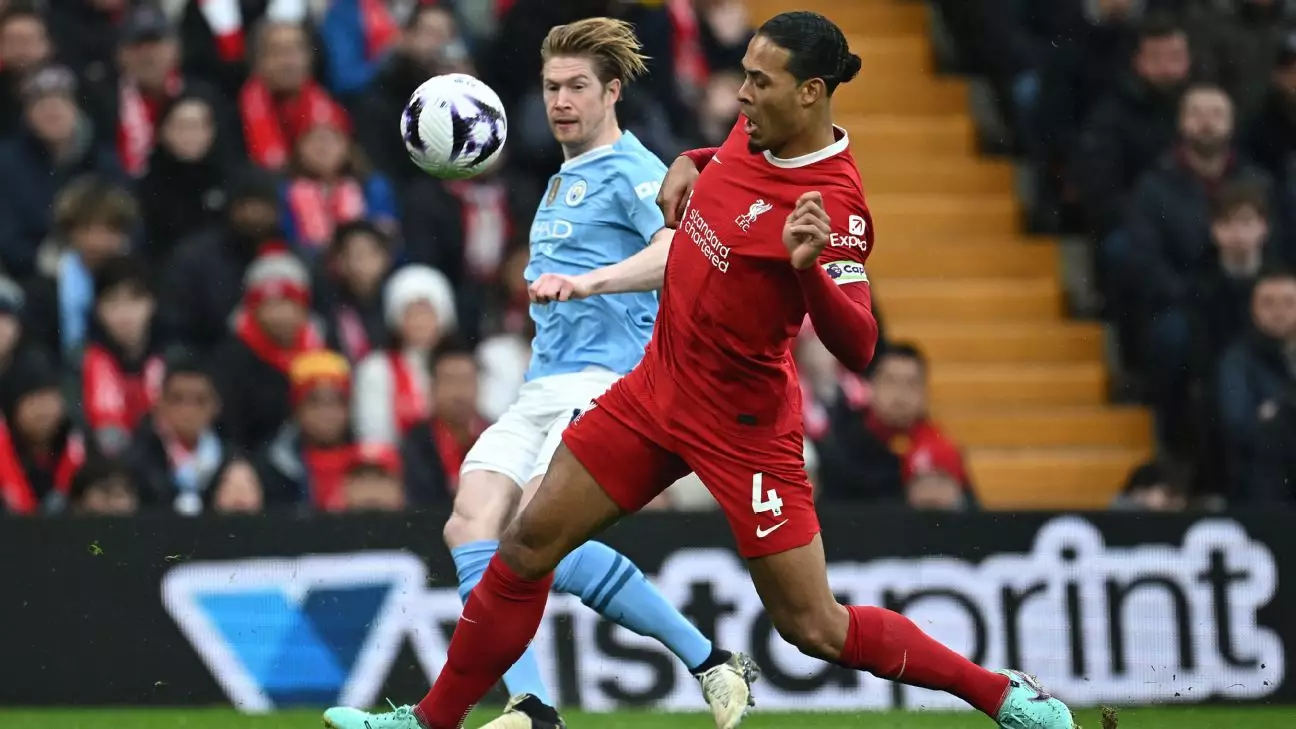
The urgency surrounding the contract situations of these seasoned athletes cannot be overstated. For players like Salah and Van Dijk at Liverpool, and De Bruyne at Manchester City, the ticking clock presents an intricate puzzle for club management. Salah, currently 32 and enjoying a standout season, is tied for the Premier League’s scoring lead with 13 goals and ranks high in assists. His contributions are undeniable; yet, questions loom about sustaining form, particularly following a spate of injuries last season. Van Dijk, a year his senior, poses a different challenge for Liverpool’s hierarchy. Since overcoming a severe cruciate ligament injury, he has displayed commendable fitness, but his longevity at the elite level remains uncertain.
In contrast, De Bruyne’s situation is marked by a troubling injury history. Having missed numerous matches recently, his fitness trajectory raises red flags for City executives contemplating an extension. Devastating injuries could cast a long shadow over his career; thus, managing these delicate negotiations requires using data analytics to assess the potential future contributions of these players accurately.
Football contracts hinge heavily on two pressing questions: Are these veterans still valuable assets at their current high salary? And what can clubs realistically expect from them in the coming years? According to a former Premier League sporting director, assessing the squad’s depth and market alternatives plays a pivotal role in decisions on older players. Clubs must strike a delicate balance between performance and the need for future adaptability.
Looking across the Premier League, many clubs grapple with similar decisions for their seasoned players. While Manchester United’s Harry Maguire and Christian Eriksen may face uncertain futures at Old Trafford, Arsenal’s Jorginho and Thomas Partey are likewise under scrutiny regarding their roles moving forward. As each club calibrates its expectations, the case for retaining or releasing established figures becomes an existential dilemma.
Adding to the complexity is the physical state of these players, often measured through metrics on fitness. The frequency of injuries and a player’s training regularity contribute significantly to contract negotiations. With robust data collection and analysis capabilities, clubs are equipped to predict a player’s downturn before it becomes apparent on the pitch, complicating emotional decisions rooted in loyalty and legacy.
Amidst these contractual considerations, we cannot ignore the global shift in football economics. The influx of wealth from leagues in Saudi Arabia has opened new avenues for aging stars seeking lucrative contracts abroad. Players aware of the diminishing prospects in the Premier League must consider the global market for potential offers. Yet, many opt for shorter contracts and pay cuts, motivated by lifestyle stability for their families over a final payday.
While Salah, Van Dijk, and De Bruyne each represent unique cases, their futures further illustrate a broader trend within football. Some stars defy the norms; Cristiano Ronaldo and Lionel Messi persist at peak performance well into their late 30s. Meanwhile, others, like Wayne Rooney and Fernando Torres, flounder past the age of 30. This unpredictability poses a significant risk for clubs to misjudging the remaining potential of veteran players.
Pragmatism in the Decision-Making Process
Finding a middle ground in these negotiations is crucial. For clubs, the last thing they want is to be burdened with high wages for players who can no longer contribute effectively. As teams evaluate potential re-signings, they must consider pragmatic solutions that allow for transition without immediately disrupting squad dynamics. This could involve exploratory discussions for reduced wages, or a mutual agreement to part ways as a fresh wave of talent is sought.
As Liverpool, Manchester City, and other top clubs ponder the futures of their veteran stars, they must embrace a calculated approach informed by data and performance metrics. The survival of a club’s aspirations and ambitions often hinges on these intricate decisions surrounding their mature players. The pressures are immense, and the outcomes can impact club identity for years to come.
In summation, the crossroads at which clubs find their aging icons requires insightful deliberation. Balancing nostalgia with strategic vision is crucial as the Premier League grapples with the implications of caring for its aging superheroes—a task steeped in both emotional and pragmatic significance.