
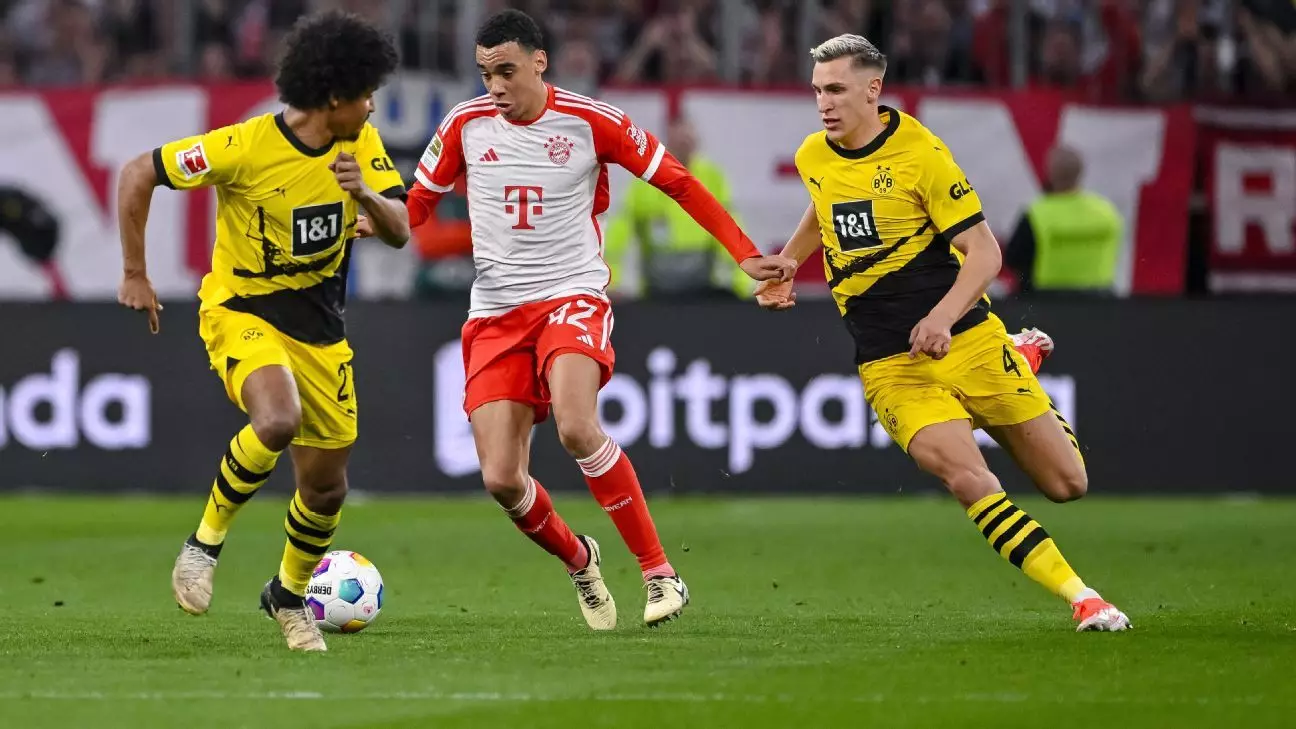
The rivalry between Borussia Dortmund and Bayern Munich is more than just a football match; it’s an ongoing narrative filled with passion, history, and a multitude of emotions. Fans from around the world find themselves drawn to this fierce battle, not just due to the quality of football played, but because it encapsulates the essence of German football culture. As two of the best-supported clubs in Germany, Dortmund and Bayern bring a unique blend of local loyalty and expansive global appeal. However, this rivalry isn’t simply comparable to others in European football, most notably the intense duopoly seen in Spain. The complexity of German football culture means that local clubs are entrenched in their communities, meaning that Dortmund versus Bayern, while significant, occupies a different space within the broader Bundesliga landscape.
For years, the dynamic of the Bundesliga matches involving Dortmund and Bayern has evolved significantly, with terminology like ‘Der Klassiker’ becoming a staple in sports media. This term, while perhaps perceived as mere marketing by some, serves to create a framework that helps viewers—especially those less familiar with the Bundesliga—understand the significance of the match. Yet, in a country where regional rivalries like the Revierderby between Dortmund and Schalke exist, the emotional stakes on those local levels often overshadow the clash between these two powerhouses.
The ascendancy of the word “Klassiker” can be traced back to a period of electrifying football that began in the mid-1990s, characterized by high-profile encounters and a growing narrative that enveloped the teams. Before this shift, other matches, like the legendary clashes between Borussia Mönchengladbach and Bayern or Hamburg SV versus Bayern, painted a different picture of German football’s prime. But as the interest in Bayern and Dortmund grew, the evolution into a ‘Klassiker’ was inevitable.
The narrative of Dortmund’s rivalry with Bayern can be traced to pivotal moments that changed the landscape of Bundesliga football. The rise of Dortmund in the late 1990s, culminating in the historic UEFA Champions League victory in 1997, marked a watershed moment. The intensity of this rivalry truly deepened with the managerial shift of Ottmar Hitzfeld, who navigated between the two clubs, fueling the competitive spirit.
The bruising encounters in subsequent years only served to amplify tensions. For example, the infamous 2001 match that saw ten players booked and three sent off captured the raw emotions and intensity that this rivalry brings to the fore. Such moments solidified ‘Der Klassiker’ as a fixture to reckon with in German football history. Even when Dortmund found itself in dire financial straits in 2004, the lifeline thrown by Bayern in the form of a loan reflected the complicated relationship between rivalry and mutual respect.
Many fans would argue that it was under Jürgen Klopp that the Dortmund-Bayern rivalry reached new heights. Klopp’s Dortmund was a fearless beast, challenging Bayern’s dominance with a series of performances that redefined expectations. Winning back-to-back Bundesliga titles in 2011 and 2012, Klopp’s side exhibited a captivating brand of football that became synonymous with the club.
One game during this era remains etched in memory as a symbol of this rivalry’s intensity. During the 2011-12 season, a match marked by individual moments of brilliance—such as Robert Lewandowski’s crucial goal and Roman Weidenfeller’s penalty save—was emblematic of the rivalry’s significant highs and lows. These experiences served to weave a rich tapestry of emotions that fans continue to cherish.
Fast forward to the present, and the rivalry remains just as enthralling, although the context has shifted yet again. In recent years, Bayern has dominated, claiming title after title, but this does not diminish the competitiveness of their matchups. Each game is a “Momentaufnahme” or snapshot in time—an expression of the current state of both clubs.
Dortmund has shown resilience despite Bayern’s overwhelming presence, illustrated by their recent league victory at the Allianz Arena, shattering nearly a decade of struggles in Munich. As both teams strive for supremacy, the anticipation surrounding their encounters remains captivating for fans, with every match holding the potential for unexpected outcomes.
As we look ahead, the rivalry between Dortmund and Bayern continues to be an essential storyline in world football. With emerging talents and strategic maneuvers shaping both teams, the essence of this clash—combining local pride with a global audience—remains intact. Within every game lies the potential for new chapters to be written and past moments revisited, ensuring that this enduring narrative captivates football fans both locally and globally. Ultimately, as history unfolds, it becomes clear that the beauty of this rivalry lies not just in the outcomes, but also in the evolving storylines and emotions it generates.