
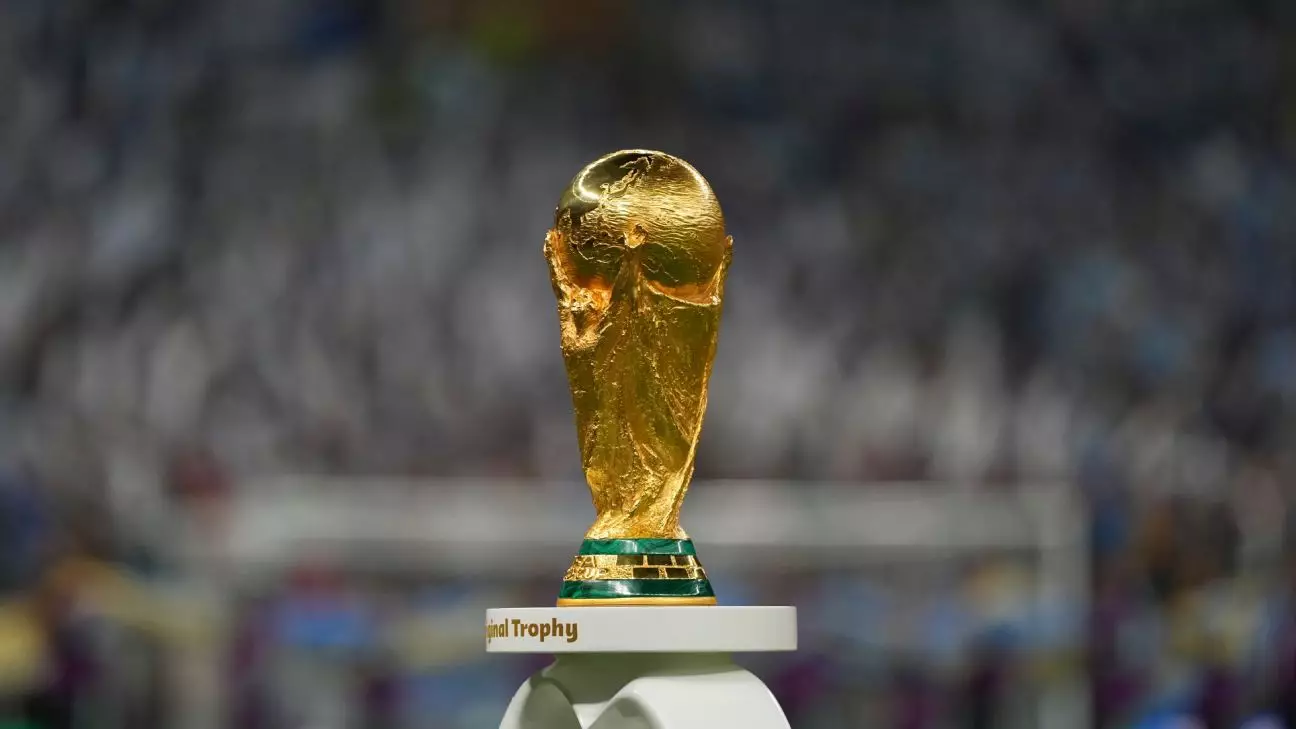
FIFA, the world governing body of football, is once again at the center of controversy as it gears up for the 2034 World Cup. Set to be hosted by Saudi Arabia, this decision has ignited tension with Europe’s premier leagues, including the English Premier League and LaLiga. The challenges underlying FIFA’s plan underscore a fundamental struggle between global football ambitions and the practical realities faced by domestic leagues and players.
On an administrative front, FIFA’s announcement of Saudi Arabia as the singular host for the men’s 2034 World Cup represents a pivotal moment. The kingdom’s bid is positioned not only as a significant event for the nation but also as a litmus test for FIFA’s growing influence in securing substantial financial backing from non-traditional football powers. However, this decision is fraught with complications, particularly concerning scheduling and player welfare.
The juxtaposition of the World Cup being staged in the Middle East’s harsh climate necessitates scheduling during milder months, specifically from October to April. This mimics the unprecedented decision to hold the 2022 World Cup in Qatar during late fall and winter, a move that disrupted the traditional football calendar. The prospect of another mid-season upheaval refocuses scrutiny on FIFA’s disregard for the established rhythms of domestic competitions.
The crux of the conflict lies in FIFA’s control over the International Match Calendar, which dictates the timing of football events worldwide. Legal complaints from FIFPRO Europe—a vital players’ union—along with multiple European leagues, have illuminated the growing frustration regarding FIFA’s monopolistic oversight. Citing potential player burnout and scheduling conflicts, these leagues are pushing back against FIFA’s authority, arguing for a more collaborative approach and highlighting the need for player input in decisions that fundamentally affect their careers.
FIFA’s stance, as reported, indicates consultative intentions for stakeholders in redefining the International Match Calendar before finalization for 2034. Yet, claims that no substantial consultations have taken place regarding the mid-season scheduling raise questions about the sincerity of these intentions. The implication is clear: without collaborative dialogue, the balance between player health and the demands of international competition may continue to tip unfavorably.
The Consequences of an Expanded Tournament
Compounding the scheduling challenges is the projected scale of the 2034 World Cup, featuring an unprecedented 48 teams. With 104 matches expected over a condensed timeframe, the potential ramifications for domestic leagues are staggering. An extended tournament planning may not only demand a hiatus that could last up to seven weeks but would also require players’ clubs to release their athletes for a significant period—up to 49 days for some players.
Such disruptions could prove detrimental to club competitions, risking fan disengagement and impacting revenue models predicated on consistent match schedules. Furthermore, the resultant player fatigue from such congested schedules could lead to increased injuries, ultimately harming not only the clubs but the quality of international competitions as well.
Evaluating FIFA’s Strategic Choices
As we approach the FIFA confirmation of Saudi Arabia’s hosting rights, the overarching question remains: does FIFA prioritize its revenue and global influence over the integrity and viability of domestic football? The agency’s recent actions reflect a strategy that favors expansion and financial gain through international tournaments, yet neglects the foundational elements that make club football successful.
The path ahead for FIFA and European leagues is fraught with challenges. The potential for legal entanglements and public outcry over player welfare may serve as critical leverage points for leagues and unions to push back against unilateral changes. For FIFA to maintain its credibility and authority, fostering a cooperative relationship with the leagues and players is not just advisable; it is imperative. Balancing the ambition of hosting lavish, expansive tournaments while honoring the commitments to local leagues and domestic competitions is a delicate act that will define the landscape of football in the years to come.