
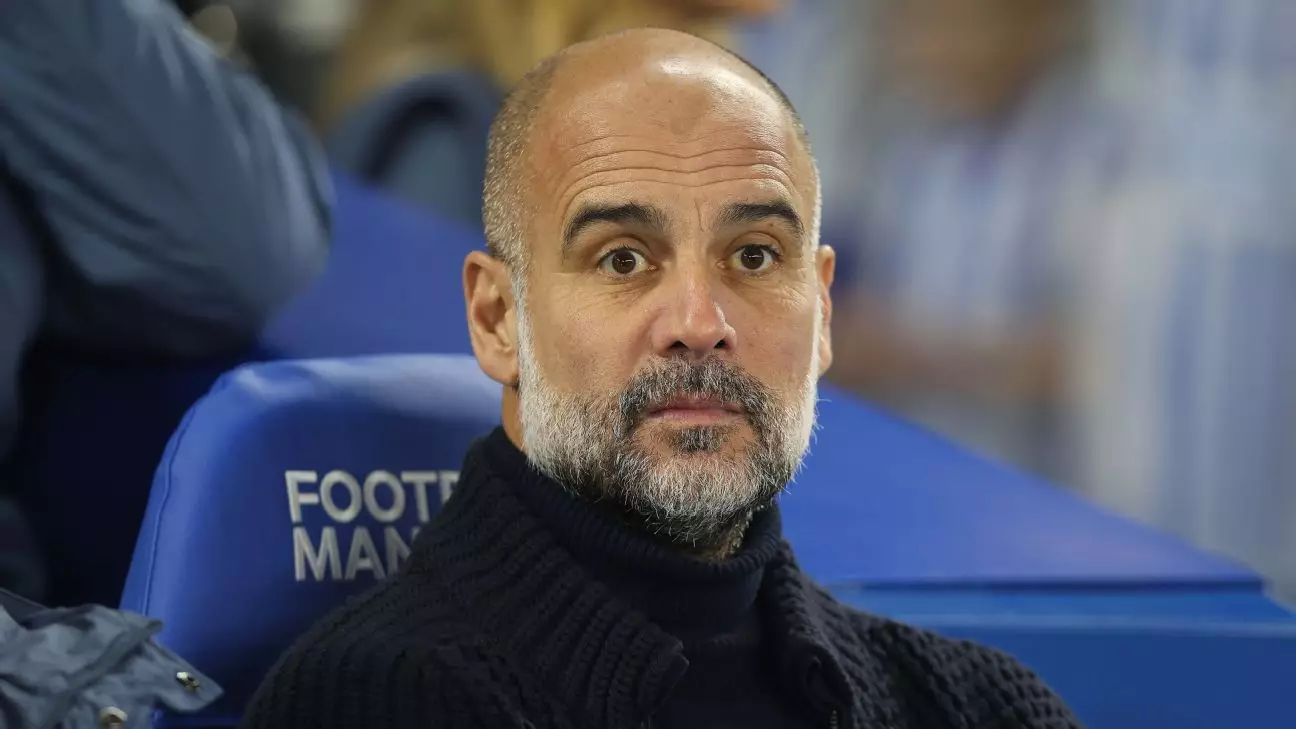
As Premier League teams navigate the current season, the future of Manchester City is at a critical point. With the departures of several key figures who have been instrumental in the club’s recent successes, including Chief Operating Officer Omar Berrada and Director of Football Txiki Begiristain, City finds itself at a precarious crossroads. The stakes increase with head coach Pep Guardiola’s uncertain future, as he too is a pivotal figure in City’s narrative of triumph since his arrival from Bayern Munich in 2016. There’s a pressing question that lingers over the club: how much will change, and how soon will it happen?
Guardiola’s future is particularly crucial. Currently contracted only until the season’s end, he has remained tight-lipped regarding his plans. In light of the recent executive departures, the importance of his continuation in the managerial role cannot be understated. Guardiola himself recently stated, “It’s not true… I don’t even know. Anything can happen in life,” hinting at the indecisiveness that has enveloped not just him, but the entire club.
Recent Results: A Period of Struggle and Reflection for Manchester City
Manchester City finds itself in uncharted territory with an alarming run of four consecutive losses across all competitions—an unwelcome record not seen since 2006. This unexpected slump has cast doubt over the stability of a team that has dominated English football for much of the last decade. While injuries have played a significant role in this decline, none has been as impactful as the absence of Rodri. The influential midfielder is often seen as the backbone of City’s playing style, and his absence has left a noticeable void both defensively and in orchestrating the team’s possession-based approach.
The timing of these struggles is particularly concerning, given City’s remarkable run of six Premier League titles in seven years. Such dominance established a reputation for consistency and resilience, making this sudden dip in form all the more jarring. Questions have arisen about whether the current squad, which has achieved so much, is entering a natural phase of decline or if these recent results signal the beginning of a broader transition period for the club.
Pep Guardiola, renowned for his ability to thrive under pressure, faces one of his toughest challenges yet. The combination of poor results, an evolving squad, and looming leadership changes within the club presents a multifaceted problem. Rebuilding City’s form on the pitch and maintaining morale during this turbulent time will require all of Guardiola’s tactical ingenuity and leadership prowess. As fans and analysts alike scrutinize every move, the unfolding narrative is as much about the team’s future as it is about reclaiming its once-unassailable dominance.
Manchester City Leadership: Balancing Legacy and the Future
Manchester City’s leadership finds itself at a critical crossroads, delicately balancing the respect for Pep Guardiola’s unparalleled legacy with the pressing need to plan for a future that may not include him. While Guardiola’s contributions to the club are undeniably historic—transforming City into a global powerhouse and amassing 15 major trophies—his potential departure looms large over the club’s strategic planning. This duality leaves City’s hierarchy in a state of reflection and preparation.
Chairman Khaldoon Al-Mubarak, alongside other senior officials, is reportedly already considering contingency plans should Guardiola decide to step down. While Guardiola’s continued presence is undoubtedly the club’s preferred scenario, the realities of football demand readiness for a potential transition. Among the potential successors, names like Xabi Alonso have emerged as serious candidates. Alonso, currently managing Bayer Leverkusen with impressive results, brings both tactical acumen and a fresh approach to leadership. His inclusion in discussions signals that City is proactively considering long-term strategies to maintain their competitive edge.
Adding to the complexity is the uncertainty surrounding Guardiola’s decision timeline. Insiders suggest that the manager could reveal his plans between upcoming international breaks, leaving the club with limited time to adjust its trajectory. This uncertainty places additional pressure on the leadership to maintain focus and ensure that the team’s performance does not falter in these pivotal months.
The leadership’s challenge lies not only in preparing for Guardiola’s potential exit but also in managing the psychological impact on players, staff, and fans. Maintaining stability amidst such turbulence will be a defining test of City’s organizational strength and vision for the future.
Similar Post: Pep Guardiola’s Continued Leadership: A Testament to Success at Manchester City
Premier League title Hopes
Winning remains City’s expectation as they chase yet another Premier League title and a lofty position in the Champions League. Despite the recent downturn, the club’s ambitions have not faltered. There are still important fixtures ahead, including clashes against Tottenham and Liverpool that could redefine City’s trajectory. Guardiola’s previous statements reinforce an awareness of the broader implications of the team’s performance relative to his position, further intensifying the scrutiny he faces.
Guardiola’s achievements at Manchester City are an impressive narrative: 15 major trophies, including the coveted Champions League, and a historic domestic treble in 2019. This season, the ambition to secure a fifth consecutive league title stands as a testament to the winning culture he fostered. Yet, as the club prepares for a potential phase of restructuring, the questions of what more he can accomplish linger.
With several senior players inching closer to the end of their productive years—such as Kevin De Bruyne and Ilkay Gündogan—the need for new talent is clear. This inevitability weighs on the current crop, particularly as Guardiola’s potential successor, Hugo Viana, gears up for a challenging transition within the transfer market. Such a landscape underscores the urgency of forward planning amidst the uncertainties.
In addition to potential player changes, Guardiola’s own future and its implications intertwine with the ongoing investigation into Manchester City concerning over 100 financial charges. The outcomes of this inquiry could compel Guardiola to reconsider his position. He may feel a sense of obligation to stay longer to help navigate the club through challenging waters, or the findings could serve as a catalyzing force for change.
Ultimately, whilst City’s hierarchy operates with a degree of optimism regarding Guardiola’s extension, the current environment portends significant upheaval. Stakeholders remain deeply aware that time is of the essence. As they contemplate pivotal decisions regarding leadership, roster adjustments, and the long-term vision for the club, Manchester City’s future is at a pivotal junction. The potential for profound change exists, but when and how it unfolds remains tantalizingly uncertain.
Manchester City stands on the brink of a defining chapter, where the interplay of leadership, strategy, and resilience will shape its future. With Pep Guardiola’s contract nearing its end and key executives departing, the club faces a convergence of challenges that demand swift and strategic action. The Future of Manchester City, coupled with recent struggles on the pitch, paint a picture of a team grappling with the weight of its own success.
Guardiola’s legacy at Manchester City is already etched in history, but the decisions he and the club make in the coming months will determine the sustainability of their dominance. The balance between honoring his remarkable contributions and preparing for a post-Guardiola era is delicate, yet crucial. As stakeholders work behind the scenes to plan for potential transitions, the pressure to maintain the club’s competitive edge looms large.
City’s unwavering ambition to chase Premier League titles and European glory remains, but these aspirations are now interwoven with questions of leadership, squad evolution, and external pressures like financial investigations. This moment represents more than just a tactical or managerial pivot—it’s a crossroads that will define the next decade for one of football’s most successful clubs.
Whatever the outcome, one certainty remains: The Future of Manchester City will continue to captivate, driven by a legacy of excellence and the promise of new opportunities on the horizon.