
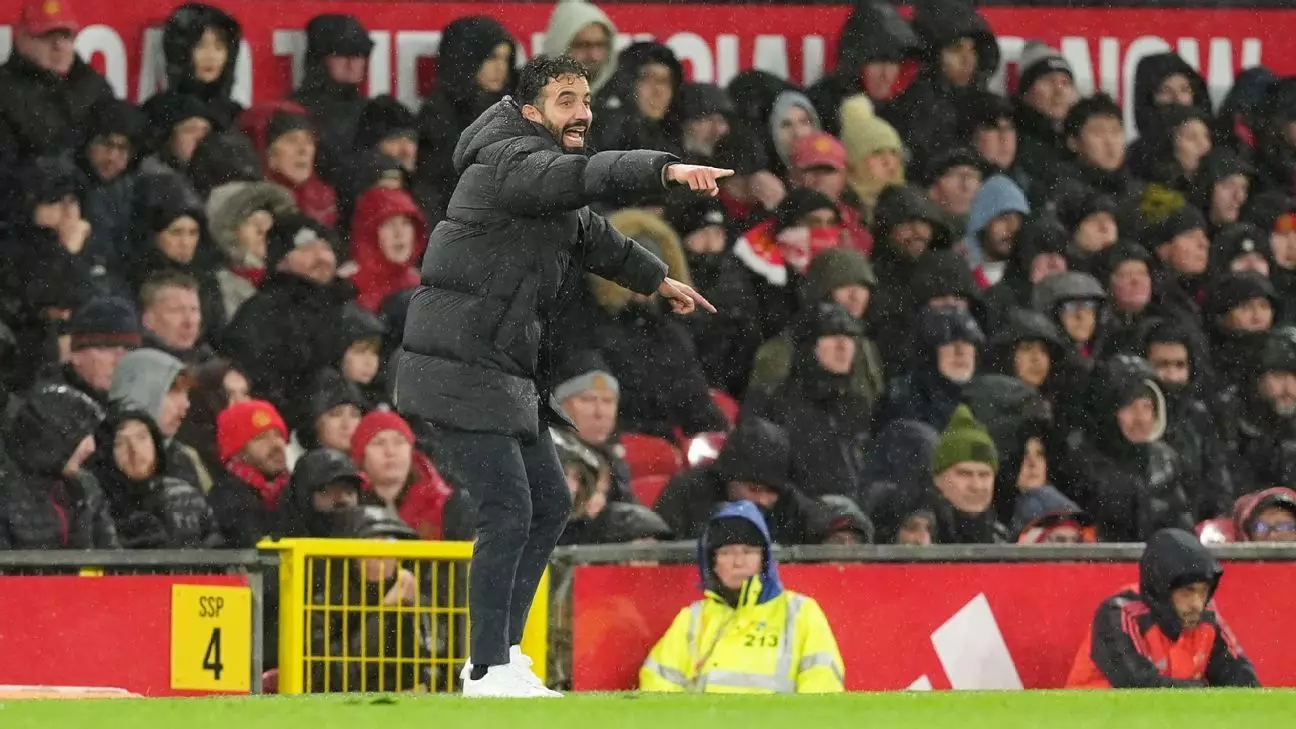
Manchester United has not only experienced a shocking defeat at home against Nottingham Forest, but they also find themselves in a precarious position in the league—sitting 13th with only 19 points after their first 15 matches. The loss, which marks Forest’s first victory at Old Trafford in three decades, leaves a glaring indictment on the state of the club. Ruben Amorim, newly appointed manager, commented on the significant challenges ahead, coining the predicament as a “long journey” back to the top. Such reflecting sentiments lay bare the grim reality of a once-mighty institution now grappling with inconsistency and faltering morale.
The defeat highlighted a pattern of defensive shortcomings that have plagued Manchester United throughout the season. Key players made glaring mistakes that contributed to the three goals scored by Forest. From Lisandro Martínez’s failure to defend a corner early on, to Bruno Fernandes’s misplaced passes resulting in a goal, it was evident that defensive cohesion was lacking. Perhaps the most glaring errors came from goalkeeper André Onana, whose mishaps turned promising situations into opportunities for the opposition. Such an alarming catalogue of mistakes is troubling for a club with ambitions of competing at the highest level.
Amorim’s experiences at Sporting CP during challenging times echo the current sentiment surrounding United’s performances. He reflects on his past management challenges, emphasizing that while the stakes may differ between Portugal and the Premier League, the emotional weight of disappointing performances is universally shared among managers. If history has taught us anything, it is that such tumultuous periods can often provide valuable lessons that, if internalized properly, can help teams transform their fortunes.
Despite the disheartening nature of the results, Amorim underscores the necessity of staying the course and focusing on consistent improvements. His statements are a call to arms—not only to players but also to fans disheartened by the string of poor performances. The reality is stark; without a collective commitment to evoke change in training and performance, a turnaround may seem like an elusive dream. Reiterating the importance of maintaining focus, Amorim suggests that there can be no shortcuts in the pursuit of excellence.
In the grand tapestry of football, teams face highs and lows, but it is during the lows that real character is built and tested. The overarching theme from United’s defeat and Amorim’s remarks illustrates the importance of resilience and unity. As the “massive club” strives to reclaim its status, overcoming the daunting challenges ahead requires introspection, strategy, and the grit to learn from mistakes. Looking ahead, supporters can only hope that this marked phase in the club’s journey will yield the resilience and spirit required for future triumphs.